
Under the Spring Moon

As Spring is slowly approaching, this is the time of year when some people are called to take stock, to reflect, to pray, and offer alms, often as charitable works.
Last week, Wednesday February 18th, held an especially quiet and beautiful convergence!
Ash Wednesday, the beginning of Lent for Christians,
and the first day of Ramadan for Muslims, fell on the same day.
It was a rare calendar overlap — and a meaningful one.
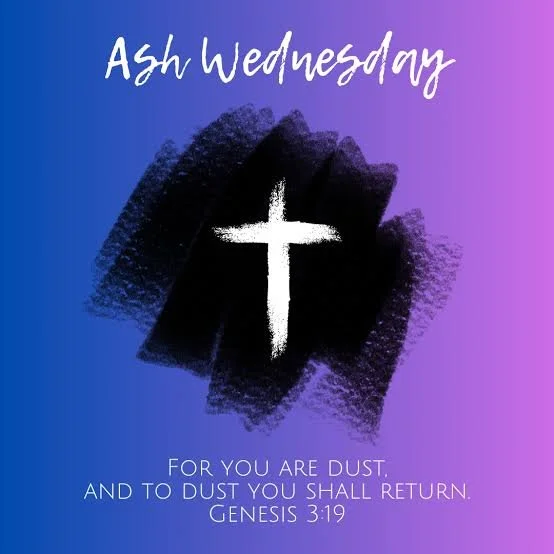
If you had spotted people out and about last week with a distinctive smudge on their foreheads, it could only have meant one thing: It was Ash Wednesday, the first day of the Christian season of Lent.
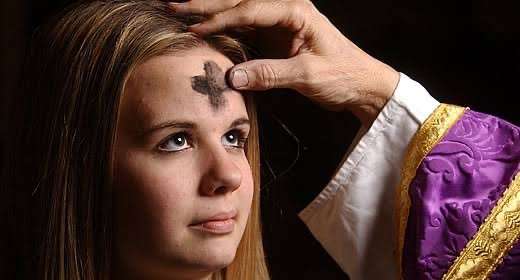
The ashes are created each year from the leftover palms of the previous year’s Palm Sunday, the Sunday before Easter.
Some priests say the following words as they place the ashes on a person’s forehead in the shape of a cross: “Remember that you are dust, and to dust you shall return.” (Genesis 3:19)
Saying it this way might sound harsh, yet the ashes are a sign of humility, mortality, and a public acknowledgment of the need for repentance.
When I was a religion teacher in a New York City Catholic high schooI, I was called upon at times to serve in the imposition of ashes on foreheads for Ash Wednesday.
We had a choice of words we could use. I always chose the format that seemed to me to be gentle and proactive: “Turn away from sin and believe in the Gospel.”(Mark 1:15)
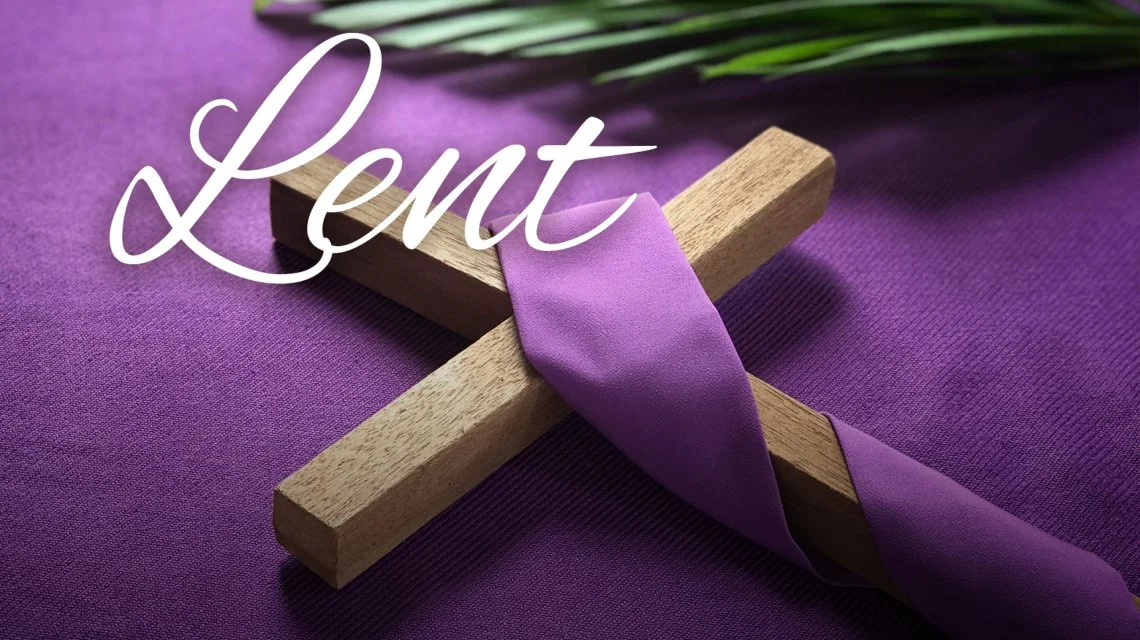
Lent is not only for Catholics.
While it is most prominently celebrated by Roman Catholics, it is also found with Eastern Orthodox Christians (as "Great Lent"), Anglicans, Lutherans, Methodists, and Presbyterians. Some Baptist, Anabaptist, and non-denominational churches may also observe it, often focusing on self-reflection or fasting.
For Christians, it is a 40-day season that emphasizes prayer, fasting and almsgiving/service, all of which include reflection, self-denial, and charity—and all in a renewal leading toward Easter, the celebration of the Resurrection of Christ.
Some Lenten Practices
Prayer and Reflection:
Focusing on spiritual growth in preparation for Easter.
One common practice is to participate in a special meditation, the Stations of the Cross. This is a set of 14 stations, each usually marked by a plaque with a scene that marks moments in the Passion of Jesus in the days before, during, and after his crucifixion.
It is an especially meditative practice for teen groups in a parish church, as the teens participate in a dramatic reading of each of the Stations.
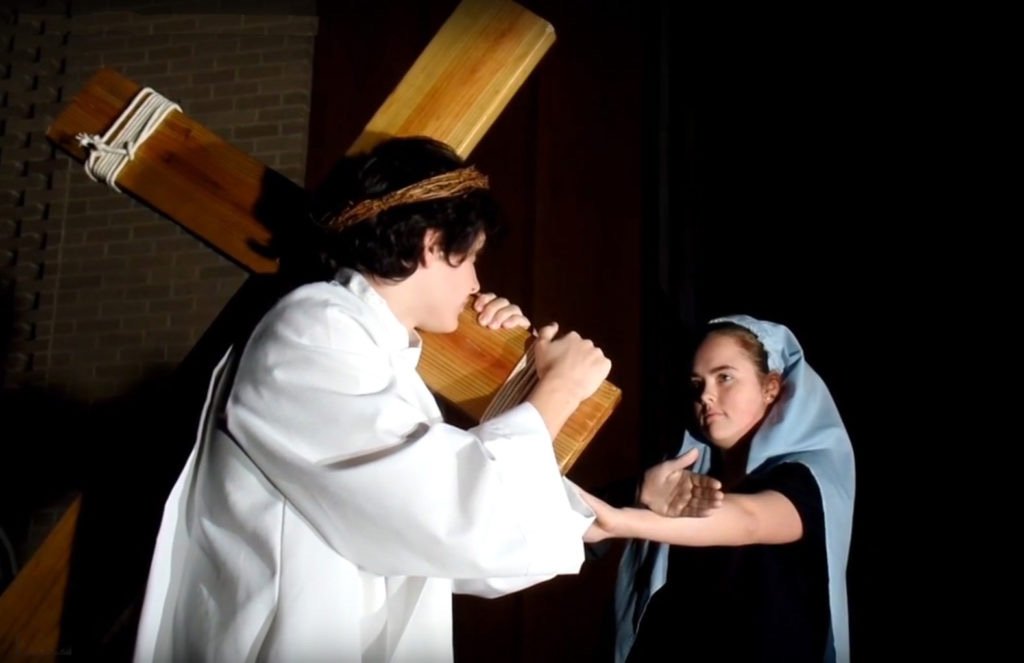
4th Station: Jesus meets his mother
My favorite online meditation on “the Stations,” is the one offered by Father Reed in a video that is available on YouTube with this URL:
https://youtu.be/tLGwLMLcq8k?si=hZg2283kFa5cY1S9
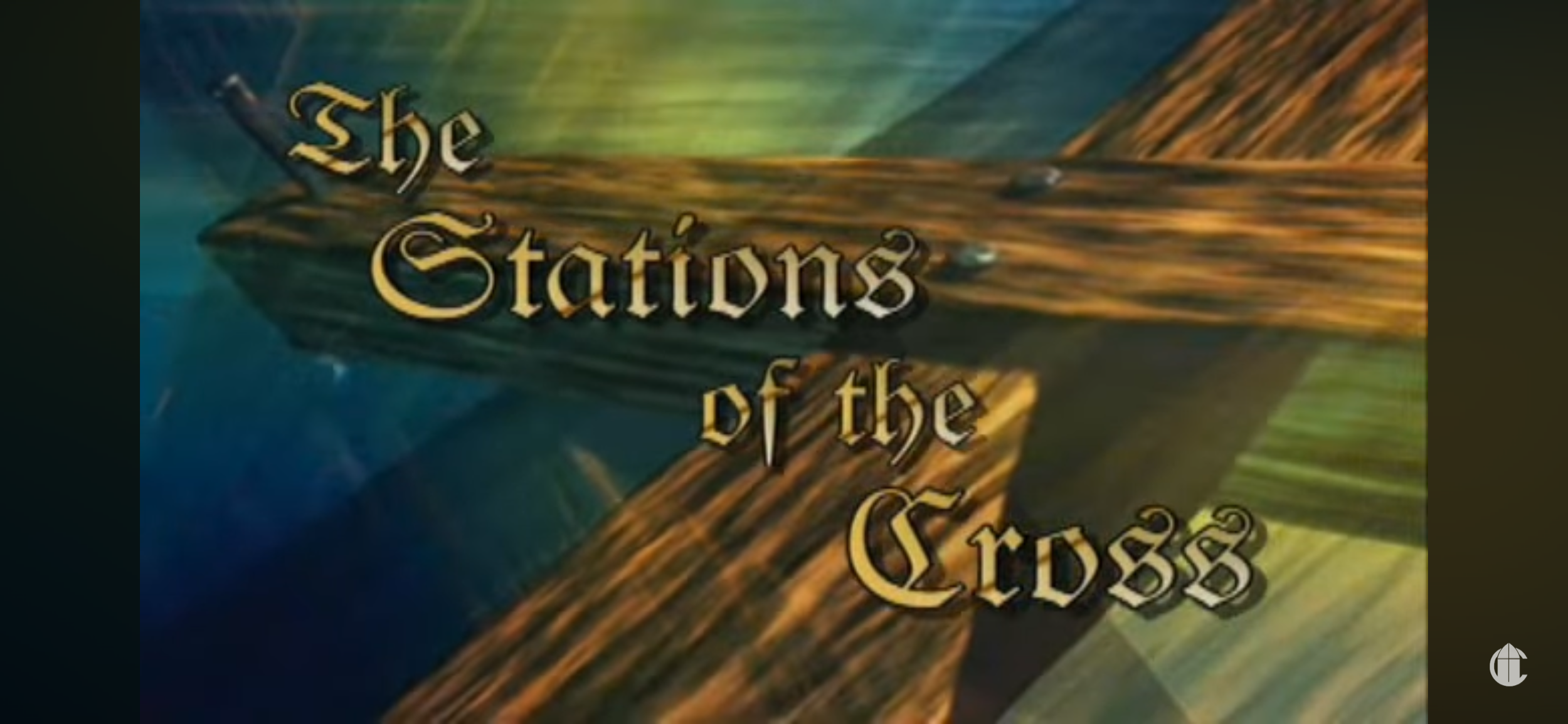
Fr. Reed provides us with a personally meaningful and beautifully modern reflection at each of the 14 stations.
I appreciate his reflection on the 8th station: “Jesus Meets the Women of Jerusalem.” (Jesus is carrying his cross.)
Father Reed meditates on how the women have come out to comfort and thank Jesus who had broken all kinds of social conventions just to connect with them. Jesus, in turn, feels their grief and is sorrowful that he cannot be there to continue to support them as he had been doing.
Other Forms of Prayer and Reflection
Daily Scripture/Devotionals: Read the Bible in a year, use a daily devotional, or read the daily Mass readings.
Guided Prayer: Utilize apps for 10-minute daily prayers.
Adoration and Mass: Attend Eucharistic Adoration or a weekday Mass.
Journaling: Keep a Lenten journal to record spiritual reflections.
Fasting:
Giving up specific foods or luxuries.
This is the most traditional element of Lent, during which a person chooses something to give up for the 40 days prior to Easter.
Msgr. Charles Murphy, the author of The Spirituality of Fasting, defines this Catholic spiritual practice in the following way:
“Religious fasting first of all is an act of humility before God, a penitential expression of our need for conversion from sin and selfishness. Its aim is nothing less than helping us to become more loving persons, loving God above all and our neighbor as ourselves. Its purpose therefore is the transformation of our total being—mind, body, and spirit.”
—Ave Maria Press
Some Concrete Ideas for Fasting
Digital Fast: Give up social media, streaming services, or smartphone apps.
Dietary Fasting: Skip snacks, alcohol, or fancy coffees.
Behavioral Changes: Give up sarcasm or complaining.
Shopping Fast: Commit to buying no new clothing or non-essential items for 40 days.
Almsgiving and Service:
Increased service to those in need.
One might “give up,” instead time—perhaps to serve in a soup kitchen or the like.
Almsgiving and Service
Charitable Giving: Donate money saved from fasting to a charity.
Acts of Kindness: Perform 40 days of kindness or volunteer work.
Letter Writing: Write notes of encouragement to friends or family.
Are you perhaps wondering how the date for the moveable feast of Ash Wednesday is decided upon each year?
There is a rhythm to it.
To learn the annual date requires looking ahead to when Easter will be for that year—and counting back 40 days.
Why look ahead to Easter?
Easter is the monumental point in the Church’s liturgical year—the celebration of the Resurrection of Christ.
The date for Easter points to an annual cosmic event, the Northern Hemisphere’s Spring (Vernal) Equinox—when day and night are equally balanced.
It also involves the first full moon following the Spring Equinox. This moon is often called the Spring Moon, or the Easter Moon.
Here is how the calculation works:
Here is how the calculation works:
The Spring Equinox in the Northern Hemisphere is the first day of Spring, which usually occurs on March 20thor 21st.
The Spring, or Easter, Moon is the first full moon that occurs after the Spring Equinox.
Easter is the Sunday directly following that Spring Full Moon.

If you like deciphering riddles, try working out the chart at the very end of this double reflection on Lent and Ramadan. Its title is: “When Will Easter Be?”* 😊
RAMADAN
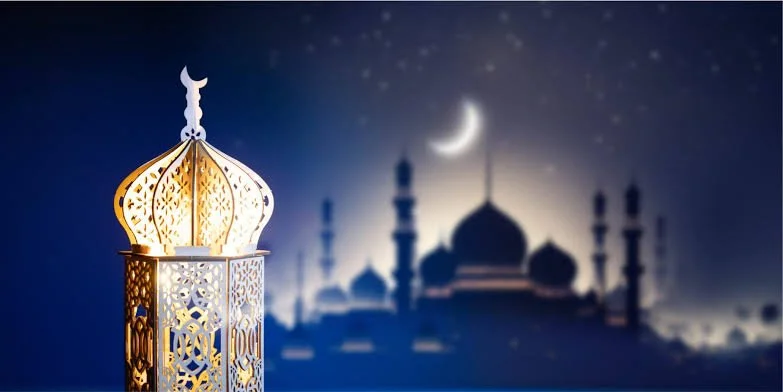
For Muslims, who practice the religious tradition Islam, the moon also has an important role in the first day of its feast of Ramadan. Theirs is the crescent moon.
The first sighting of the crescent moon begins Ramadan — a sacred month of fasting from dawn to sunset, for prayer, charity, and spiritual discipline.
Like Lent, Ramadan is a time of self-examination and deeper devotion. It is about re-centering life around God.
Why Ramadan Is Sacred
Ramadan commemorates the month in which the Qur’an was first revealed to the Prophet Muhammad in the 7th century.
Why Is the Date for Ramadan Different Each Year?
Ramadan occurs on different dates because Islam follows a lunar calendar, and so Ramadan moves about 10–11 days earlier each year in the Gregorian calendar.
Practices for Ramadan
Fasting (Sawm)
The central practice of Ramadan is fasting from dawn (fajr) until sunset (maghrib).
During daylight hours, Muslims abstain from:
Food and drink (including water)
Smoking
Marital relations
But fasting is not only physical. It also involves:
Guarding one’s speech
Avoiding gossip, anger, and harmful behavior
Practicing patience and gratitude
The fast is broken each evening with a meal called iftar, traditionally beginning with dates and water, following the example of the Prophet Muhammad.
Photo below: People break their fast each day throughout Ramadan.
Istanbul, Turkey’s historic Sultanahmet district.
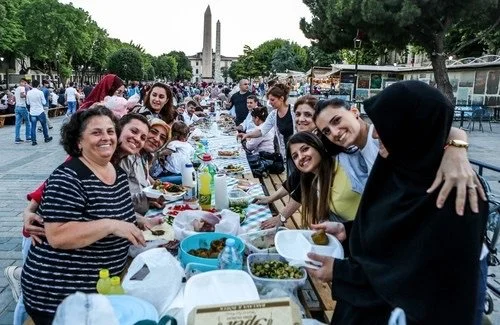
Photo below: Before dawn, many rise for a pre-fast meal called suhoor.
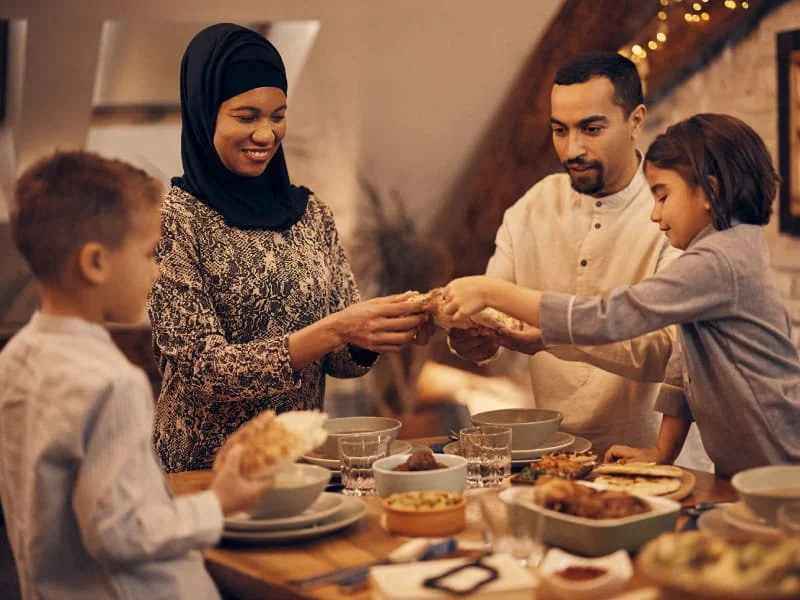
Fasting cultivates empathy for those who experience hunger daily and strengthens a sense of social responsibility.
Night Prayers and Community
Ramadan is marked by increased prayer, especially special evening prayers called Taraweeh, often performed in congregation at the mosque.
The month fosters strong community bonds:
Families gather nightly for iftar (the breaking of the daily fast).
Mosques host communal meals.
Acts of charity multiply.
💛 Charity and Compassion
Charity is central to Ramadan.

Muslims are encouraged to give generously, especially through:
Zakat (obligatory almsgiving)
Sadaqah (voluntary charity)
A Spiritual Vision
At its heart, Ramadan is not simply about abstaining from food.
It is about:
Re-centering life around God
Cultivating discipline and humility
Renewing compassion for others
Seeking forgiveness and spiritual transformation
🎉 The End of Ramadan: Eid al-Fitr
Ramadan concludes with a joyful festival: Eid al-Fitr, which is a day of communal prayer, feasting, visiting loved ones, and giving thanks.

Closing Reflection on the Coincidence of Dates
That these two sacred seasons began on the same day this year seems like a quiet grace.
Although Christianity and Islam are different traditions with different theologies, they are connected. Islam is an outgrowth of Christianity. Both traditions, along with Judaism before them, hearken back to the biblical prophet Abraham.
In this year 2026, both Christians and Muslims have called their faithful on the very same day: to fast, to pray, to repent, to simplify, and to turn their hearts toward the Divine.
In the fractured world, in which we are living today, that shared turning has to be more than coincidence.
It is a reminder that longing for the Divine—and, with it, the desire to become more just and merciful—runs deep across humanity.

* Resource: When Will Easter Be? Everything you need to solve the riddle is in the chart, or just below it.
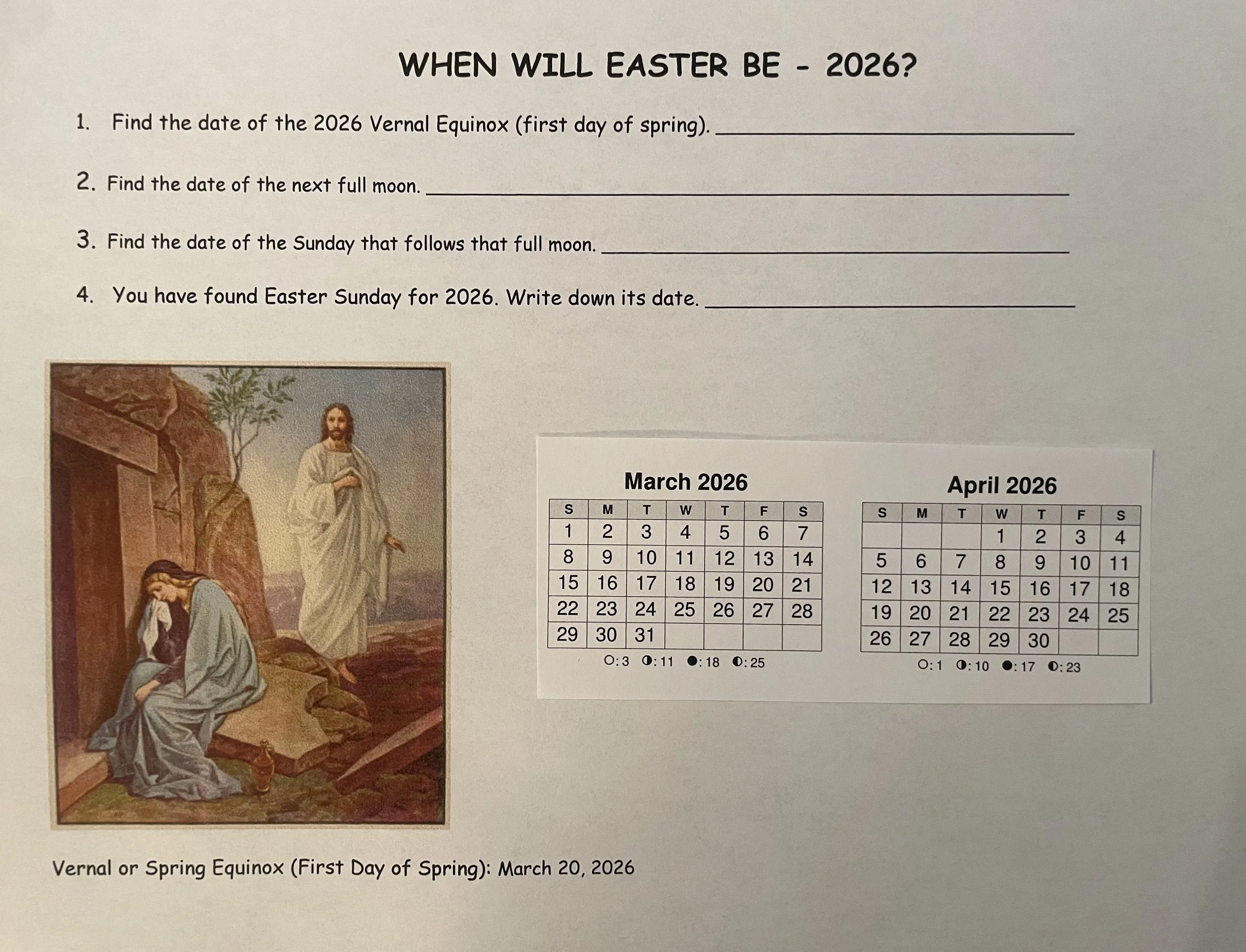
Circle legend key for the moon phases is under the calendars:
Clear Circle = Full Moon; Black Circle = New Moon
IN YOUR OWN WORDS:
Previous Post: “…Bring a Folding Chair.” Written by Anne Andersson February 14, 2026
—Thanks Anne. Always loved this saying of Ms. Chisholm. Again, appreciate your research but also the flow of the story you tell so well. Difficult, I’m sure, to know what to include and what to leave, as they say, on the cutting floor! A special lady for this Black History Month and for these times. —Maryanne
—Happy valentine to you, Anne. Very inspiring.—ER
—Hope you girls had a great Valentines.♥️ —PH
—Thank you. —RE
REMEMBERING THE EPSTEIN SURVIVORS:
These women are out there courageously sharing their painful stories through the invitations of TV and social media hosts. They are in the news.
Fortunately, they have elected officials supporting and advocating for them—that they be heard by the administration and that their perpetrators be held accountable.
NEITHER HAS HAPPENED YET.
KEEP THEM IN YOUR PRAYERS.
C:WED WISH LIST:
Please remember C:WED in your prayers!