
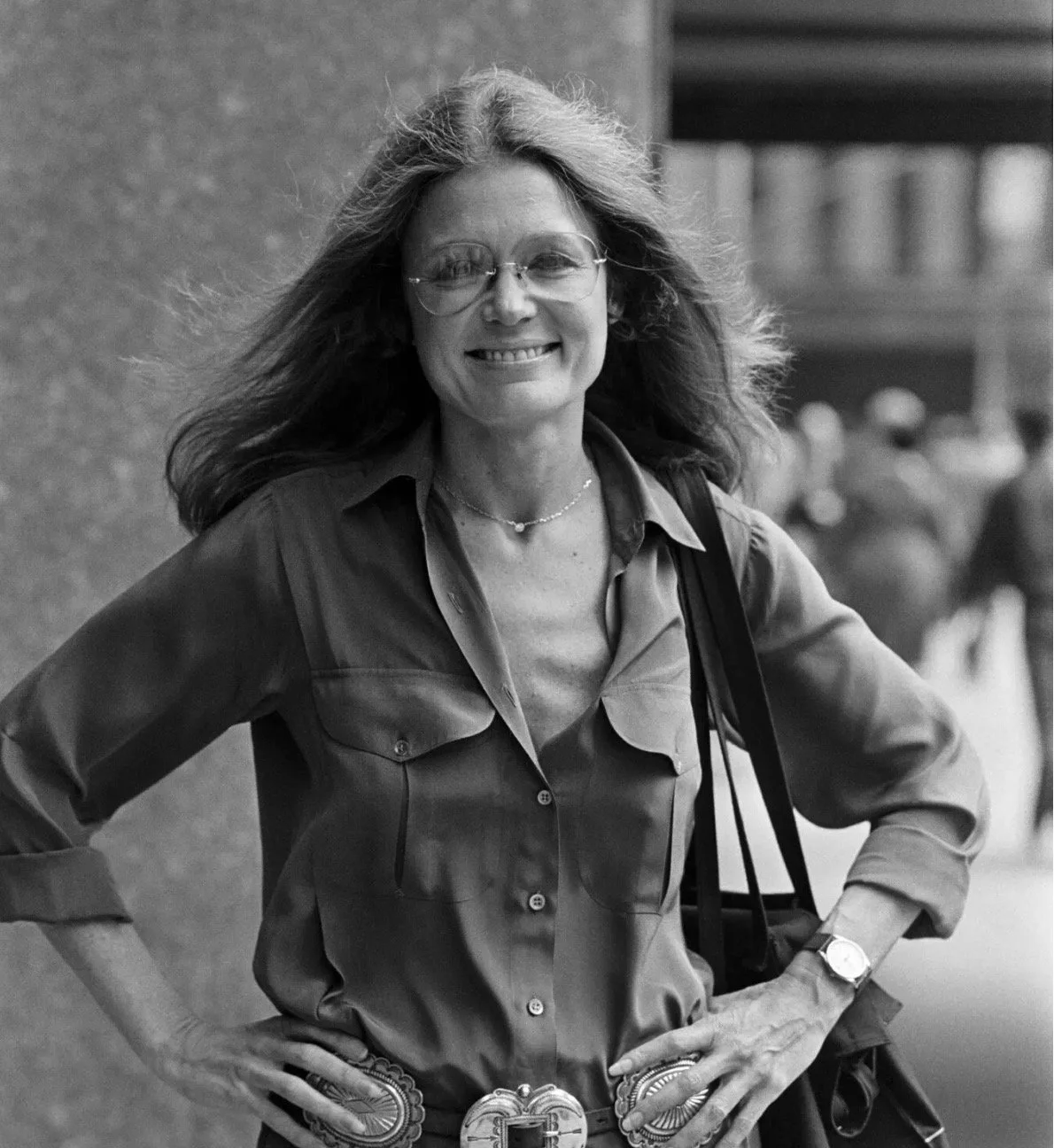
Gloria Marie Steinem
(March 25,1934 - September 2, 2026)
New York City 1984
Credit: Neal Boenzi/The New York Times
I felt as though I had lost one of my best friends!
This was my almost immediate emotion upon learning of the death of Gloria Steinem on Wednesday September 2, 2026.
It was my second reaction after my immediate, spontaneous one of shock. Even at the age of 92, I had the subconscious sense that Gloria would live forever!
Gloria was solid; Gloria was a fighter; Gloria would be there like a rock! We —women and men—need her!
Wild thoughts, right?
Maybe not.
I found a similar sentiment in Katie Couric’s interview on the day of her death with Cindy Leive, co-founder of the feminist media collective The Meteor, and Gloria’s close friend and journalistic collaborator.
Katie: “Gloria was one of those iconic figures that, like Dolly Parton, has been a part of our lives for so, so long, that we never thought this day would come.”
Cindy: “Yes! And many of my friends also have the same sentiment. One friend said: ‘I know everybody has to die, but it just seemed like she never would.’
I think it is partly because she was doing what she did right up until the last minute.
She has a new book coming out, and she was having gatherings of women and organizers in her living room up until a couple of weeks ago.”
Her new book is: An Unexpected Life: A Memoir.
~~~~~~
I (Anne) believe that Gloria does—and will—continue to live each time a woman opens a credit card account in her own name (without also needing a man’s signature) or signs a lease or mortgage similarly.
Or does one or ten or so many other things we now take for granted, but that were barred to women just a few generations ago.
It might be obvious to ask, as many have:
What did Gloria Steinem gain for women?
More surprisingly, we must also ask:
What did Gloria gain for men?
The answers lie in what being a feminist meant to Gloria.
The Prison of Gender Roles
For decades, many who were opposed to the second-wave feminist movement tried to frame it as a battle where women gained ground only at the expense of men. And that those women were haters of men.
But Gloria’s vision of equality was never exclusive. It was expansive.
Her core philosophy is captured in this statement in her 1983 book, Outrageous Acts and Everyday Rebellions:
“A feminist is anyone
who recognizes the
equality and full humanity
of women and men."
To Gloria, feminism was never about building a wall between the genders. It was about breaking down the walls that trap both of them.
For Men:
Gloria understood that the rigid, traditional expectations placed on men—the demand to suppress emotion or the pressure of being the sole financial support in the family—were as damaging to them as the restrictions placed on women.
She sought a new perspective: that men be viewed as full human beings rather than as mere protectors or providers. She believed that they should be able to freely express emotions as they feel them.
Fortunately, things have changed, as she has written in An Unexpected Life:
Now, thanks to social justice movements that have changed our idea of work, both in and outside the home, I see girls and women, boys and men, who are better able to envision a future that suits them, one that isn’t imprisoned by expectations of gender. Men now raise babies and little children, and many women have jobs that once belonged primarily to men.
What Gloria Gained For All of Us:
Freedom.
Gloria Steinem helped women gain the space to be fierce,
and
men the space to be vulnerable.
For Women:
Gloria Steinem not only helped women gain critical financial independence, but she also helped them secure legal protections against workplace discrimination.
“She challenged sexist assumptions, helping women develop a sense of self-worth and gain a measure of equality at work, at home and in society at large.”
—Katharine Q. Seelye, The New York Times September 3, 2026
Here are some of the ways:
WORKPLACE EQUALITY
Fair Pay: She fought against lower pay for women doing the same jobs as men.
Ending Job Segregation: She challenged job advertisements that were split into separate "female" and "male" sections.
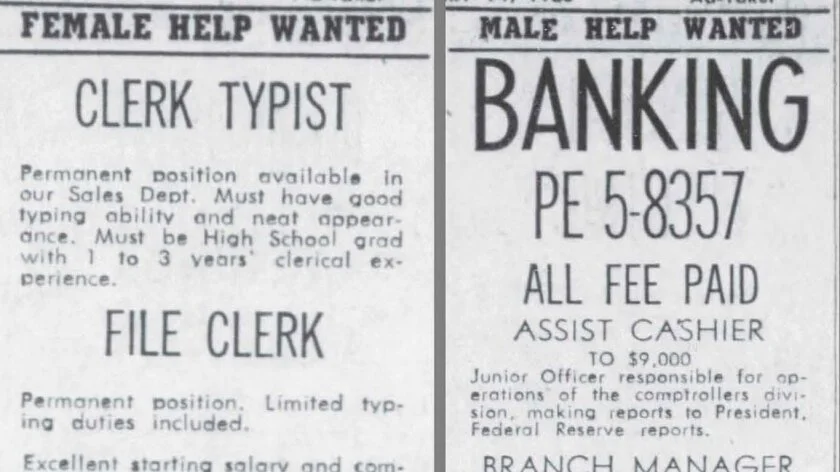
Typical Help Wanted Ads in the 1950s & 1960s
Sexual Harassment: She helped bring public attention to workplace harassment, giving a name and a voice to an issue that was previously ignored.
“We have terms like sexual harassment and battered women. Not so long ago, they were just called life.”
—Gloria Steinem, Outrageous Acts and Everyday Rebellions
EXPOSITORY JOURNALISM:
UNDERCOVER AS A PLAYBOY BUNNY
Gloria gained national attention in 1963 when Show Magazine hired her, at the age of 28, to go undercover to report on the working conditions at New York City’s famed Hugh Hefner’s Playboy Club. [1]
Her expository article, written in a two-part diary format, documented her experience. It ran in Show’s May and June issues as “A Bunny’s Tale.” [1][2][3]
It revealed the not-so-glamorous, sexist, and underpaid life of a Playboy Bunny.
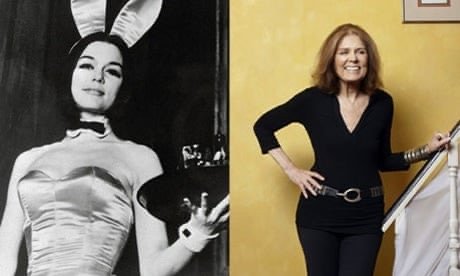
Photo: Gloria Steinem's 'a bunny's tale' – 50 years later
Nicolaus Mills, The Guardian, Sun 26 May 2013 [4]
THE AD FOR THE JOB
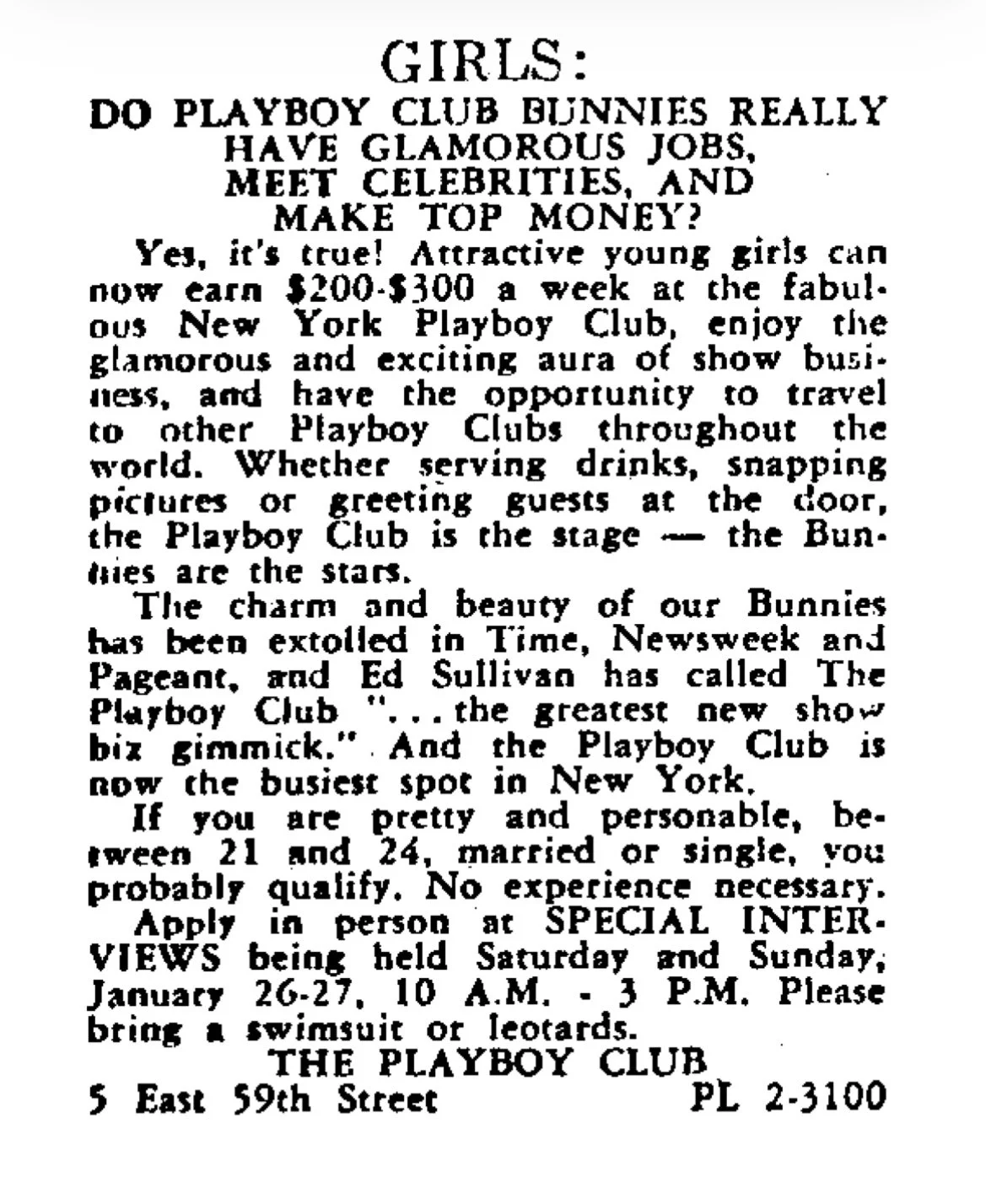
Gloria applied to that ad using her grandmother’s name, Marie Catherine Ochs. She gave her age as 24.
As an applicant, an internal gynecological exam with the Playboy-sanctioned doctor was followed by a Wassermann blood test, which was used at that time to check for syphilis.
Marie Catherine Ochs got the job.
In addition to being required to wear painfully tight costumes, there were discrepancies in pay:
Advertised vs. Actual Wages: Not the $200 to $300 a week, about $1,700 to $2,600 today, as promised, but $50 a week (about $430).
For Bunny waitresses, the Club also took 50% of the first $30 of credit card tips; 25% of amounts up to $60; and 5% after that for drink orders.
She wrote in her article for ˆShow: “We may keep all cash tips that are given to us, but if we indicate any preference for cash trips, we will be fired.”
Base pay for Hat Check Bunnies was a flat $12 for an 8-hour shift with no tips. [1] [2] [3]
Uniform Expense and Costume Upkeep:
Bunnies had to buy their own shoes with three-inch heels and thin black nylon tights for $5 a pair, risking fines or demerits if the tights got a run in them. [2]
Cleaning and upkeep of costume costs were $2.50 a day (about $21 today, adjusted for inflation. [1] [2] [3]
Demerit System:
This was a strict penalty mechanism used by management to dock the pay of Bunnies for minor infractions, such as crooked bunny ears or not smiling enough.
Dating
Dating members was not allowed, UNLESS the member held a special key, which permitted him and the Bunny to do as they pleased.
IMPACT OF THE EXPOSÉ
Immediate:
Elimination of Invasive Exams: The most direct victory of Gloria’s article was that Hefner immediately ordered the clubs to cancel mandatory gynecological exams and blood tests for Bunny applicants.
Hefner's Response: The company filed a short-lived $1 million lawsuit over the piece.
Long-Term:
Financial and Cultural Decline
The clubs could not survive the shifting cultural landscape for women in the late 20th century.
Gloria’s exposé contributed to the culture change in that it revealed that the clubs were not glamorous party floors, but were just exploitative, highly restrictive workplaces.
Playboy closed its final three company-owned flagship locations (New York, Chicago, and Los Angeles) in 1986 and the last one in Lansing, Michigan in 1988.
For Gloria herself
The exposé made her a celebrity, but for many years she struggled to be taken seriously as a journalist after this assignment. [5]
For a long time, Gloria saw her 11 days as Bunny “Marie Ochs” as a huge career blunder.
Only later did she appreciate the usefulness of the ruse that allowed her to expose Playboy’s exploititae employment policies.
POLITICAL VOICE
Gloria Co-Founded Proactive Groups:
In 1971, she co-founded the National Women’s Political Caucus (NWPC), which was created to recruit, train, and elect feminist candidates to all levels of government.
Other NWPC key founders were:
Shirley Chisholm: The first African American woman elected to the United States Congress.
Bella Abzug: Fiery lawyer, activist, and U.S. Representative.
Betty Friedan: Author of The Feminine Mystique and co-founder of the National Organization for Women (NOW).
Dorothy Pitman Hughes: a trailblazing Black feminist, child welfare advocate, and grassroots community organizer.
Fannie Lou Hamer: Renowned civil rights and voting rights activist.
The Free to Be Foundation was co-founded in 1973 by four prominent feminists and activists to ensure children’s wholeness as human beings.
Gloria Steinem
Patricia Carbine: feminist journalist and former executive editor of Look magazine.
Letty Cottin Pogrebine: writer, political activist, and founding editor of Ms. Magazine.
Marlo Thomas: actress, author, and creator of the children's project Free to Be... You and Me.
Women’s Media Center (WMC) was co-founded in 2005 by Jane Fonda, Robin Morgan, and Gloria Steinem as a progressive, nonpartisan, nonprofit organization working to raise the visibility, viability and decision-making power of women and girls in media and, thereby, ensuring that their stories get told and their voices are heard.
Women's Action Alliance (WAA), 1971 to 1997, was co-founded by Gloria Steinem and other prominent second-wave feminists, Brenda Feigen Fasteau and Dorothy Pitman Hughes, to provide grassroots activists with technical, communication, and resource support to combat sexism and advance equality.
The WAA also included leaders such as Bella Abzug and Shirley Chisholm.
REPRODUCTIVE RIGHTS
Gloria clearly supported reproductive rights for women.
A paragraph in her book My Life on the Road places this subject in the patriarchal realm:
In our co-lecturing days, Flo Kennedy and I were sitting in the back of a taxi on the way to the Boston airport discussing Flo’s book Abortion Rap. The driver, an old Irish woman, the only such cabbie I’ve ever seen, turned to us at a traffic light and said the immortal words, “Honey, if men could get pregnant, abortion would be a sacrament!”
I (Anne) leave it up to you to search the internet for Gloria’s analysis of this subject — and then embrace your own views and vision.
SPREADING THE FREEDOM MESSAGE
Gloria Steinem co-founded Ms. Magazine in 1971 with Dorothy Pitman Hughes, Letty Cottin Pogrebine and a team of pioneering editors.
It was intended as a bold alternative to traditional women’s magazines, which focused primarily on homemaking, fashion, and attracting husbands.
Ms. dedicated itself to women's liberation, political power, and systemic equality. The magazine was designed to give women a space to discuss sexism, health, and equality.
The title "Ms." was chosen as a unifying title for women regardless of their marital status, a convention that was novel and controversial at the time.
Ms. Magazine is still available in print and digital forms from the Ms. Magazine Store.
Also, its online presence: Publishes daily feminist news, investigative reporting, and commentary on the official Ms. Magazine Website.
THE ARRIVAL OF THAT 1972 SPRING ISSUE OF MS.
At Last, I Know I'm Not Alone
When the standalone preview issue of Ms. Magazine hit the newsstands in January 1972, I felt a surge of relief and joy. I immediately purchased my own copy.
I hadn’t known at the time that it was a test issue. Earlier, a smaller similar version had been published as a trial insert in New York Magazine, which then sold out immediately with its prized insert.
Not being sure of its standalone magazine’s reception, the founders labeled their preview issue “Spring/1972.” They theorized that if sales were slow, they didn’t want the issue to look stale on the newsstands.
They needn’t have worried as issues of that standalone preview flew off the newsstands.
For me, opening the pages of that preview issue gave voice to words and phrases that named much of what I had been feeling, but could never articulate.
After reading—and LOVING—that preview issue, I signed up for a monthly subscription and devoured the pages upon their arrival each month.
I still have my treasured preview issue. (Image below)
Cindy Leive, in that interview with Katie Couric I mentioned above, said that she still has “an unhealthy trove” of her Ms. Magazine issues.

EARLY C-R GROUPS AND THEIR RELATIONSHIP TO GLORIA’S “TALKING CIRCLES”
At about the same time in 1972 that I discovered Ms. Magazine, I was invited to join a Consciousness-raising (C-R) Group. It met weekly, rotating its meetings in the homes of its eight suburban Long Island, NY members of the group.
We sat in chairs and couches in a circle around the members’ living or family rooms.
We all had the same list of discussion starter questions, one topic of which we addressed in each meeting.
The questions were designed to help us uncover patterns in our lives, thereby allowing us to realize that our personal struggles were not solely ours.
There were strict rules: There was to be no leader. Speaking was in turn with no interruptions permitted. This was huge because women were always being interrupted.
There could be no questions made as a woman was speaking. These were to be saved for discussion after she had finished. Each woman’s views and stories were understood to be her own and were not to be judged or criticized.
This discovery of patterns was meant to be deeply political: allowing us to also see that the struggles with which we were living in our lives were a result of the systemic oppressive order of society.
I can’t say that we always succeeded in that deep analysis, but we did uncover surprising similarities in our stories and in our answers to the weekly prompts. We felt quite comfortable sharing some intimate aspects of our lives and relationships.
GLORIA’S TALKING CIRCLES
Throughout the 1970s and for the rest of her life, Gloria adapted the concept of C-R groups into her signature format: "Talking Circles."
Her format was initially inspired by community organizing models she had observed during a two-year stay in India and by American Indigenous traditions introduced to her by the Cherokee Nation Principal Chief Wilma Mankiller, the first woman elected Principal Chief by the Cherokee Nation in modern times, and whose name was a hereditary title for someone who protected the village.
Gloria dedicated her newly published book, An Unexpected Life: A Memoir, to Wilma, her longtime friend who, she said “had a gift for helping people have the confidence in themselves to move from dependence to independence.”
Decades later, Gloria remained vigilant in her view of the value of meeting in person and discussing.
She held her Talking Circles in the living room of her own home in Manhattan.
She hosted them right up to a few weeks before her death.
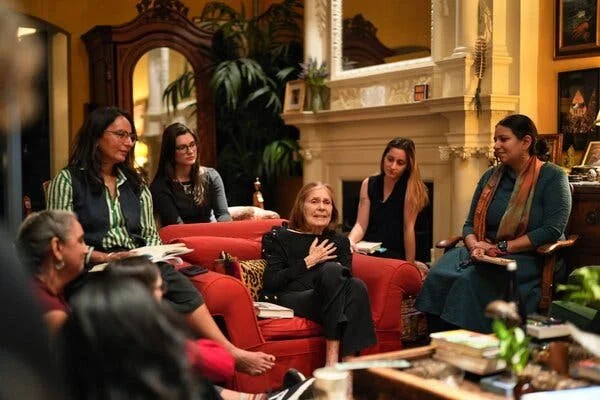
Credit: Gia McKenna - Gloria’s Foundation
Gloria strongly believed that:
“Gathering is how we process things. Gatherings of women.”
Katie Couric commented on Gloria’s Talking Circles:
“Not only was everyone welcome, everyone felt free to talk and share.
A beautiful way to welcome people: everyone was seen.
Gloria’s gift was that, when you were talking to her, you felt that you were the only person in the world.
She really listened.”
~~~~~~~~~~~~
HUMILITY—NO SOLO POLITICS
There is an important note to highlight about Gloria’s leadership in the women’s movement.
She knew that a movement is never a solo act; it is a collective circle that must always grow wider.
She did not appreciate people giving her all the credit. She fiercely resisted being placed on a pedestal as the "sole leader" of the women's liberation movement.
She always reminded the world that she was part of a rich, diverse tapestry of thinkers and organizers.
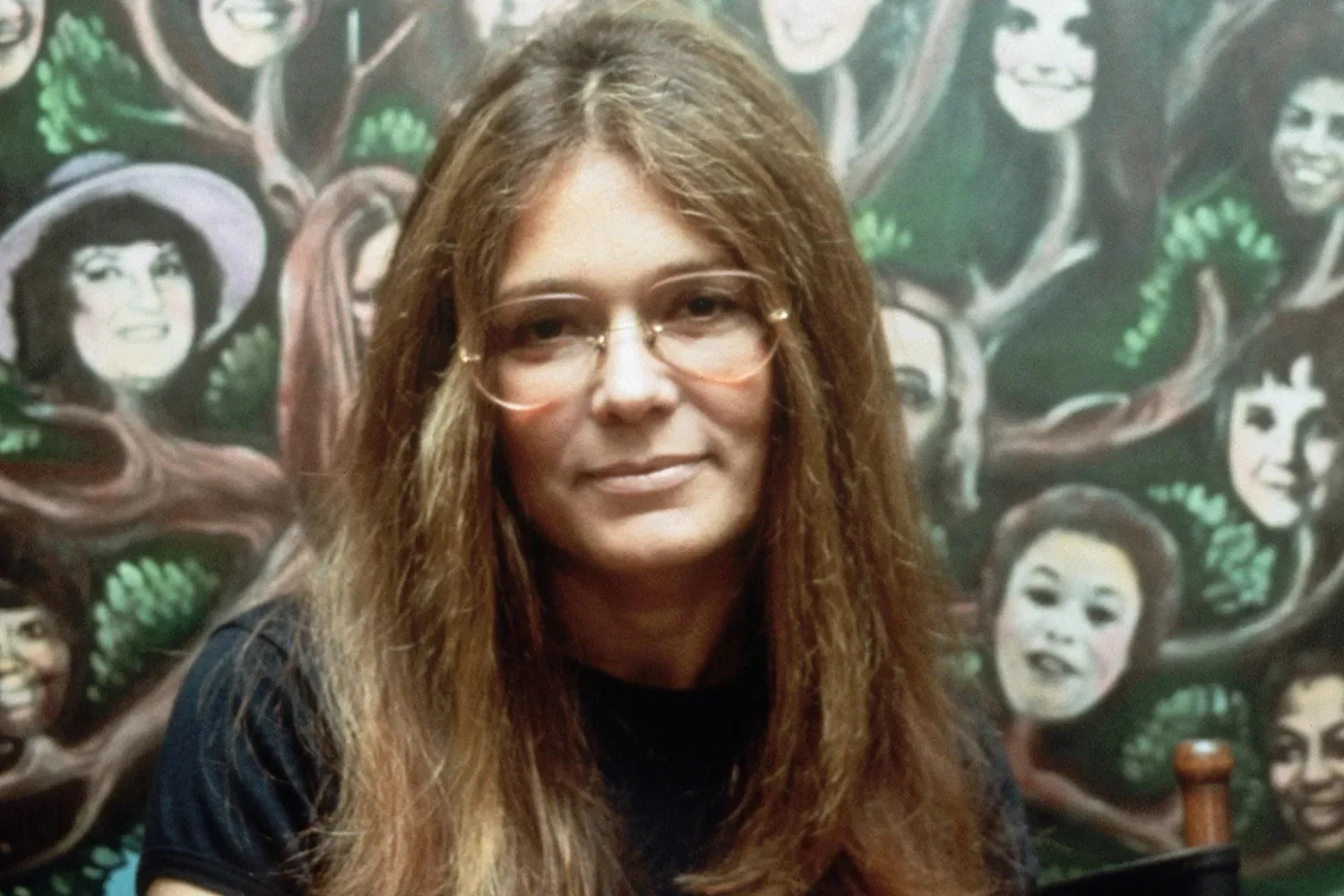
Gloria’s Collective Circle
Credit - Bettman Archive
~~~~~~~~~~~~
EMBRACING CRITICISM AND DIVERSITY
Warranted criticism has been directed over the years toward first- and early second-wave feminist action because leaders in those movements ignored, even snubbed, Black women.
Back in the 1970s, when Gloria was asked to speak, she would insist on appearing with a woman of color, acutely aware of the privilege she received from being a white woman.
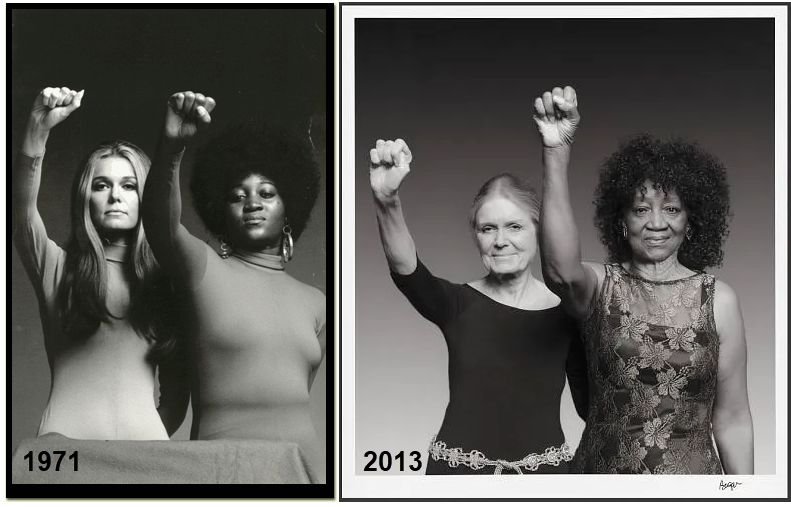
Left: The famous 1971 photo of fists-raised Gloria Steinem and Dorothy Pitman Hughes who co-founded the Women’s Political Caucus, the Women's Action Alliance, and Ms. Magazine.
Right: In 2013, to mark Gloria’s 80th birthday, Dorothy commissioned a portrait reenacting that iconic 1971 photo.(Bagan Photography)
~~~~~~~~~~~~
AWARDS
GLORIA HAS BEEN RECOGNIZED IN MANY WAYS.
HERE ARE A FEW:
Presidential Medal of Freedom (2013): Awarded by President Barack Obama as the highest civilian honor in the United States for her trailblazing activism.
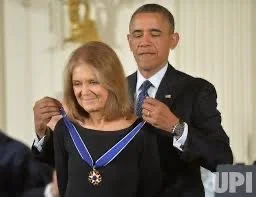
Princess of Asturias Award (2021): One of Spain's most prestigious international awards, recognizing her decades-long dedication to feminism and human rights.
National Women's Hall of Fame (1993): Inducted for her foundational role in the modern feminist movement.
Library of Congress Living Legend (2000): Honored for making significant contributions to America's diverse cultural, scientific, and social heritage.
Freedom Award (2019): Presented by the National Civil Rights Museum for her lifelong pursuit of equality and civil rights.
Eleanor Roosevelt Val-Kill Medal (2014): Acknowledged for her commitment to ideals of social justice and global human rights.
Ceres Medal (United Nations): Awarded by the UN's Food and Agriculture Organization to recognize her work in revolutionary feminism and humanitarian progression.
Lifetime Achievement in Journalism (1990s/2000s): Conferred by organizations including the Society of Professional Journalists.
…and many more awards.
Gloria also received a plethora of honorary doctorates.
Here is just one example:
Harvard University, Yale University, Wesleyan University, and Pace University (to name just a few) conferred upon Gloria the honorary degree of Doctor of Humane Letters.
~~~~~~~~~~~
CARRY YOUR OWN TORCH
When asked of Gloria as she approached the age of 90:
To whom are you passing on your torch?
She would respond in this manner:
"I’m keeping my torch."
Here is a paraphrase of her complete response:
You all need to carry your own similar torches. With more torches, the light will be greater.
🔥
And so, now we all—women and men—must take inspiration from her and carry our torches forward ourselves!
Carrying A Torch:
My colleague, Jim Philipps, and I carried our torches to a generation of teens in March 2019 when, with parental permission, we introduced the members of the World Youth Alliance Club (WYA) to the off-Broadway play, Gloria, a Life.
The play was about Gloria Steinem. WYA was a club in the all-girls high school where we were both teachers and co-moderators of the club.
The girls loved the play, and were inspired by what they had learned about Gloria Steinem.

The Play: Gloria, A Life
The stage was the carpet-covered floor partially shown in my photo above. It was surrounded by audience seats, on each of which colorful pillows served as backrests.
The theatrical set actually mimicked one of Gloria’s “Talking Circles,” set in the living room of her home.
And so it was: The first act was a six-character bioplay about Gloria’s life and career as a feminist writer and activist; the second act was a facilitated “talking circle” that included the audience and a moderator.
And Gloria actually led the conversations at some of the performances (unfortunately, not at ours). It had been her hope that “people will tell their own stories and make connections with other people in the room, with ideas, with actions they can take the next day and the next,”
Even I dared to tell one of my own stories.
Synchronicity
At this point, I must mention another odd coincidence to add to the one I discussed in my previous post honoring Dolly Parton.
In that post, I had commented on the fact that the deaths of two feminist-leaning women, Dolly Parton and Gloria Steinem, had oddly occurred within a week of each other, Dolly on August 25 and Gloria on September 2.
I had speculated that perhaps this was a cosmic sign that we should be more pro-active in getting the Equal Rights Amendment (ERA) to be officially certified as part of the U.S. Constitution.
Then suddenly,
just three days after Gloria’s passing, Robin Morgan, who served as editor-in-chief of Ms. Magazine and was a co-founder of the Women’s Media Center, died on September 5 at the age of 85.
Robin Evonne Morgan
(1941-2026)
Robin is credited with coining the word “herstory” and helping to popularize the clenched fist and female symbol icon. She was a key organizer of the 1968 feminist protest against the Miss America pageant.
Robin was a poet, journalist, activist, feminist, organizer and author. Her 1970 essay anthology, Sisterhood is Powerful, which she edited, is considered one of the essential texts of the modern women’s movement.
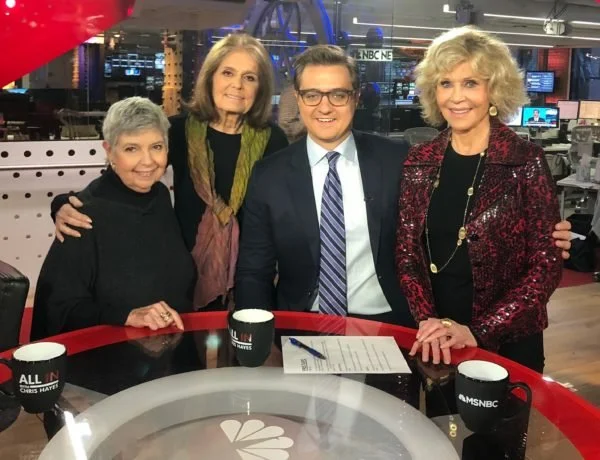
Robin Morgan (L), Gloria Steinem, and Jane Fonda (R), Women’s Media Center Co-Founders, stand with Chris Hayes on the set of his cable TV show All In with Chris Hayes. Photo: James Grant
COSMIC SYNCHRONICITY?
Was this a cosmic event with a new message?
Three Women.
Dolly, Gloria, and Robin.
All feminists, all fighters for justice.
All three died within a week and a half of each other.
Perhaps the message is:
Be aware; be vigilant; be pro-active.
A message such as this would be especially important in our current national and global situation, which is moving us backward.
We are losing in so many areas where Gloria had worked so hard to make strides for women.
~~~~~~~~~~
In Conclusion
THE HOPE-AHOLIC!
Gloria referred to herself as a “hope-aholic!”.
Determined never to give up hope!
And, she placed her hope in “Talking Circles.”
She says to us posthumously in her just released book,
An Unexpected Life: A Memoir:
“There is nothing more important
than being able to tell the truth and be supported in community.
You never know where it will lead.”
~~~~~~~~
Our Rock
Gloria may no longer be here physically to act as our rock, but she spent many of her 92 years showing us how to stand on our own.
She didn't want us to wait for her light to pass to us. She wanted us to look at the fire she built and use it to ignite our own flames.
🔥
Her light isn't gone; it has multiplied. It is now in the hands of everyone—women and men alike—who believe in full humanity.
Let’s keep the light burning.
Rest in power, Gloria.
Thank you for lighting the road for us.
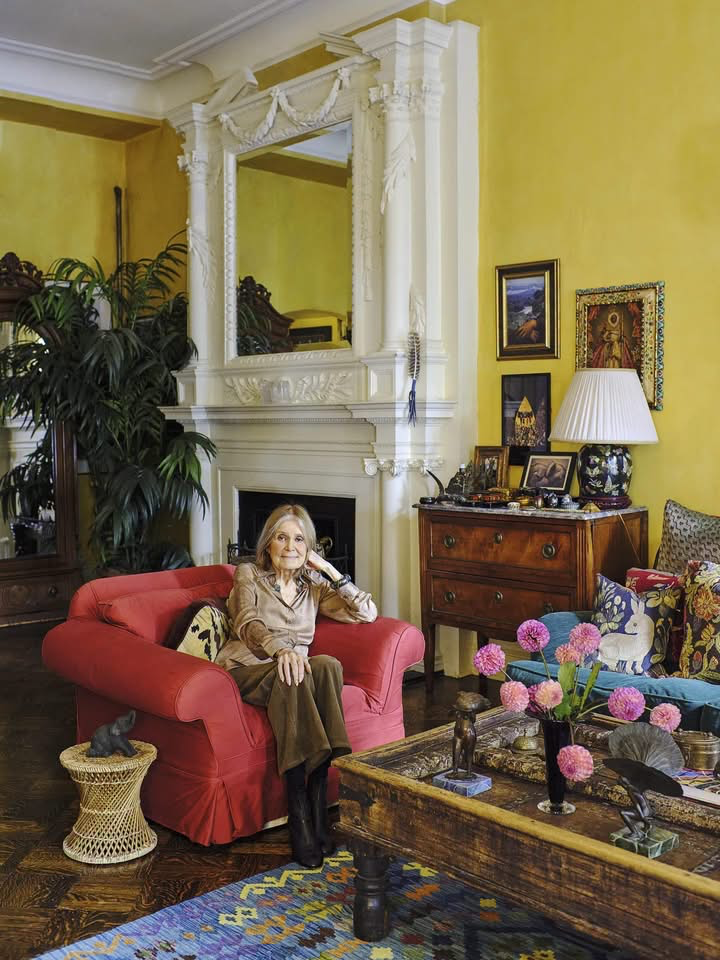
“The truth will set you free, but first it will piss you off.”
—Gloria ❤️
Works Cited:
BIOGRAPHY, “Inside Gloria Steinem’s Month as an Undercover Playboy Bunny,” by Rachel Chang. Updated: September 3, 2026, biography.com newsletter, a part of Hearts Digital Media.
https://www.biography.com/authors-writers/a70820016/gloria-steinem-playboy-bunny-undercover
2. Substack, “Gloria Steinem’s Playboy Bunny Notebook".” by Jillian Hess, English professor at CUNY, September 20, 2026. Includes reprint of her original two-part article.
https://jillianhess.substack.com/p/gloria-steinems-playboy-bunny-notebook
3.“A Bunny’s Tale,” Gloria Steinem- Show Magazine Undercover.hosting.nyu.edu.
https://undercover.hosting.nyu.edu/s/undercover-reporting/item-set/61
4.The Guardian, by Nicholas Mills, “Gloria Steinem's 'a bunny's tale' – 50 years later,” 26 May 2013.
https://www.theguardian.com/commentisfree/2013/may/26/gloria-steinem-bunny-tale-still-relevant-today
5.National Women’s History Museum, “Gloria Steinem,” MLA – by Debra Michals, 2017. Date accessed. Chicago – Michals, Debra “Gloria Steinem.” National Women’s History Museum, 2017. Revised 2026.
https://www.womenshistory.org/education-resources/biographies/gloria-steinem
COMMENTS ON PREVIOUS POSTS
PREVIOUS POST: “’9 to 5’ —Dolly Parton, a Labor Day Tribute,” Written by Anne Andersson, September 4, 2026
—”I just read your CWED tribute to Dolly. Excellent as always! I will look forward to the CWED piece on [Gloria Steinem].”—MW
—”Anne, that was such a wonderful article about Dolly Parton. She was such a generous person, giving time & money to help children and other worthy causes. It is such a loss for all.” —Barbara
— “I loved the post! What an amazing person she was!!! ❤️❤️❤️I loved the part about “The film was directly inspired by a real-life grassroots labor movement called 9to5.” 👏👏👏
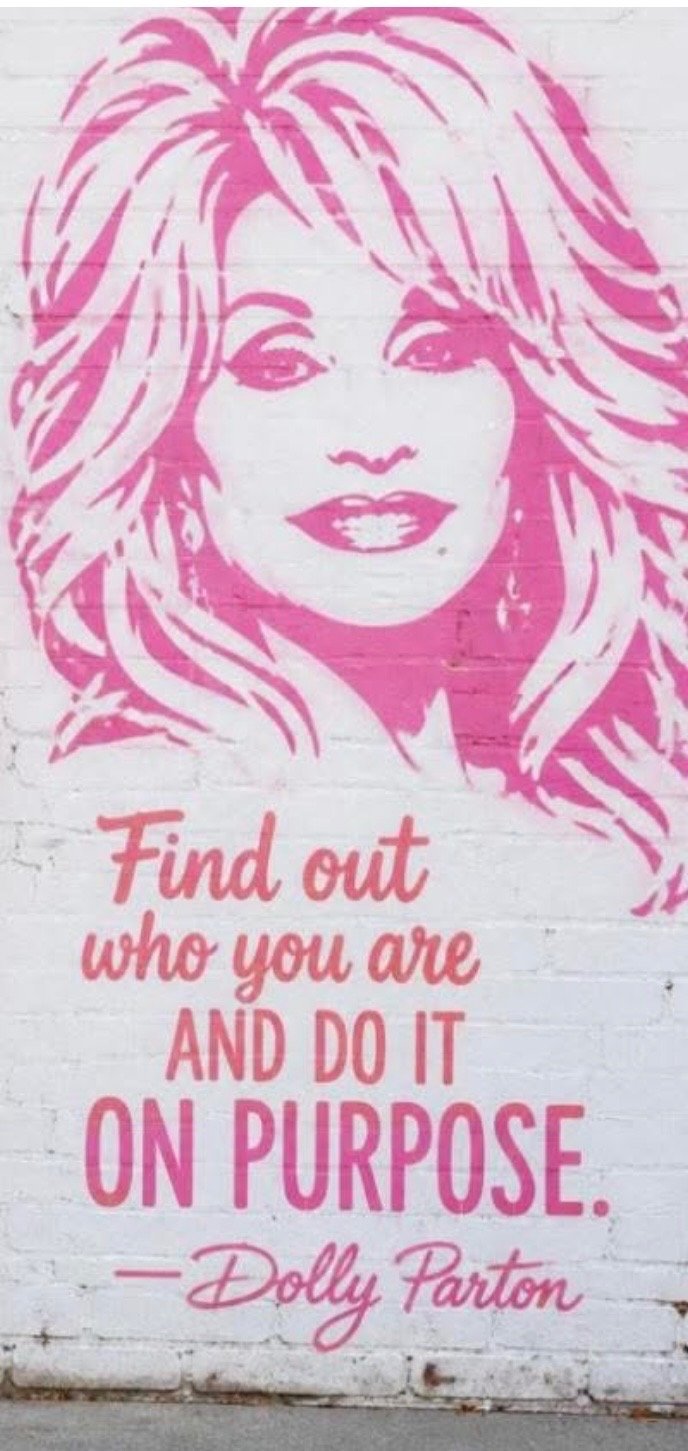
—MA
PREVIOUS POST: “9/11 — 25 years and Counting.” Written by Anne Andersson, September 11, 2026
— Great post! Very moving and thought-provoking.” —CA
—”Thank you. This is just as powerful today as the first time I saw it.” —RE
__”Very moving, Anne. Thank you and thank Sr. Eileen. Brings this day of sad memories to a fitting close. Amen 🙏” —MVT
—”Really powerful! I remember you showing me the Shutterfly book but your post really hits home! 😔❤️ “ —MA
—This was so beautifully written 🙏🏻 —OF
WE ARE:
THE CENTER FOR WOMEN, THE EARTH, THE DIVINE
C:WED
Support our work!