
More of the Greats—Unsung Americans
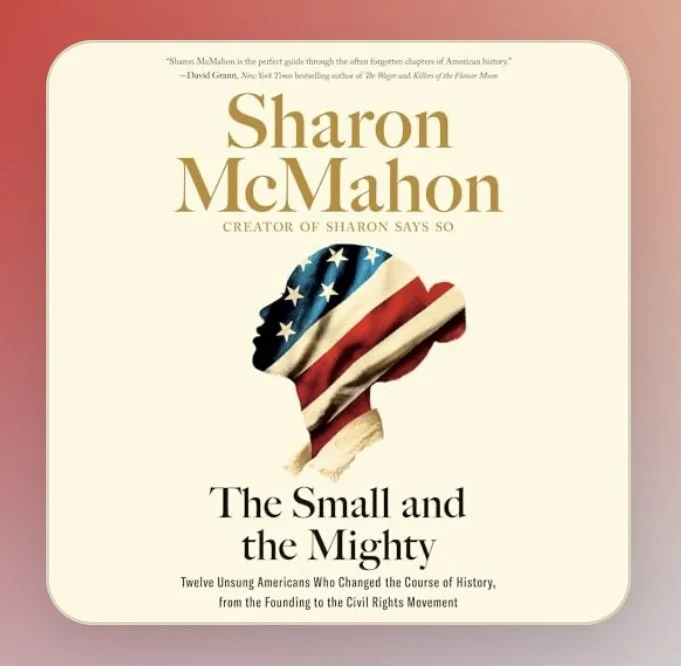
Thank you Maryanne Tuite for adding to our list of Great Americans with your suggestion of the book
by
Sharon McMahon:
The Small and the Mighty: Twelve Unsung Americans Who Changed the Course of History, from the Founding to the Civil Rights Movement,
2024
Penguin-Random House
Actually, I think it might be more appropriate to thank, posthumously, Maryanne’s younger sister Carolynn Tuite who suggested the book to their bookclub.
As Maryanne told me:
“The Small and Mighty was Carolynn’s suggestion but she never got to read it with us, having died November 15th. The group wanted to read it in her honor which touched me. Carolynn was my small and mighty person!
Hope you enjoy the book. Some really unsung heroes of service to our country in varied ways.”
I (Anne) met Carolynn in September, 2025, two months before she passed after losing her battle with cancer. She, Maryanne, and I had attended and graduated from the same all-girls Catholic high school, Carolynn being two years younger than Maryanne and me.
When we met that night in September, we were all attending a milestone celebration of the religious community of sisters, many of whom had been our high school teachers—and some our own classmates. We had the best time chatting all evening. I felt as though I had known Carolynn for just as long as I have known my own classmate, her sister Maryanne.
And so, in honor of the Tuite sisters, Carolynn and Maryanne, here are short summaries of these Great unsung ones whom Sharon McMahon has considered in her book.
Of course, McMahon has included wonderfully extensive stories about each person. Following are my brief highlights, many of them supplemented with Wikipedia information.
1. Clara Brown (1800-1885)
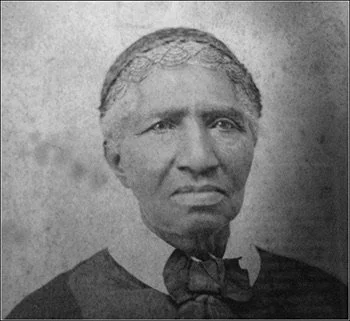
Clara Brown was a former enslaved woman (enslaved until her 50s) from Virginia and Kentucky who became a community leader and philanthropist. She helped formerly enslaved people become settled during Colorado’s Gold rush. She was known as the “Angel of the Rockies” and made her mark as “Colorado’s first black settler and a prosperous entrepreneur.” [1]
2. Virginia E. Randolph (1874-1958)
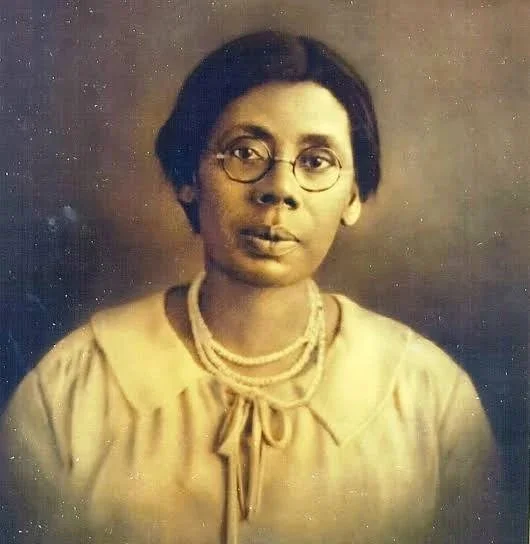
Virginia Estelle Randolph was a pioneering American educator who transformed rural education in Henrico County, Virginia.
Her work is widely associated with vocational education. She was named the United States’ first “Jeanes Supervising Industrial Teacher” by her Superintendent of Schools, Jackson Davis, and she led a program funded by the Jeanes Foundation to upgrade vocational training throughout the U.S. South as her career progressed.
Two schools of the Henrico Public Schools system were named in her honor and in 2009, Randolph was posthumously honored by the Library of Virginia as one of their “Virginia Women in History” for her career and contribution to education. [2]
3. Katharine Lee Bates (1859-1929)
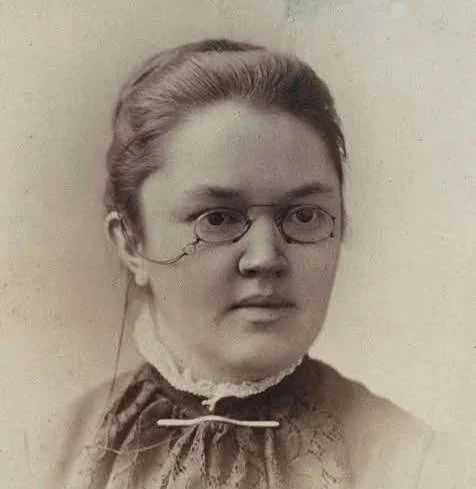
Katharine Lee Bates was an American author and poet, chiefly remembered for her anthem “America the Beautiful,” but also for her many books and articles about social reform, on which she was a noted speaker.
Bates enjoyed close links with Wellesley College, Massachusetts, where she had graduated with a B.A., and later became a professor of English literature. She also achieved an M.A. from Oxford University.
At Wellesley, she helped to launch American literature as an academic specialty, and in writing the first-ever college textbooks on it. [3]
4. Inez Milholland (1886-1916)
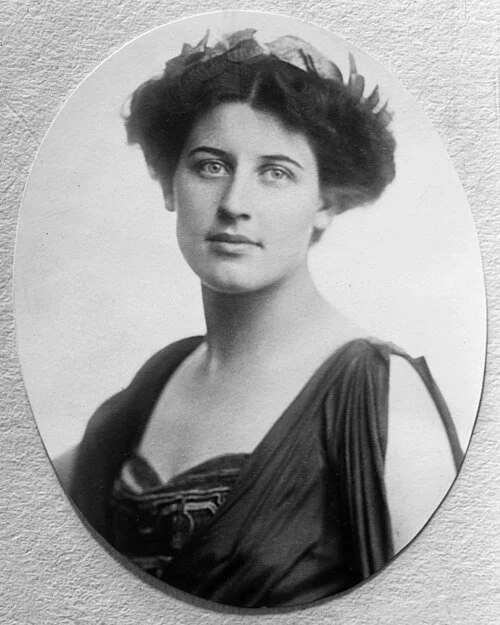
Inez Milholland, from her college days at Vassar College, campaigned aggressively for women’s rights.
She was a prominent public face of the women's suffrage movement who famously led the dramatic Woman Suffrage Procession in Washington, DC while riding on horseback.
On March 3, 1913, the day before Woodrow Wilson's presidential inauguration, thousands of women marched along Pennsylvania Avenue in this procession, which had been organized by the National American Woman Suffrage Association (NAWSA).
Alice Paul and Lucy Burns, the newly-appointed chairs of NAWSA's Congressional Committee, choreographed the procession to illustrate women's exclusion from the democratic process.They insisted that it follow the same route that the inaugural parade would take the next day.
The purpose of the procession was winning passage of the Susan B. Anthony Amendment, the historical name for the 19th Amendment to the U.S. Constitution, which would grant women the right to vote.
Drafted by Susan B. Anthony and Elizabeth Cady Stanton in 1878, the 19th Amendment was ratified on August 18, 1920, legally prohibiting the federal and state governments from denying any citizen the right to vote based on sex.
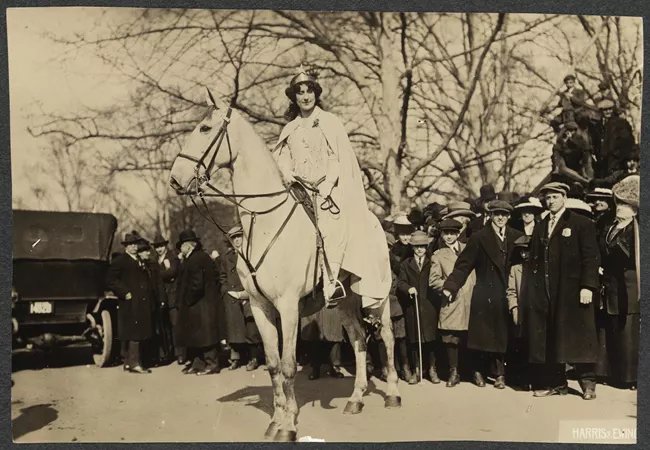
Inez Milholland riding Grey Dawn as the herald of the Woman Suffrage Procession, March 3, 2013.
Photo: Harris & Ewing. Records of the National Woman’s Party, Library of Congress
Milholland was also a labor lawyer and a war correspondent. She died of pernicious anemia at age 30 while on a speaking tour, traveling against medical advice. [4]
5. María de López (1881-1977)
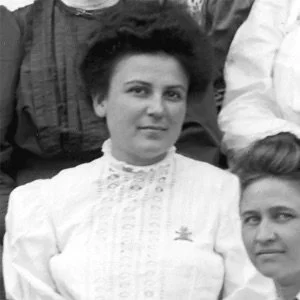
María Guadalupe Evangelina de López was a California educator who led Spanish-language suffrage campaigns and drove ambulances during World War I.
She was an American activist in the Women’s Suffrage movement, serving as a Spanish-language translator during the 1911 state-wide campaign.
She is credited as the first person to make speeches in California on equal suffrage in the Spanish language while also giving speeches on suffrage in English. [5]
During World War I, she temporarily gave up her teaching job and moved to New York City where she trained as an ambulance driver.
She also learned to fly a plane and served in the ambulance corps in France. She was later cited for her bravery by the French government. [6]
6. Rebecca Brown Mitchell (1834-1908)
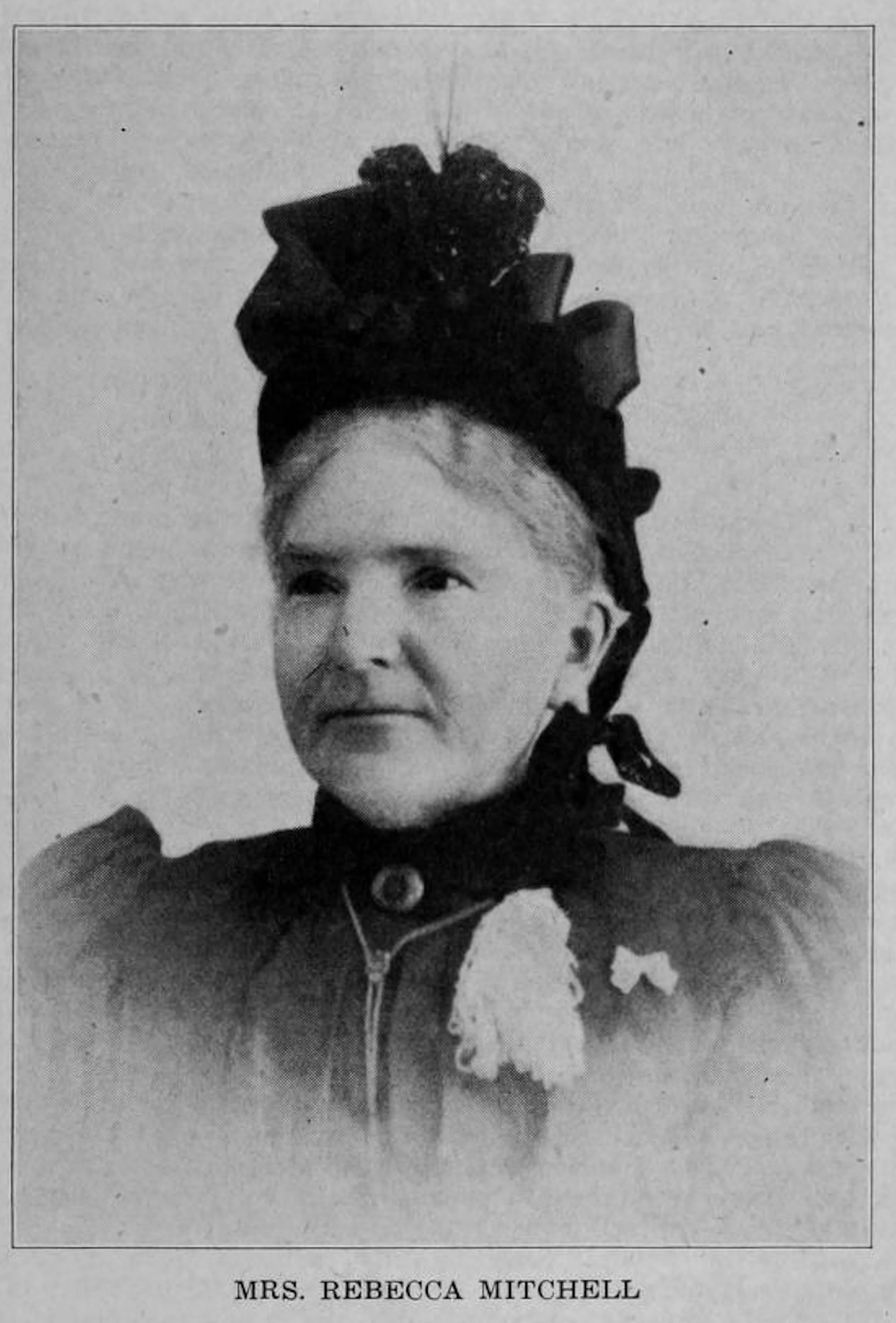
Rebecca Brown Mitchell was a missionary and teacher who advocated for women's suffrage. She served as the Idaho Legislature’s first female chaplain and helped the state recognize women’s right to vote.
From EastIdahoNews.com. October 10, 2024 —Article by Rett Nelson, IDAHO FALLS:
When Rebecca Brown Mitchell arrived in Eagle Rock with her teenage daughter, Bessie, they had nothing but the clothes on their backs and a few belongings.
Rebecca’s husband had died 26 years earlier leaving her a widow at age 22 with two young sons; [she later married her husband’s brother and they had two daughters, one of whom died at age 5].
Laws prevented women from owning property at the time, and when her husband died, it meant their home and everything else they’d acquired became the property of the state. This put Mitchell in a precarious situation.
With the exception of a Bible and a hymnal—her only possessions exempt from reclamation, according to her personal history—she was forced to buy back her own property from the state of Illinois.
In her book, The Small and the Mighty, Sharon McMahon describes Mitchell as an “audacious woman” who found a place to live in Eagle Rock by going door to door and asking for help.
Eventually, a man took pity on her and offered his shed for shelter. She started teaching school in the shed she was living in to make ends meet. She also taught Sunday School.
For the next two years, she saved money to build the city’s first chapel, which also housed a school. The chapel later became First Baptist Church.
Mitchell’s involvement in the women’s rights movement came from her own experience. She came from a situation in which women had no rights, and were subject to men.
Mitchell had no way of knowing [when she first arrived] that in just a few years, her efforts would result in the town’s first church building and Idaho becoming one of the first states recognizing women’s right to vote.
7. Anna Thomas Jeanes (1822-19070
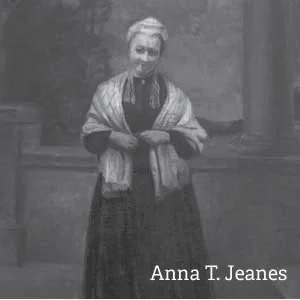
Anna T. Jeanes was born in Philadelphia, PA and was a wealthy American Quaker philanthropist and educator.
She is best remembered for establishing the Jeanes Fund, which helped fund and improve rural elementary schools for Black children in the American South.
The fund educated and hired Black teachers and traveling supervisors for rural schools, and improved African American school facilities.
The "Jeanes teachers" traveled the South, providing vital support for the education of Black students. In 1937 the group merged with several charities sharing similar missions, and became the Southern Education Foundation. [7]
Virginia Randolph, who is included as one of Sharon McMahon’s 12 Small and Mighty Unsung Americans—and whose bio is #2 above—was named the United States’ first Jeanes Supervising Industrial Teacher by her Superintendent of Schools in Virginia. Randolph also led a program funded by the Jeanes Foundation to upgrade vocational training throughout the U.S. South.
8. William James Edwards (1869-1950)
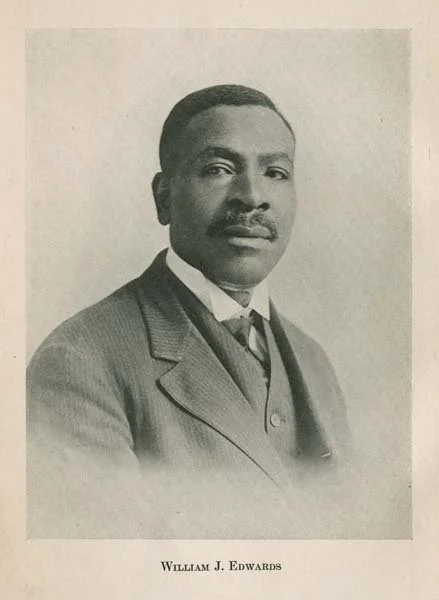
William James Edwards was an Alabama educator who escaped poverty and attended Tuskegee Institute.
He later founded Snow Hill Normal and Industrial Institute, which was also known as the Colored Industrial and Literary Institute of Snow Hill. It was a historic African-American school in Snow Hill, Alabama.
Edwards wrote Twenty-Five Years in the Black Belt about his experiences. In the book’s preface he wrote:
In bringing this book before the public, it is my hope that the friends of the Snow Hill School and all who are interested in Negro education may become more familiar with the problems and difficulties that confront those who labor for the future of a race.
I have had to endure endless hardships during these twenty-five years, in order that thousands of poor Negro youths might receive an industrial education - boys and girls who might have gone into that demoralized class that is a disgrace to any people and that these friends may continue their interest in not only Snow Hill but all the schools of the South that are seeking to make better citizens of our people.
I also hope that the interest may be sustained until the State and Nation realize that it is profitable to educate the black child as well as the white.
9. Julius Rosenwald (1862-1932)
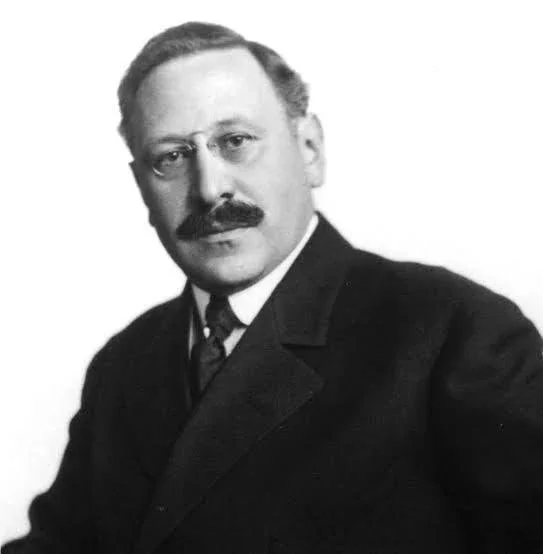
Julius Rosenwald was a Jewish American business executive and philanthropist. He was the long-time president and an owner of Sears, Roebuck and Company.
His Rosenwald Fund donated millions in matching funds to promote Black American education. Together with Booker T. Washington, they built close to 4,000 schools, many of them in the segregated south and provided fellowships to close to one thousand grantees.
Rosenwald’a impact on America, via the retail revolution he created through Sears, Roebuck & Company, as well as his wide-ranging philanthropy, had remained largely unknown, much having to do with his insistence to remain anonymous by withholding his name from the projects he funded.
However, Rosenwald, a 2025 film directed by Aviva Kempner, documents his life and philanthropy.
And he is [remembered] today through many books, such as Julius Rosenwald: The Man Who Built Sears, Roebuck and Advanced the Cause of Black Education in the American Southby Peter M. Ascoli; and also Julius Rosenwald: Repairing the Worldby Hasia R. Diner. [8]
10. Booker T. Washington (1856-1915)
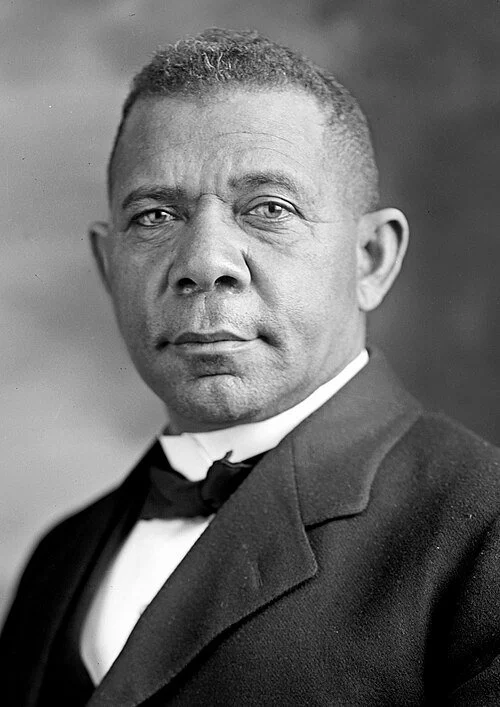
Booker Taliaferro Washington was a renowned American educator, author, and orator who founded the Tuskegee Institute (now Tuskegee University), an institute for Black higher education in Alabama.
Born into slavery on April 5, 1856 in Hale's Ford, Virginia, Booker T. Washington was freed when U.S. troops reached the area during the Civil War.
As a young man, he worked his way through Hampton Normal and Agricultural Institute and attended college at Wayland Seminary.
In 1901, Washington wrote an autobiography, Up From Slavery, which became a major text.
He was a key proponent of African-American businesses and one of the founders of the National Negro Business League.
He was an influential leader who had the ear of the powerful in the U.S. of his day, including presidents.
Washington called for Black progress through education and entrepreneurship, rather than trying to challenge directly the Jim Crow segregation and the disenfranchisement of Black voters in the South.
Many did not agree with that vision. Washington's legacy has been controversial in the civil rights community.
In an essay entitled, “Of Mr. Booker T. Washington and Others,” W.E.B. Du Bois cticized Washington’s accommodationist program, saying that it asked blacks to give up political power, insistence on civil rights, and higher education for Negro youth. [9]
However, in the late twentieth century, more nuanced perspectives about his actions by scholars and historians interpreted him more positively.
11. Daniel Inouye (1924-2012)
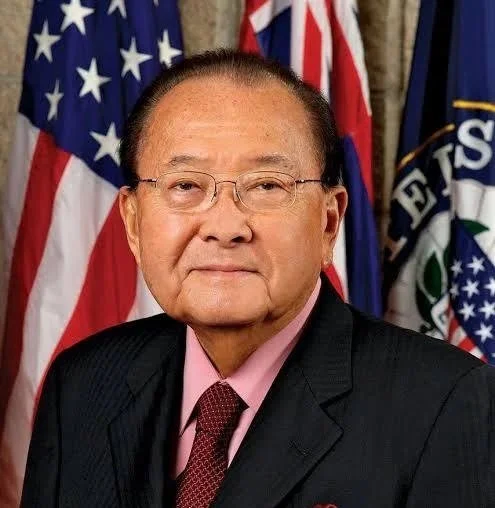
Daniel K. Inouye was a U.S. Senator who was a celebrated war hero who had lost an arm during World War II.
When Hawaii achieved statehood in 1959, Inouye was elected as its first member of the U.S. House of Representatives.
He was elected to the U.S. Senate in 1962, and represented Hawaii from 1963 until his death in 2012.
A member of the Democratic Party, he was the most-senior member of the Senate when he died, and is the longest-serving U.S. senator in history. He never lost an election in 58 years as an elected official, and he exercised an exceptionally large influence on Hawaii politics. [10]
A Disappointment
I discovered a dark spot in Daniel Inouye’s story that Sharon McMahon does not cover because she focuses exclusively on his early life, his discovery of the first casualties at Pearl Harbor, and his distinguished combat record in World War II.
However…
I was disturbed and disappointed in Inouye to read about reports of allegations of sexual misconduct by at least 10 women in the 1990s. [11]
Because the women would not testify or file formal charges, the U.S. Senate Ethics Committee dropped its investigation in 1993. [12]
Years later, in 2014 [13] and 2017 [14], additional allegations surfaced, in many cases prompted and encouraged by the courageous outspokenness of survivor women as part of the #MeToo Movement.
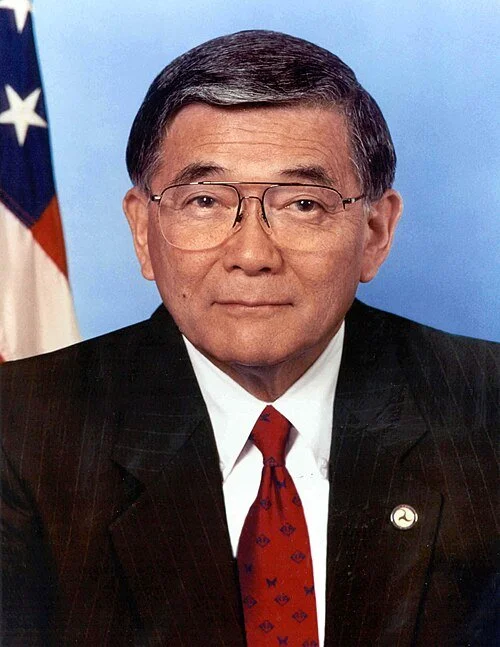
12. Norman Mineta (1931-2022)
12. Norman Mineta (1931-2022)
Norman Yoshio Mineta was an American politician and Cabinet member. He was born in San Jose, California to Japanese immigrant parents who were barred from becoming American citizens at that time by the Immigration Act of 1924.
During World War II, the Mineta family was interned for several years at Area 24, 7th Barracks, Unit B in the Heart Mountain Relocation Center near Cody, Wyoming, along with thousands of other Japanese immigrants and Japanese Americans.
Mineta was a driving force in the House of Representatives behind the passage of H.R. 442, which became the Civil Liberties Act of 1988, a law that officially apologized for and redressed the injustices endured by Japanese Americans during World War II.
Mineta served in both the administrations of President Bill Clinton, a Democrat, as commerce secretary, and President George W. Bush, a Republican, as transportation secretary, where he oversaw aviation security during 9/11 and its aftermath.
When Bush announced Mineta as his pick for transportation secretary in 2001, Mineta became one of few people to serve in both Democratic and Republican Cabinets.
Bush wrote: “As I said when presenting him with the Presidential Medal of Freedom, ‘Norm has given his country a lifetime of service, and he’s given his fellow citizens an example of leadership, devotion to duty, and personal character.’” [15]
RESOURCES:
Wikipedia: Clara Brown. Shirley, Gayle C. (2002) More than Petticoats. Twodot. p.1 (n14)
Wikipedia: Virginia Randolph.“Virginia Estelle Randolph (1874-1958)” Library of Virginia
Wikipedia: Katharine Lee Bates
Wikipedia: Inez Milholland
Wikipedia: María de López. Helton, Jennifer (15 August 2019). “Woman Suffrage in the West.” National Park Service.
Wikipedia: María de López. “Los Angeles citywide history context statement, Context: Women’s Rights in Los Angeles” Survey LA Los Angeles Historic Resources Survey October 2018.
Wikipedia: Anna T. Jeanes. “150 Year Timeline” Southern Education Foundation.
Wikipedia: Julius Rosenwald: Diner, Kasia (2017). Julius Rosenwald: Repairing the World. Yale University Press.
Yale-New Haven Teachers Institute. Gibson, Robert A., “Booker T. Washington and W. E. B. DuBois: The Problem of Negro Leadership.”
Wikipedia: Daniel K. Inouye.
Honolulu Civil Beat, Denby Fawcett: “Would Dan Inouye Have Survived the 1992 Sex Allegations Today?” Honolulu Civil Beat, November 28, 2017.
Wikipedia: (95) (96). Washington Post, “Inouye Review Dropped” by Senate Ethics Panel, by Kenneth Cooper, April 7,1993. Also, “Do ‘Smart Keep Silent’ on Inouye Charges?” Desert News, (Associated Press), December 5, 1992.
Wikipedia: (98) Multiple sources, such as “NYT: Inouye made Gillibrand quip,” Jonathan Topaz, Polito, 9/22/2014.
Wikipedia: (99) Denby Fawcett: “Would Dan Inouye Have Survived the 1992 Sex Allegations Today?“ Honolulu Civil Beat, November 28, 2017.
George W. Bush Presidential Center; Wikipedia: Norman Mineta
IN YOUR OWN WORDS:
Previous Post: "Summer Solstice 2026 Meditation,” Written by Anne Andersson June 12, 2026
— Dear Anne, Thanks for your wonderful account of the summer solstice. I've always thought that we might learn some valuable things from the pagans...and from others who live closer to nature. You really are an excellent writer….Blessings on your good work. —LB
—Thank you Anne. The information that you provided is very helpful, as always. It is important for us to appreciate and experience as we meditate on our many blessings. —RE
Previous Post: "America at 250🗽,” Written by Anne Andersson June 26, 2026
—Great post! Really comprehensive list. An uplifting reminder that is so needed now! 👏👏👏 —MA
Previous Post: "Mariska,” Written by Anne Andersson July 10, 2026
—Anne, again, another woman of value whom I know but was unaware of all the good she does. Thank you for your continued ‘strike-up’ conversations with others. We learn so much when we do. I wondered if you knew of this excellent book The Small and the Mighty: Twelve Unsung Americans Who Changed the Course of History, from the Founding to the Civil Rights Movement by Sharon McMahon who is a longtime high school government and law teacher. This is her first book. Thank you, again, Anne, for your unique researches of people, places and events. —Maryanne Tuite
—Nice post on Mariska Hargitay and her work for rape victims. [My wife] is an empath as well. —JP
—This was such a great article about a woman who is giving so much of herself to help other people. I hope that by reading all the groups she is involved in will help people realize that they are not alone and there is help for them. Another informative article. Thanks Anne! —Barbara McCarthy
—This Is great! For sure I will read it again! —LB
—Thank you Anne. —RE
—Thanks so much for the info. It was very interesting. —MK
—Hi Anne, another beautiful article! You write sooo well. I do know about Mariska. She didn’t even know her birth father was not the body builder named Hargitay. I remember the accident, the press only sensationalized the fact that they were decapitated, I saw no mention of the children. Keep up the great work. I know I must donate again.❤️ —MH
REMEMBER THE WOMEN!
Once again, the Epstein survivors have been humiliated, this time by someone seeking to become the Attorney General of the U.S.
The nominee was “forced” to meet with the women (previously he had refused to do so) for the sole purpose of obtaining the positive vote of a senator who had made meeting with the women a requirement of getting his “yes” vote in the AG’s confirmation hearings.
Within hours of that stipulation, the AG nominee suddenly had the meeting with the women set up and he spoke with the survivors who were present.
But the women’s reporting on the meeting was negative:
Survivors like Jess Michaels stated they were treated with condescension and that the session felt like a superficial box-checking exercise rather than a genuine engagement.
Annie Farmer and other attendees voiced that the meeting made them even more confident in opposing [his] confirmation, calling him abrasive and intentionally non-committal.
Participants noted that he avoided answering questions regarding Ghislaine Maxwell’s transfer to a lower-security prison and failed to address why past investigative leads were ignored.
Dani Bensky stated that his advice to restart complaints with the FBI felt like a deliberate attempt to pass the buck and claim the office is powerless.
C:WED WISH LIST:
KINDLY DONATE
BY
CLICKING ON THE BUTTON BELOW!
WE ALWAYS SO APPRECIATE YOUR ASSISTANCE!