
Mariska
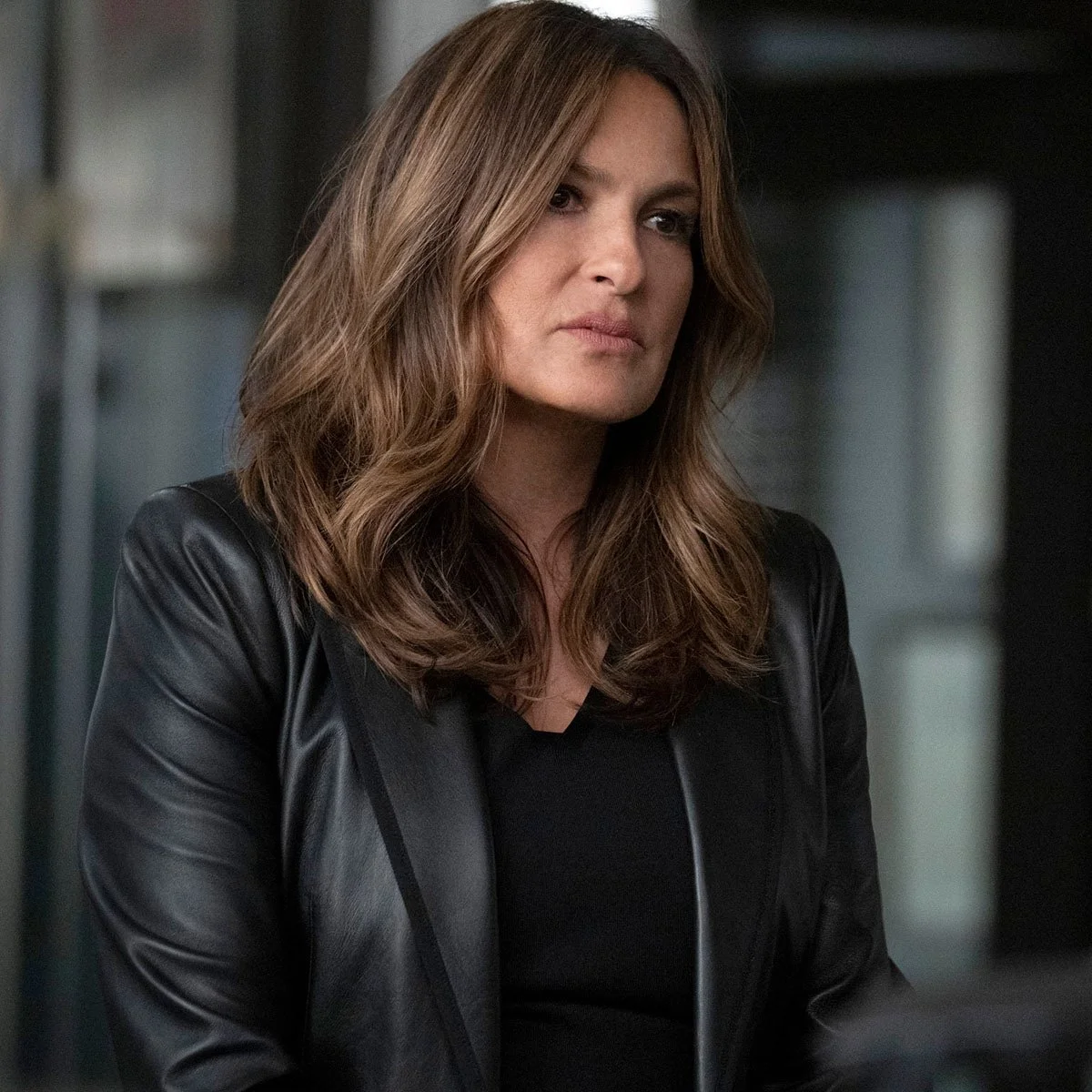
She has been portraying a detective-turned-captain on a television crime series for 27 seasons.
She has not left the series for better pastures!
Digression: Well, except for a brief six-week stint just now (May 26 to July 5, 2026)—making her Broadway debut in the audience-interactive, one-person show Every Brilliant Thing, succeeding Daniel Radcliffe of Harry Potter fame, in the role.
I saw her performance two weeks ago. The play, although dealing with depression, suicide, and grief, was also about hope and beauty. It was creative, sensitive, and witty. I found the show itself, and particularly with this actor in the role, to be superb.
In fact, her role in the TV crime show holds the record for the longest-running character in American primetime drama.
From all visible cues, she sees her work, in front of, behind, and beyond the cameras, as a calling, a mission.
In her role as Captain Olivia Benson of NBC’S Law & Order: Special Victims Unit (which she has portrayed since the show began in 1999), she has consistently played a compassionate advocate for female and male victims of sexual assault: listening to them, believing them, supporting them, investigating their perpetrators, and being present in any court proceedings.
She became a certified rape crisis counselor for her role, and through that portrayal, she has become a passionate real-life advocate for survivors of sexual violence.
She is Mariska Hargitay, the 62-year old daughter of Hollywood icon Jayne Mansfield and bodybuilder Mickey Hargitay.
Born January 23, 1964, Mariska now primarily lives in a large apartment in New York City with her husband, actor Peter Hermann. The couple also owns a sprawling property in East Hampton, New York.
Mariska has been married to Peter Hermann since 2004. They have three children, August, 19, Amaya, 15, and Andrew, 14, and their dog Kaia and cat Karma.
Mariska’s mother, Jayne Mansfield, died tragically in a car crash in 1967 when Mariska was three-and-a-half years old.
She was in the car and was discovered only when her two older brothers, Zoltan and Miklos, Jr., ages 6 and 8, respectively, informed the rescuers that their little sister was missing.
The rescuers went back to the car and found the child wedged under the front seat. She still has a zigzag scar on her forehead from her hairline to above her right eyebrow as a result of the tragedy.
As to that scar, there is a current video clip online of Mariska recalling the time recently when Daniel Radcliffe was ending his role in the Broadway show, as she was preparing to take over the role in his place.
She joked with him, saying that she was “the real Harry Potter” because she had an authentic Harry Potter-like scar on her forehead.
He was in awe of the similarity of her scar to the one his character in the blockbuster films had sported. That was their bonding moment, she said, and they have remained good friends.
In her 2025 documentary about her mother, My Mom Jayne, Mariska recounts the effect the loss of her mom at age 3 has had on her life.
She explains that making the film was cathartic for her. Her mom, Jayne Mansfield, had wanted to be a stage actress (she had been on Broadway at first), but her physical beauty and sexual attributes defined, and limited, her to being cast in the style of Marilyn Monroe.
Mariska said she had been embarrassed by her mom, especially when she learned from her dad that Jayne had wanted to be a serious actor.
The coincidence of the release of Mariska’s film about her mom last year, and now her own quite unexpected debut on the Broadway stage, she says, have brought her mother closer to her in an uncanny way.
And… Just announced this week on July 7, Mariska Hargitay will be the host of the 2026 78th Emmy Awards in September, the first woman in 15 years to serve as host of this event.
Suddenly, she is sprouting up all over the news.
There is, however, another private side to Mariska Hargitay that is only barely mentioned in these pop-up news stories these days.
Mariska, beyond being an Emmy- and Golden Globe-winning actor (and now also a Broadway stage actor), as well as a director, and filmmaker—and who also serves as an executive producer and frequent director of the Law & Order: SVU show—is a dedicated philanthropist and activist.
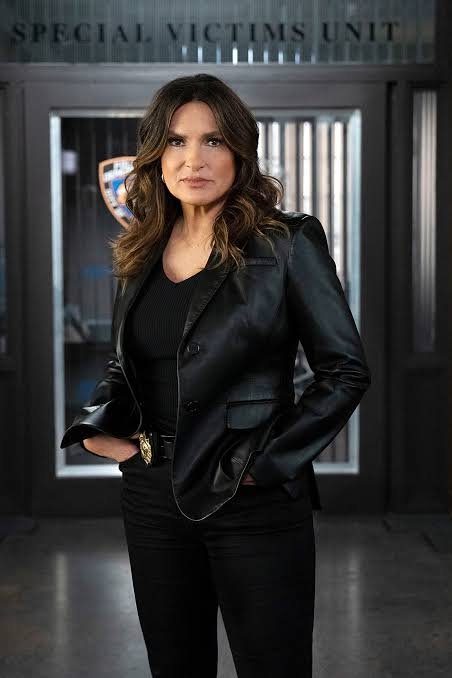
Mariska Hargitay as Captain Olivia Benson on Law & Order: Special Victims Unit (SVU)
In my last post, America at 250🗽, I featured Mariska Hargitay as the first person on my own personal list of the people who have made, or are making, America Great.
Why?
For starters:
In addition to her loyalty to her role on SVU, in an interview with the American broadcaster and journalist, Hoda Kotb, Mariska referred to herself as an empath. (She included Hoda in that identity as well.)
What Does It Mean to Be an Empath?
An empath is a person who feels the energy, emotions, and even physical sensations of others as if they were their own. Empaths actually absorb those emotions, often involuntarily. This is unlike general empathy, which allows us to understand others’ feelings.
There are different types of empaths:
Emotional empaths feel others’ joy, sadness, or anxiety deeply.
Physical empaths may sense others’ pain or fatigue in their own bodies.
Intuitive empaths pick up on unspoken needs, intentions, or energy shifts.
—from American Behavioral Clinics
What else has Mariska Hargitay been up to that makes her a Great Person?
Hargtiay is the founder and president of the Joyful Heart Foundation, an organization she established in 2004 to provide support to survivors of sexual assault, domestic violence, child abuse, elder abuse, and human trafficking.
As a certified rape counselor, she has engaged in initiatives to support domestic violence shelters and raise awareness about untested rape kits.
In 2024, she publicly disclosed that she is a rape survivor. As a rape survivor, she has called for an end to the stigma surrounding sexual assault.
In a 2024 essay for People, she wrote:
Tell someone you've survived cancer, and you're celebrated. I want the same response for sexual assault survivors. I want no shame with the victim.
Our Founder, Mariska Hargitay
From The Joyful Heart Foundation website:
“Joyful Heart is about the courage to heal, and our programming is about honoring that brave decision.”
Together, we are creating a more compassionate world that supports survivors of sexual assault, domestic violence and child abuse on their path to justice and healing.
A Message from Our
Founder
It all started for me when I began my
work on
Law & Order: Special Victims
Unit.
In my research for my role, I
encountered statistics that shocked me:
Every 68 seconds, someone is sexually assaulted in the U.S.
In the United States, child protective services referrals involve 7.2 million children each year
Intimate partner violence alone affects more than 12 million people every year
I was also getting letters from viewers who were disclosing their stories of abuse to me.
Normally, I’d get letters saying, “Hi, can I please have an autographed picture,” but now it was different: “I’m 15 and my dad has been raping me since I was 11 and I’ve never told anyone.”
I remember my breath going out of me when the first letter came, and I’ve gotten thousands like it since then.
That these individuals would reveal something so intensely personal—often for the very first time—to someone they knew only as a character on television demonstrated to me how desperate they were to be heard, believed, supported and healed.
Although every survivor’s story is their own, some common themes stood out in what they shared.
The first was pain—I was struck again and again by the depth of the betrayal these people had suffered, how they defined themselves by what they were enduring and how devastating violence and abuse are.
The second theme was isolation. The word “alone” appeared again and again. Whether a survivor was writing from midtown Manhattan or from a ranch in Waimea—they felt alone. They could have no one around or everyone around —it didn’t matter—they were isolated in shame and in the fear of the consequences of speaking out.
And lastly, the letters spoke of courage. And actually, the letters themselves were incredible, awe-inspiring acts of courage. I was holding courage in my hands, because the act of reaching out for help—the act of breaking the silence that imprisons so many survivors— is deeply courageous.
I obviously had my role to play on television, but I felt a great responsibility to these brave women and men and wanted them to know that they had been heard and that they could have hope.
I studied the subject, trained to become a crisis counselor and used my visibility as an actress to become an advocate. I knew I wanted to play a role in healing that pain, ending the isolation and honoring the great courage survivors were showing by reaching out for help.
The result was the Joyful Heart Foundation.
I started the Joyful Heart Foundation in 2004 to help survivors of sexual assault heal their minds, bodies and spirits and reclaim their lives.
The pursuit of justice can be an integral part of that healing. Even though the landscape around these issues has changed so dramatically—thanks both to years of advocacy and to many brave new voices—we all know that it takes courage for a society to turn toward these issues, to risk talking about them.
I am proud to stand with survivors, advocates and members of the criminal justice community to send a powerful message to other survivors:
We hear you. You have suffered enough. Your healing—and pursuit of justice—are our priorities.”
Joyful Heart Foundation
www.joyfulheartfoundation.org
320 7th Avenue, #161
Brooklyn, NY 11215
212-475-2026
info@joyfulheartfoundation.org
Note: The Safety Warning that comes up when you click on the Joyful Heart website is directed ONLY to someone who may be in danger from a perpetrator, most likely an intimate partner.
If this, hopefully, does not pertain to you, go right ahead and continue to The Joyful Heart Foundation website!
~~~
Hargitay says: When it comes to supporting survivors of abuse, domestic violence or sexual assault, the first thing she tells them is: “Talk about it.”
“Get the taboo off the survivor and put it on the perpetrator where it belongs,” she explains. “The stigma belongs on the perpetrator.”
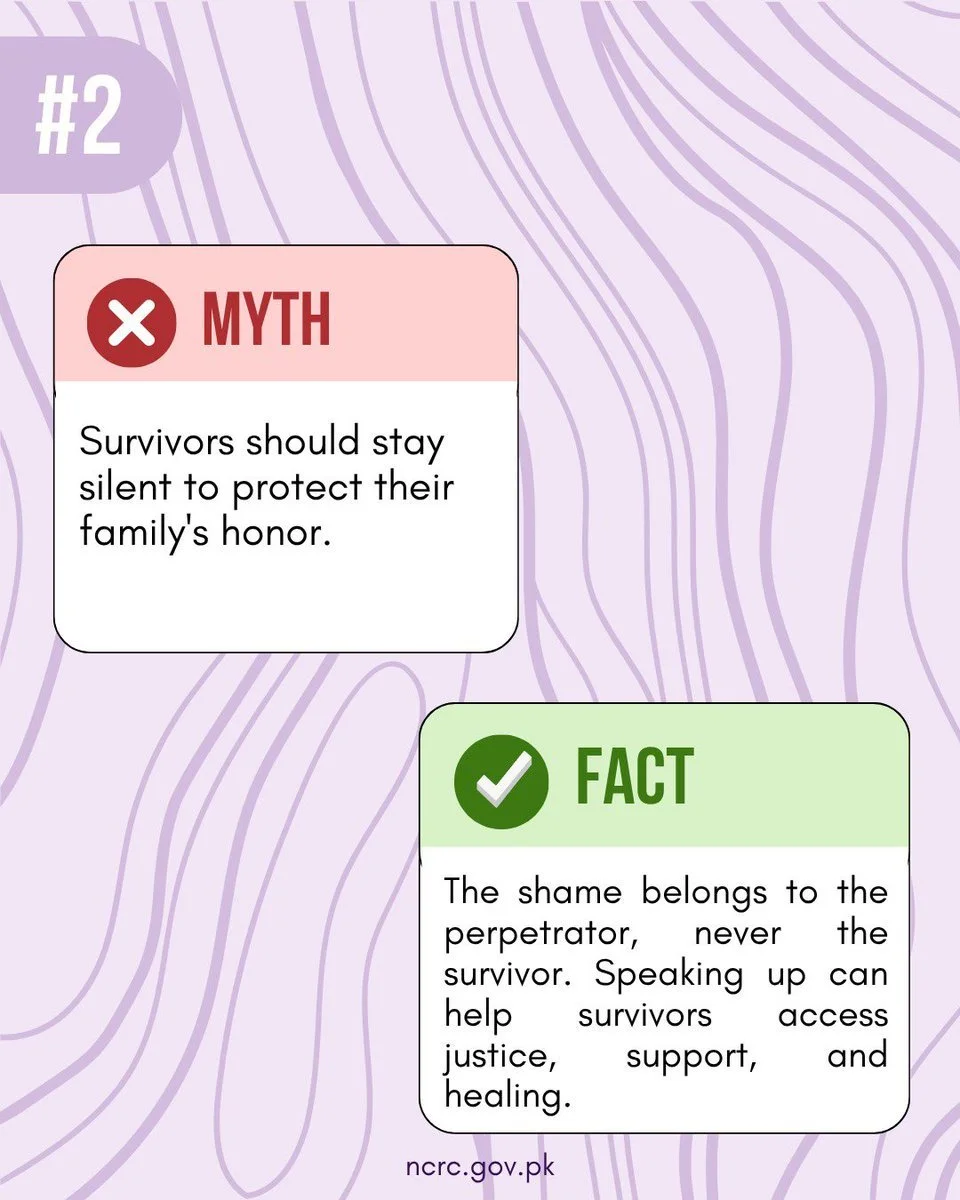
“The way we talk about it is the way we shed light on it,” Hargitay adds. “We bring it out into the conversation because then it brings a survivor out of isolation. And that is one of the hardest parts about being a survivor, is isolation.”
A Major Initiative of the Joyful Heart Foundation:
End the Backlog
Through Joyful Heart, Hargitay spearheaded this initiative to eliminate untested rape kits nationwide, successfully achieving reform across all 50 states.
A Momentous Step in Ending the
Rape Kit Backlog:
All 50 States Now Have at Least One
Pillar of Rape Kit Reform
End the Backlog exists to eliminate the backlog of untested rape kits and prevent a backlog from occurring again.
Survivor’s Story: Joanie
“I’m giving you 19 years for the 19
years Joanie had to wait for you to be
brought to justice.” —Statement by a judge
Read Joanie’s story here.
What is a rape kit?
In the immediate aftermath of a sexual assault, a victim may choose—or may be asked—to undergo a forensic examination to collect any evidence left behind in the assault.
A doctor or nurse will conduct the four-to-six-hour examination, and will preserve this evidence in a sexual assault evidence collection kit, commonly referred to as a rape kit.
If a survivor chooses to report the rape to the police, the evidence in the rape kit can be one very powerful tool to bring a perpetrator to justice.
With the backlog, the kits are not being analyzed in a timely manner. This leaves perpetrators undiscovered, and therefore unaccountable. They are, in effect, free to continue injuring others.
Joyful Heart’sEnd the Backlog program collaborates with diverse partners to make fundamental reforms that will safeguard survivors’ wellbeing and support their varied paths to seeking justice.
My Personal Comment: When I attended the Every Brilliant Thing performance, the woman seated next to me and I struck up a conversation.
She was from South Africa and was working with the United Nations. She knew about Mariska’s Joyful Heart Foundation and its End the Backlog program.
She said there is the same problem of backlog of rape kits in her country as well.
She also said that in her global travels, she has found that Law & Order: SVU is watched worldwide. She wondered if Mariska even realizes that “she is known all over the world.”
The Joyful Heart Foundation’s Partnership
with Purina
(Purina’s Motto: “Your pet, Our passion”)
Hargitay also teamed up with Purina, in partnership with the RedRover nonprofit, on the brand’s Purple Leash Project, which helps domestic violence shelters across the U.S. become pet-friendly.
Purple Leash Project.
In an interview on the Today Show, Hargitay spoke about her close bond with her own animals. She related that she was interested in the Purple Leash Project because the statistics involving domestic abuse survivors and their pets stunned her.
Nearly half of survivors delay leaving an abusive situation because they cannot take their pets with them, and less than 20% of domestic violence shelters in the U.S. accept pets, according to Purina.
“So many people’s animals are truly their lifelines, and they have almost a life-saving quality. You can’t even put into words, I think, the relationship between a person and their animal,” Hargitay says.

She has two animals of her own at home: a dog, Kaia, and a cat, Karia. “I’m so close with my animals,” Hargitay explains.
“There’s just a deep connection that animals have. They know when you’re sick, they know when you’re upset, they are happy to see you in a way that nobody else is,” she adds, laughing.
“They’re such a huge part of a survivor’s sense of safety because we know that a survivor’s healing journey, even after the abuse has stopped, can last for years and even decades, depending on the support that they get,” she continues.
“But we also know that animal companions are often a huge part of a survivor’s sense of safety and comfort: two of the most important ingredients in healing.”
Hargitay notes there are “so many psychological, physical and systemic barriers for abuse survivors to achieve safety.” Just having to decide between their own safety and the safety of their pets just shouldn’t be one of them,” she says.
~~~
The Joyful Heart Foundation also looks at:
Image-Based Abuse
The Image-Based Abuse Initiative seeks to use legislative tools, awareness campaigns and advocacy to establish a framework for addressing online exploitation and supporting those affected. The initiative operates on the fundamental principle that everyone deserves autonomy over their body and image.
What is image-based abuse?
Image-based abuse is a form of technology-facilitated abuse, which involves the use of an individual’s intimate image to harm, manipulate and control them by distributing, or threatening to distribute, intimate images without that individual’s consent.
These intimate images can be real photographs or videos, digitally generated synthetic images or videos, or both.
Forms of Image-based abuse:
—Non-consensual distribution of intimate images (NDII)
—NDII is self-explanatory.
—Synthetic intimate images aka deepfakes, fake nude apps, digital forgeries
—Synthetic intimate images are a major personal violation that happens when someone uses AI to insert a person’s face or other distinguishing characteristics into explicit content without their consent.
Sextortion
—Sextortion happens when someone threatens to share real or synthetic private and sensitive material like photos or videos unless the victim gives in to their demands, such as giving them money or sexual favors. It’s a form of blackmail.
Cyberflashing
—Cyberflashing is when someone sends unsolicited and unwanted explicit images via digital devices, often as a form of harassment.
Video voyeurism
—Video voyeurism is the act of secretly recording or watching someone in a private or intimate setting without their consent, often for personal pleasure or to exploit their privacy. It can occur through surveillance cameras, hidden devices or unauthorized recordings.
~~~
Also from the Joyful Heart Foundation:
Heal the Healers
Helping alleviate the effects of secondary trauma for the long-term well-being of professionals who support survivors.
The Heal the Healers Grantmaking Program provides critical support for secondary trauma among professionals working on the front lines of survivor-centered services.
People working on the frontlines of survivor-centered services are subject to the often overlooked effects of secondary trauma that can emerge as a result of continuous exposure to people who have recently experienced abuse and violence.
The Heal the Healers Grant Fund and Grantee Learning Cohorts provide resources to mitigate the effects of secondary trauma among the practitioners responsible for the earliest stages of survivors’ paths to justice and healing.
Creating a safer, more compassionate world for the people who do this work helps lay a foundation for lasting change and a world where every survivor’s healing is prioritized.
~~~
Advocacy & Support
Hargitay routinely films public service announcements, volunteers her time as a trained rape crisis counselor, and provides financial support to various victim assistance programs.
And so…
—those are the many reasons I have chosen
Mariska Hargitay
as a
Great American Person.
She is celebrating [over] 20 years of her Joyful Heart Foundation, which she founded not only to support those victims, but to transform how society responds to the issues associated with them.
—MC Suchoki, Senior Ediitor, the Today Show
“Get the taboo off the survivor and put it on the perpetrator where it belongs.
The stigma belongs on the perpetrator.”
—Mariska Hargitay

IN YOUR OWN WORDS:
Previous Post: "America at 250🗽,” Written by Anne Andersson June 26, 2026
—Thank you for all the good things people continue to do - including you, who continue to enlighten us with such 'good stuff'. —Maryanne
—Wonderful and so needed! Thank you!—MT
—Thank you Anne. Copies of this should be shared with social studies and religion teachers for all grades. As we look around our world, we should seek out those who are showing us how to live and following the Gospel. I hope that you have an inspiring 4th of July. —RE
—Thank you for an amazing presentation of significant people and events. —LB
—This article was so interesting and enlightening. I found out so many things I never knew about our history. Thank you for all the time and work I could tell you put into this! —Barbara
Remember the words of the Epstein survivors.
Believe the women!
Blame the perpetrators!
Pray for justice!
C:WED WISH LIST:
We hope you like what we do, and consider our work to be significant and a critical contribution to insight and healing!
If you can support us, please click this button!
Thank you for your help!