
Welcome, Spring Equinox!
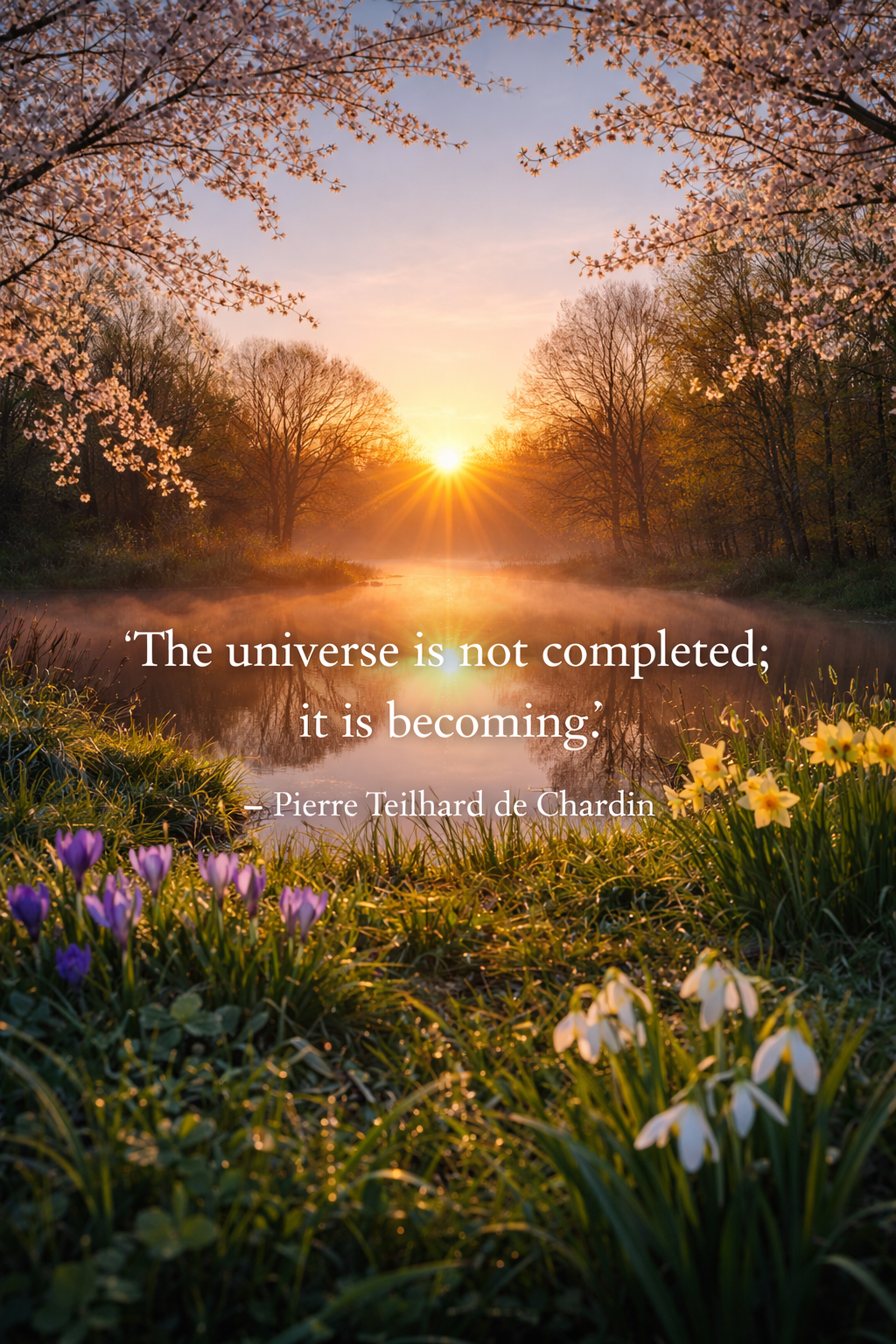
We in the U.S. northeast—and in other parts of the Northern Hemisphere as well—certainly do welcome Spring this year, after the roughest, coldest winter in many years.
I have been remarking that it has been like the old days in New York City: snow piles that do not disappear for days, sometimes even weeks, and stretches of almost subzero weather.
Still, this winter also brought us the serene beauty of the first snow as it quietly nestled on the area.
And then later in the day the same snow brought smiles to children’s faces as they rolled in it, slid on it, or made snow angels amid squeals of laughter; or built snowpeople as they were enjoying real snow days off from school—meaning no remote lessons.
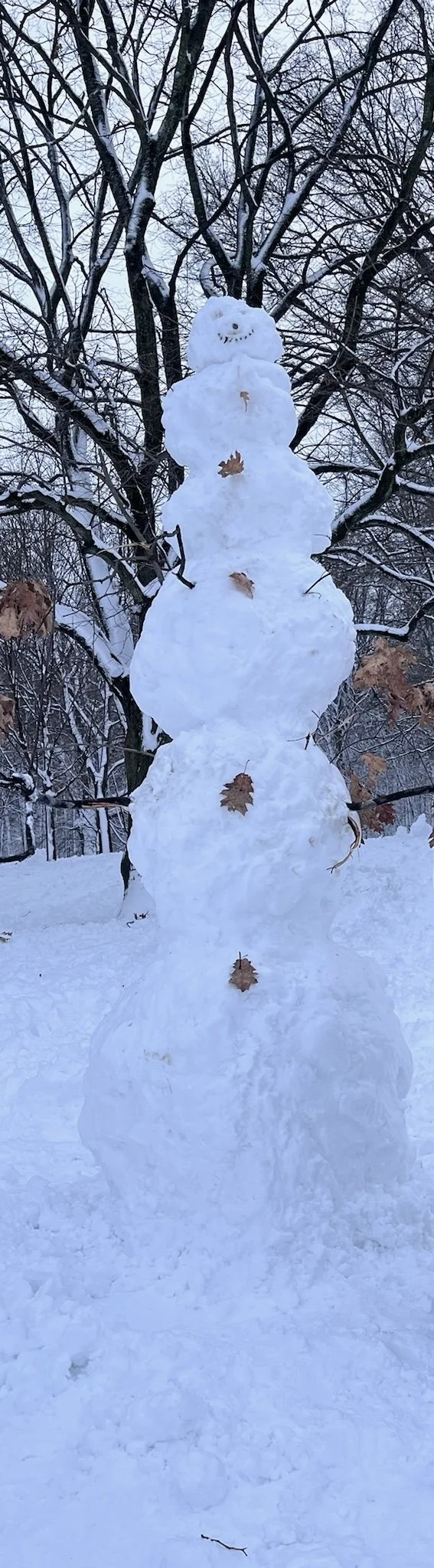
Photo by David Andersson
“Impressive Snow Creature”
Prospect Park, Brooklyn, NY
February 23, 2026
Not everyone could share in the joy!

All the while this year, as we approached this particular day of the equinox March 20, 2026, the temperatures have been rising—last week to 60 and 70 degrees—and still there were patches of lingering snow piles in some areas.
My sister Louise Connors shows me that four days ago there were still snow mounds near their home in East Northport on Long Island—the remains of the storms of a few weeks ago.
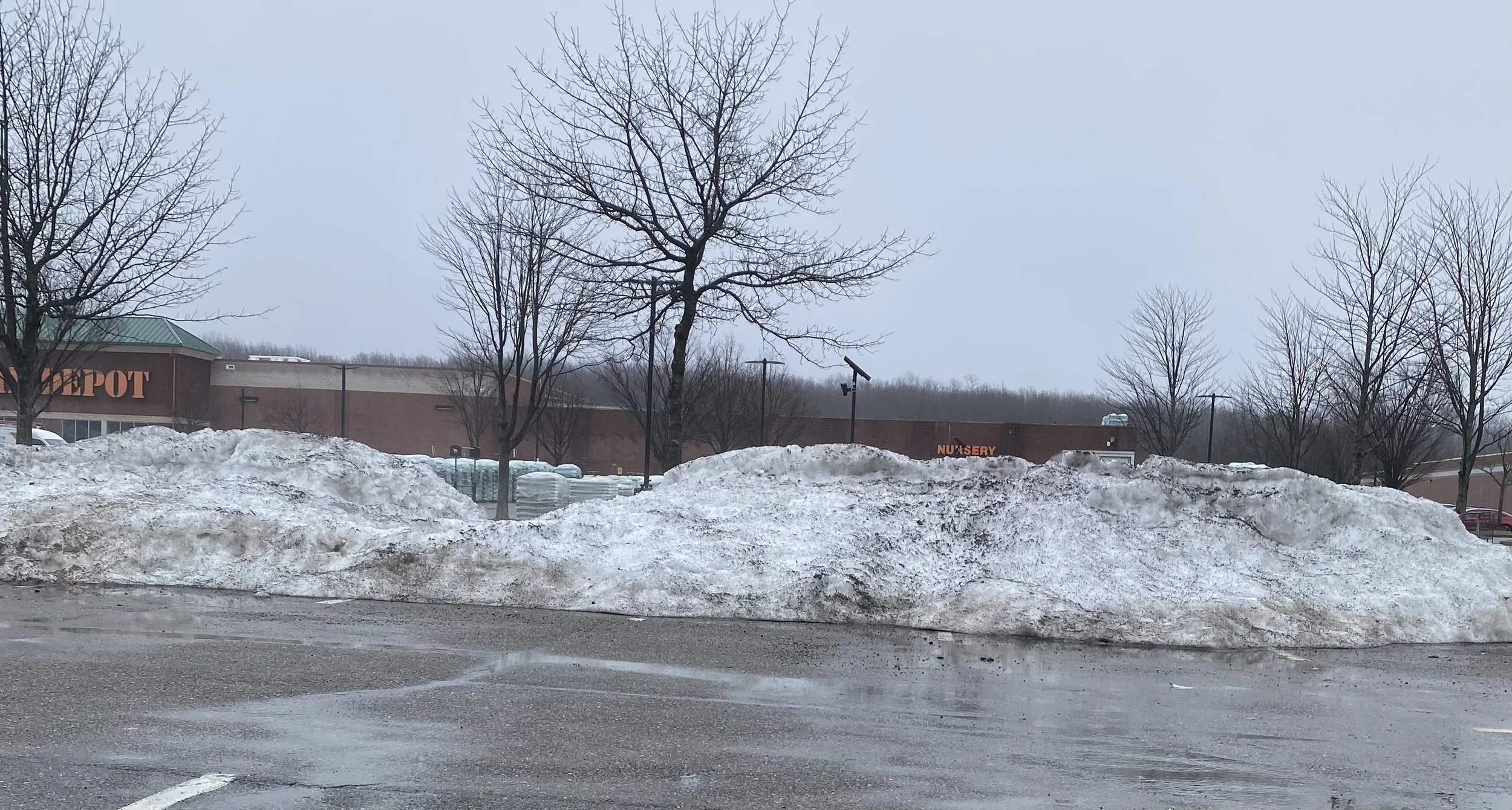
Commack, Long Island, New York
March 16, 2026
In Sweden, my niece-in-law Eva creatively named this winter’s hybrid weather, as she wrote on Facebook:
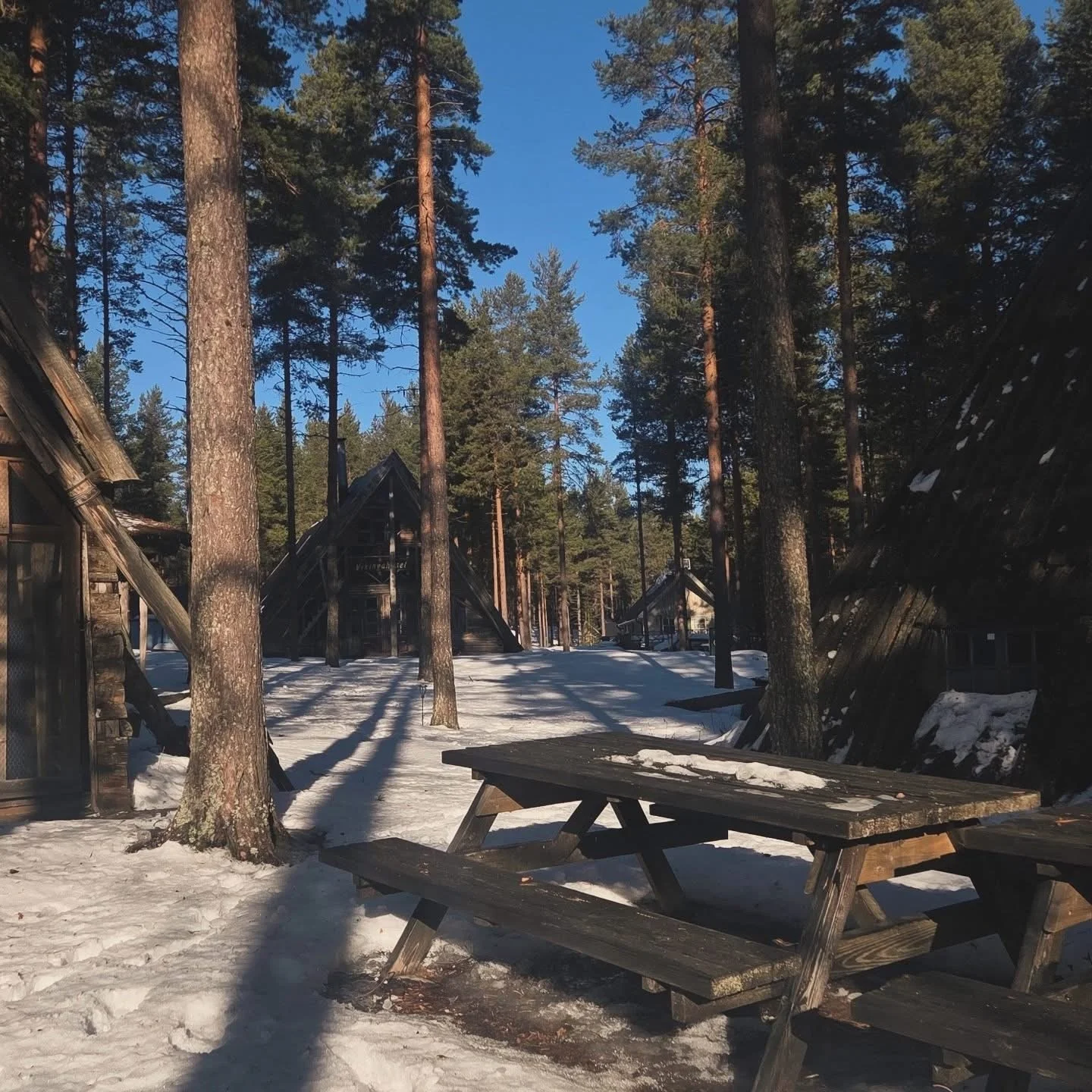
A few days in beautiful Lycksele where we got to experience the Fifth Season. "Spring Winter". March 9, 2026
Now, in the Northern Hemisphere, the Spring (Vernal) Equinox is happening—an event that occurs at one exact moment worldwide, though the clock time varies by time zone.
In 2026, the Spring Equinox moment marking the start of Spring in the Northern Hemisphere is today Friday, March 20 at 10:46 A.M. U.S. EDT
Fun Fact: In the Southern Hemisphere, that same Equinox signals the start of Autumn instead.
And just what is it that is happening? What is the science of an equinox?
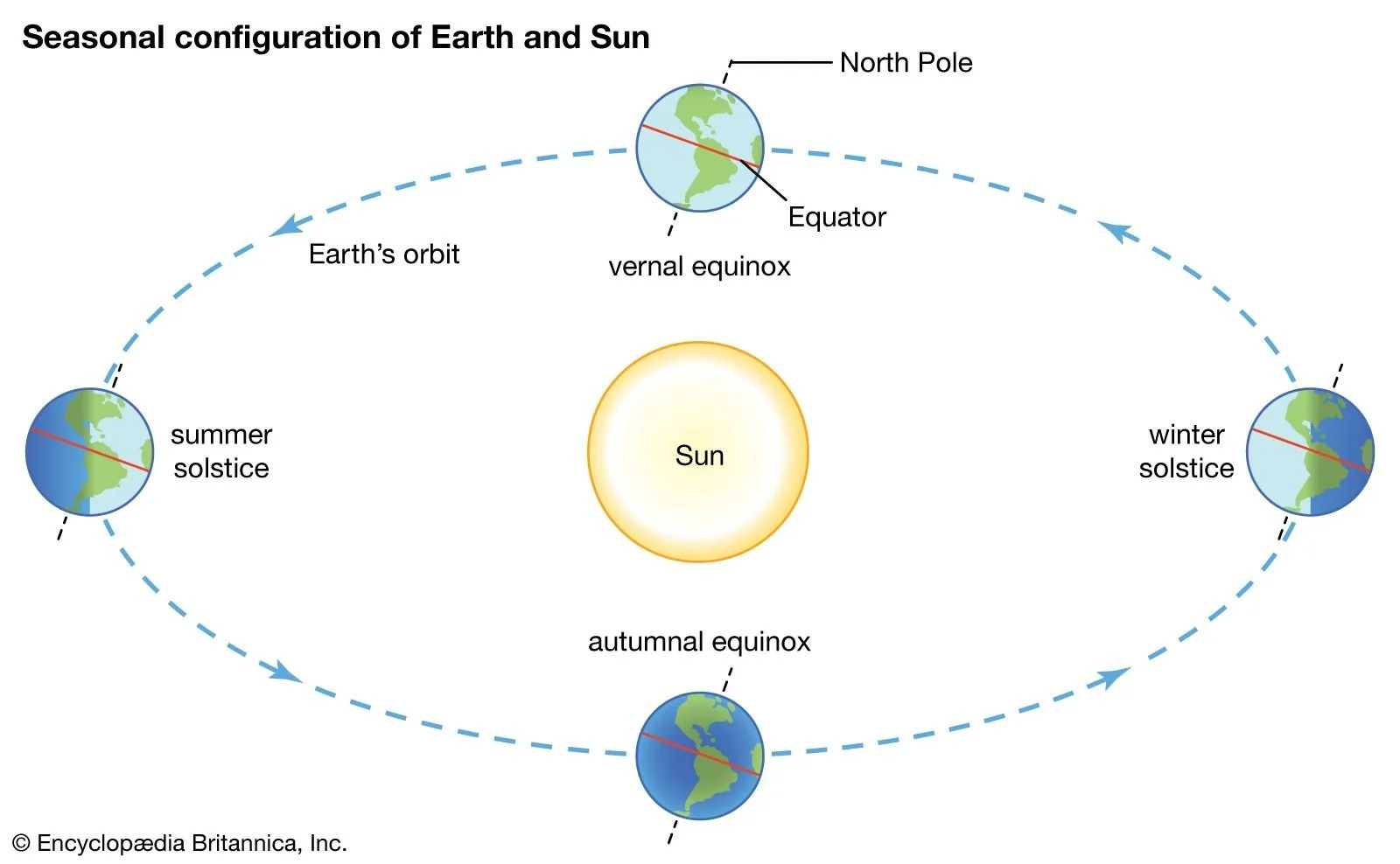
Twice each year the Earth pauses at a moment of balance, the point when day and night are nearly equal in length across the planet.
As the Earth travels around the sun, it does so at an angle, making the sun's warmth and light fall unequally on the northern and southern halves of the planet for most of the year.
But during an equinox, the Earth's tilt is neither toward the sun nor away from the sun, resulting in nearly equal amounts of daylight and darkness across the globe.
On the equator, the sun will be directly overhead at noon. Equinoxes are the only times when both the North and South poles are lit by sunshine at the same time.
The Vernal Equinox represents the liminal space between the cold dark winter and warm bright summer.
Equinoxes have been marked and celebrated around the world for centuries.
In Japan, for example, Vernal Equinox Day is a public holiday. At the Mayan site Chichén Itzá in Mexico, people gather during the equinox to watch the sun create a shadow pattern that resembles a serpent descending a pyramid called El Castillo. At Stonehenge (England), Druids and modern pagans gather to witness the sunrise at the ancient monument.
The Spring Equinox is a moment of balance. I would, however, call it a “loaded” moment of balance. For, after the long darkness of winter, the Equinox signals a subtle turning point.
It tells a story about movement. Even at the moment when day and night appear equal, the trajectory has already shifted. For a brief moment the long darkness that was winter begins to turn toward spring.
From that moment forward in the Northern Hemisphere, daylight gradually grows longer each day. The sun rises earlier, sets later, and the path toward summer begins.
The changes at first are small. A slightly warmer afternoon. The faint tint of green on bare branches. The return of migrating birds. Crocuses pushing up through cold soil.
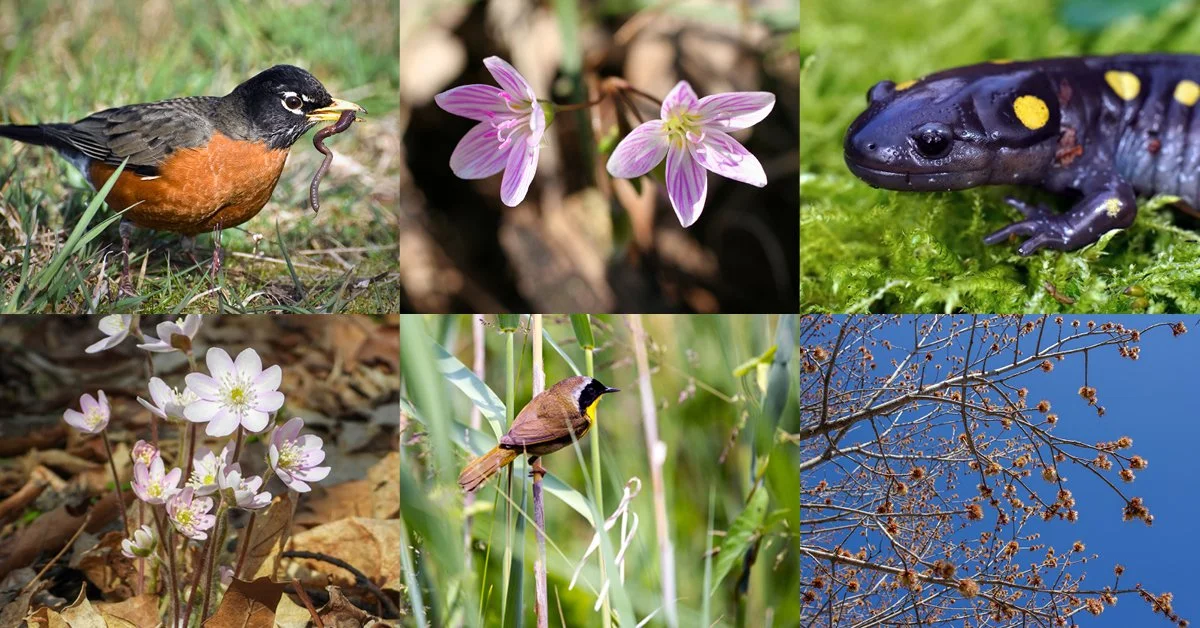
Life awakens again in ways that are almost invisible until suddenly the landscape has changed.
The balance of the Equinox also speaks to something deeply human.
Life rarely remains in equilibrium for long. There are seasons when darkness seems heavier—times of grief, uncertainty, conflict, or exhaustion. At other moments light appears abundant and hope feels close at hand.
For many Christians the Spring Equinox arrives during the season of Lent, the forty days of reflection and spiritual preparation leading toward Easter. Lent is a somber season, when Christians reflect on the darkness of the Passion of Jesus. Yet, it is also a season oriented toward light—to the joy of the Resurrection of Christ.
Seen in this light, the Equinox becomes a gentle guide to the Lenten journey. It reminds us that even when life feels suspended between darkness and light, the movement toward renewal may already be underway.
And the Earth offers us Her Wisdom in the seasons.
The natural world teaches patience. Spring does not arrive all at once. It unfolds slowly, almost quietly.
A bud forms on a tree branch. A patch of grass turns green. A longer stretch of evening light invites people outside again. Each change is small, yet together they signal a profound transformation.
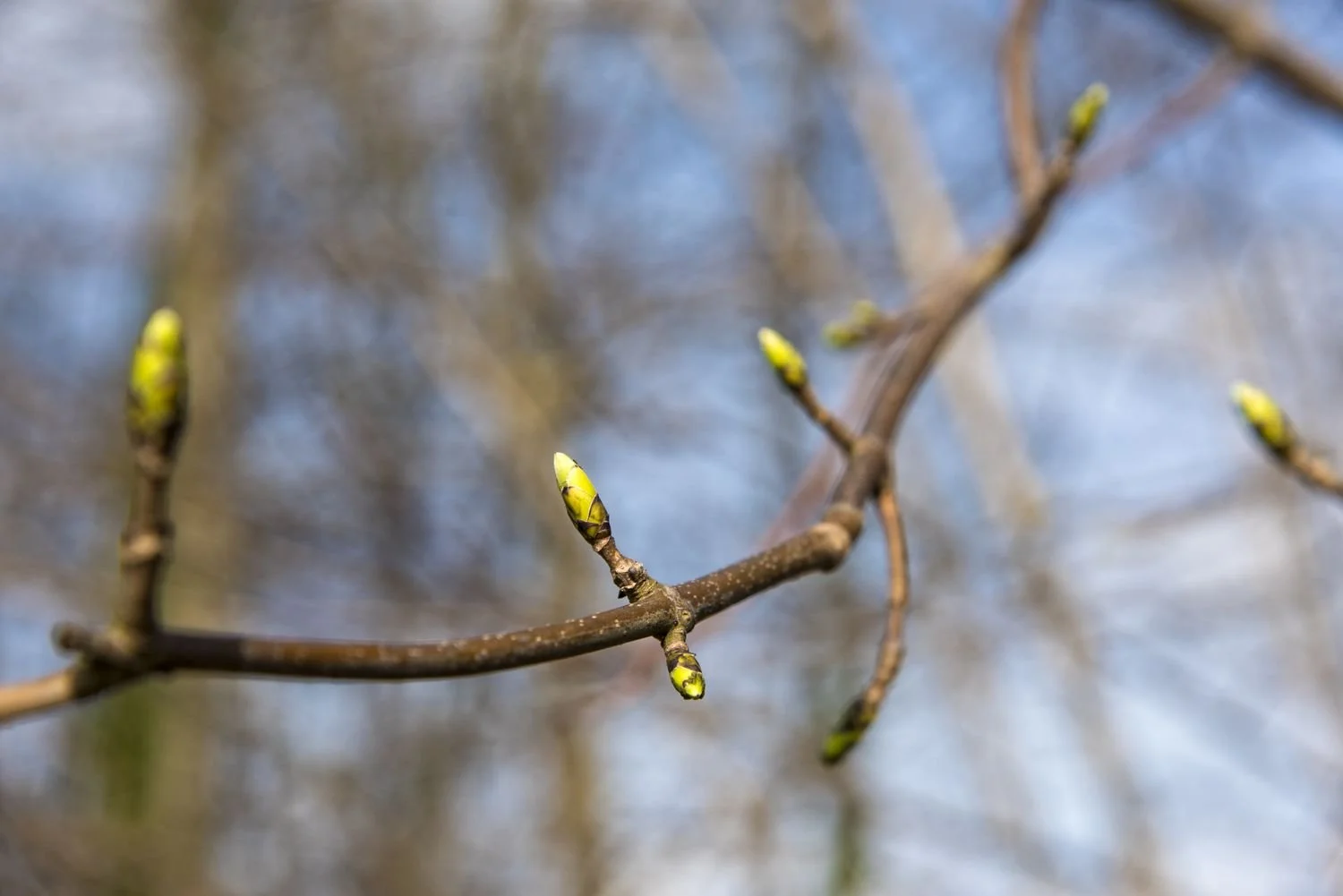
The Equinox invites us to pause long enough to notice these subtle shifts. It asks us to consider where balance might be needed in our own lives—between work and rest, reflection and action, grief and hope.
And perhaps it encourages a deeper question:
What seeds are waiting beneath the surface of our lives?
Could this question be the invitation hidden in this small cosmic event—to notice the balance, to trust the unfolding season, and to believe that even now, in ways we cannot yet see, new life is already beginning? 🌱
In a world that often feels uncertain or divided, the Equinox offers a different image: a planet turning steadily toward the light.
In closing, let us look forward to the coming of LIGHT—and conclude this post as we began it, with powerful words from a visionary whom we have met before:
“Someday, after mastering the winds, the waves, the tides and gravity, we shall harness for God the energies of love. And then, for the second time in the history of the world, humanity will have discovered fire.”
—Pierre Teilhard de Chardin

IN YOUR OWN WORDS:
Previous Post: “The Song of the Earth — Kathleen Deignan —Recent Environmentalists Mini-Series #6” Written by Kathleen Deignan in collaboration with Anne Andersson March 12, 2026
—Inspirational — ER
—I really liked it! 👏👏👏 Very fascinating and accomplished women and men that you are spotlighting! ❤️—MA
—Beautiful voice —PH
—Hi Anne, I just 'attended' through Zoom a presentation with Kathleen. She was quite informative. I believe it was offered from Mariandale in Ossining, NY live.
You certainly provided a good deal more information about her and even more info regarding your friendship with her and work at Fordham. Such a small world! Blessings. —Maryanne
Continue to remember:
the Epstein Survivors!
Belief and accountability have not yet happened.
There is much in the news now to obscure and distract from their stories—especially the larger picture as it unfolds.
Please keep your focus!
C:WED WISH LIST:
We always need—and so appreciate—your support for our ongoing tech fees!
Please click on the button to help us!
Be assured that ours is a safe link!
🩷