Óscar Romero: A Salvadoran Profile in Courage
Prelude:
Tomorrow Christians celebrate Palm Sunday.
This day is at the head of a special week known to Christians as “Holy Week.” It is a somber period that peaks at week’s end on Easter Sunday, April 5th, with a celebration of joy—the Resurrection of Christ.
This year, Easter and the Jewish feast of Passover coincide, with Passover beginning on the evening of April 1st and continuing to April 9th!
I will, however, pause with today’s post—to focus on remembering Saint Óscar Romero, Archbishop of San Salvador, the 46th anniversary of whose assassination was just a few days ago.
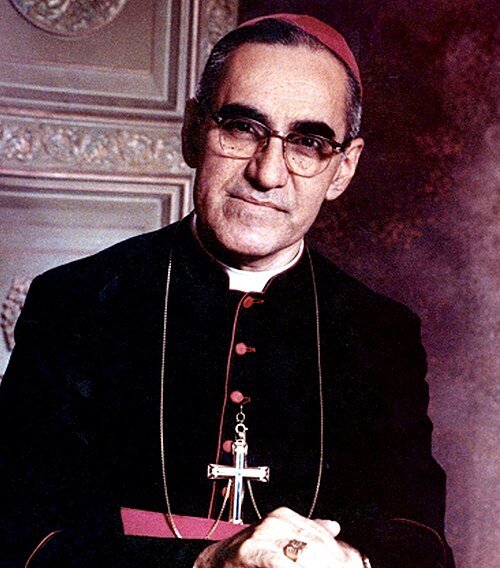
Óscar Arnulfo Romero y Galdámez (August 15,1917 - March 24, 1980)
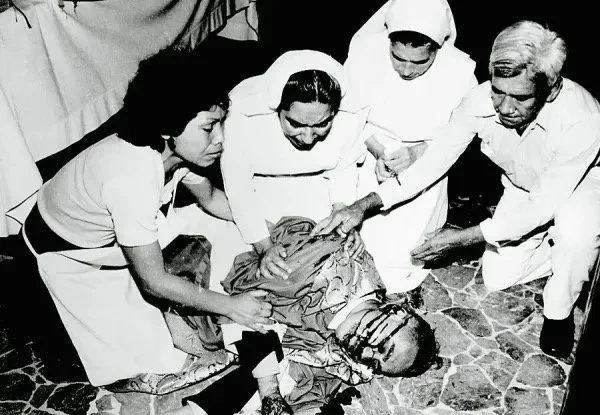
Óscar Romero was fatally shot n March 24, 1980 while celebrating Mass at the chapel of the Divine Providence Hospital in San Salvador, El Salvador.
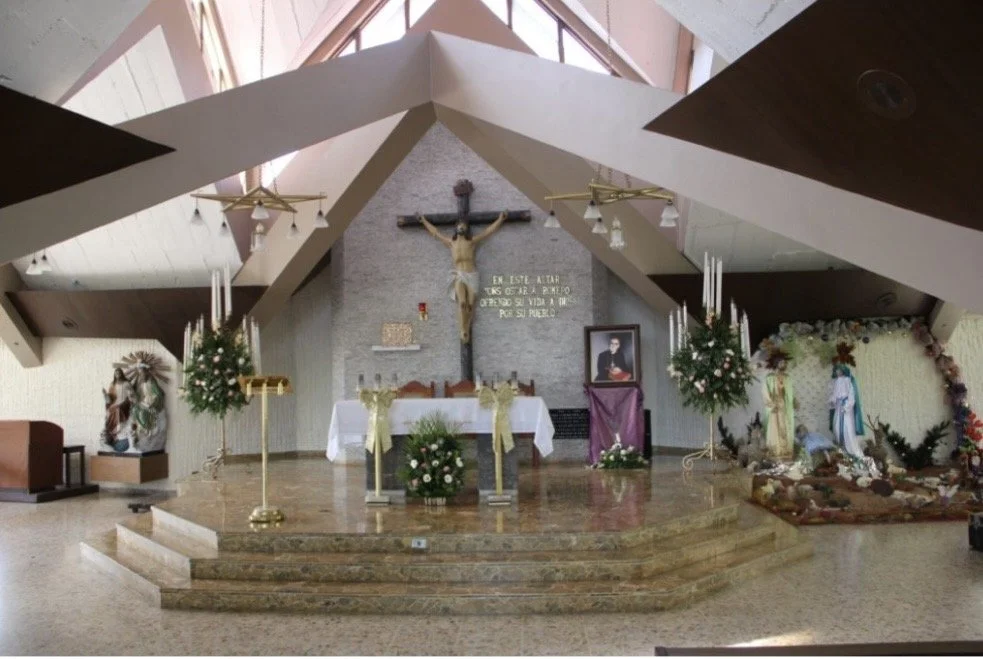
Divine Providence Chapel, San Salvador
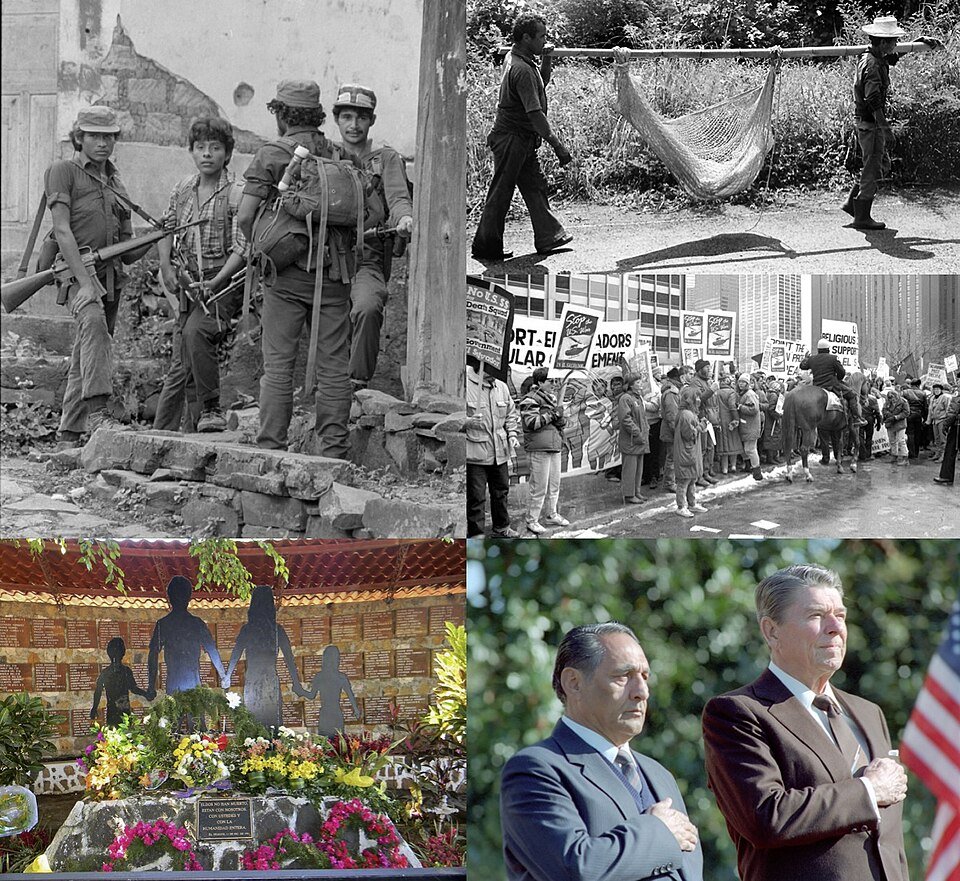
His murder was an act of repression by the Salvadoran government, which had been involved in the mass murder of the Salvadoran people during the unrest of its 12-year civil war, which ran from 1979 to 1992—and was backed by the United States.
A sadly related fact: The four American women martyrs, lay missionary Jean Donovan and Sisters Dorothy Kazel, Ita Ford, and Maura Clarke, about whom I wrote a few posts back, were also murdered later in the same year in a nearby area of El Salvador.
The women were tortured, raped, and killed on December 3, 1980. The “crimes” of these American women were that they were teaching the Salvadoran children and medically caring for the people.
Romero, however, initially seen as a social conservative at the time of his appointment as Archbishop in 1977, changed his views when he saw his friend and fellow priest, Father Rutilio Grande, murdered.
After witnessing the worsening oppression of the poor, he did a full turnaround from his conservative views and thereafter became an outspoken critic of the military government of El Salvador.
Voice of the Voiceless: He used his weekly radio sermons to denounce human rights abuses, death squads, and military violence against civilians.
He denounced the violence and social injustice, even though he knew it was dangerous.
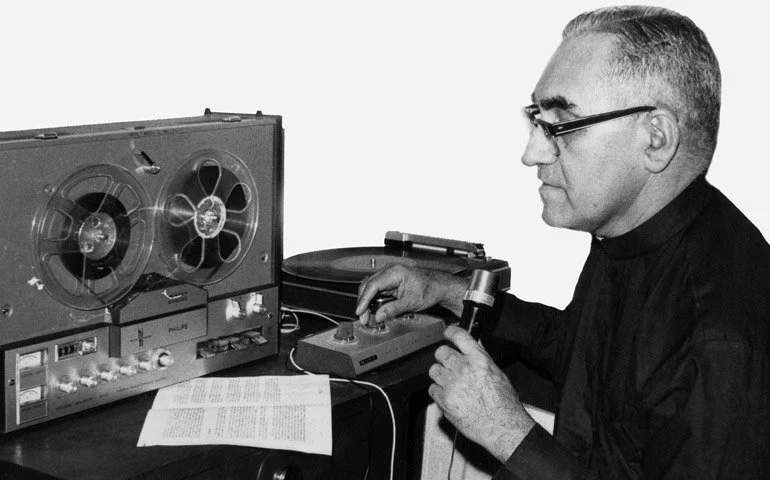
His sermons were extremely popular, especially with the rural population and also with the urban population listening regularly.
The radio station was often the only way people could find out the truth about the atrocities happening in their country.
Romero’s Last Sermon:
I thought it would be significant to recap here, on the 46th anniversary of his death, the words of Romero’s final sermon on March 23rd, the day before his death—words that are believed to have been those that directly prompted his assassination:
In a lament that was a direct appeal to the young men of the Salvadoran military, Romero stated over local radio, that God’s law must prevail: “You shall not kill!”
“No soldier,” he said, “is obliged to obey an order against the law of God. No one has to observe an immoral law.
It is time now for you to reclaim your conscience and to obey your conscience rather than the command to sin….
In the name of God, then, and in the name of this suffering people, whose laments rise up each day more tumultuously toward heaven, I beg you, I beseech you, I order you in the name of God: Stop the repression.”
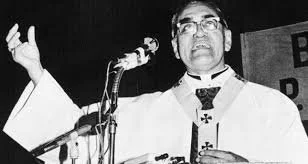
Óscar Romero was assassinated the next day.
Legacy:
On December 21, 2010, the United Nations General Assembly proclaimed March 24th as the International Day for the Right to the Truth concerning Gross Human Rights Violations and for the Dignity of Victims which recognizes, in particular, the important work and values of Romero.[94][95]
Pope Francis canonized Óscar Romero as a martyr in St. Peter’s Square, Vatican City on October 14, 2018—the conclusion of a long process that culminated in Pope Francis declaring him a saint.
During Romero's beatification (an early step in the canonization process), Pope Francis declared that Romero’s "ministry was distinguished by his particular attention to the most poor and marginalized."(6)
Saint Óscar Romero’s feast day is March 24th.
Prayer written by Bishop Ken Untener of MI in 1979.
It’s attributed to Oscar Romero and sometimes referred to as Romero’s Prayer:
Prophets of a Future Not Our Own
It helps, now and then, to step back and take the long view.
The kingdom is not only beyond our efforts, it is beyond our vision. . . .
This is what we are about: We plant seeds that one day will grow.
We water seeds already planted, knowing that they hold future promise.
We lay foundations that will need further development.
We provide yeast that produces effects beyond our capabilities.
We cannot do everything and there is a sense of liberation in realizing that.
This enables us to do something, and to do it well.
It may be incomplete, but it is a beginning, a step along the way, an opportunity for God's grace to enter and to do the rest.
We may never see the end results, but that is the difference between the master builder and the worker.
We are workers, not master builders, ministers, not messiahs.
We are prophets of a future not our own. Amen.
—Submitted by Maryanne V. Tuite
Notes:
6. Wikipedia: “Óscar Romero”
"Pope Francis sends letter for the beatification of Óscar Romero". www.archivioradiovaticana.va.
94. "International Day for the Right to the Truth Concerning Gross Human Rights Violations and for the Dignity of Victims, 24 March". www.un.org. United Nations. .
95. "International Day for the Right to the Truth Concerning Gross Human Rights Violations and for the Dignity of Victims, 24 March". www.un.org.
Resources from the Wikipedia article: “Óscar Romero”
Oliver Stone's 1986 film Salvadordepicts a fictionalized version of the assassination of Romero (played by José Carlos Ruiz) in a pivotal scene.[142]
Romero's assassination (with René Enríquez as Romero) was also featured in the 1983 television film Choices of the Heart about the life and death of American Catholic missionary Jean Donovan.[143]
The Archbishop's life is the basis of the 1989 film Romero, directed by John Duigan and starring Raul Julia as Romero. It was produced by Paulist Productions (a film company run by the Paulist Fathers, a Roman Catholic society of priests).
A film about the Archbishop, Monseñor, the Last Journey of Óscar Romero, with the priest Robert Pelton serving as executive producer, had its United States premiere in 2010.
In 2005, while at the UC Berkeley Graduate School of Journalism, Daniel Freed,[145] an independent documentary filmmaker and frequent contributor to PBS and CNBC, made a 30-minute film entitled The Murder of Monseñor[146]which not only documented Romero's assassination but also told the story of how Álvaro Rafael Saravia – whom a U.S. District court found, in 2004, had personally organized the assassination – moved to the United States and lived for 25 years as a used car salesman in Modesto, California, until he became aware of the pending legal action against him in 2003 and disappeared, leaving behind his drivers license and social security card, as well as his credit cards and his dog. In 2016 a 1993 law protecting the actions of the military during the Civil War was overruled by a Salvadoran high court and on 23 October 2018, another court ordered the arrest of Saravia.[91]
IN YOUR OWN WORDS:
Previous Post: “Welcome, Spring Equinox” Written by Anne Andersson, March 20, 2026
—Good One! Thanks.—KD
—I love your blog! Keep writing!!! Congratulations!💞 —LC
Remember the Epstein Survivors!
Retain your focus—don’t lose sight of their story.
And continue your prayers for the survivors.
Their saga is being overshadowed by the news of the day.
Justice has not yet been served.
C:WED Wish List:
Please remember us with any help you can offer.
🩷
We so appreciate your assistance!!
Click the button below to donate!
Be assured that ours is a safe click.