FROM ASHES TO ALLELUIA: Roots and Connections in Two Traditions
Christians have entered their holiest week and, coincidentally, Jews have entered one of theirs—and there are profound connections.
Christians call theirs Holy Week, the last week before the celebration of Easter, the Resurrrection of Christ. It began four days ago, March 29th, on Palm Sunday.
Jews began theirs yesterday, April 1st, the first day of Passover, which stretches from that day through to April 9th. It is a time of remembrance of their deliverance from slavery to freedom,
The Christian Tradition:
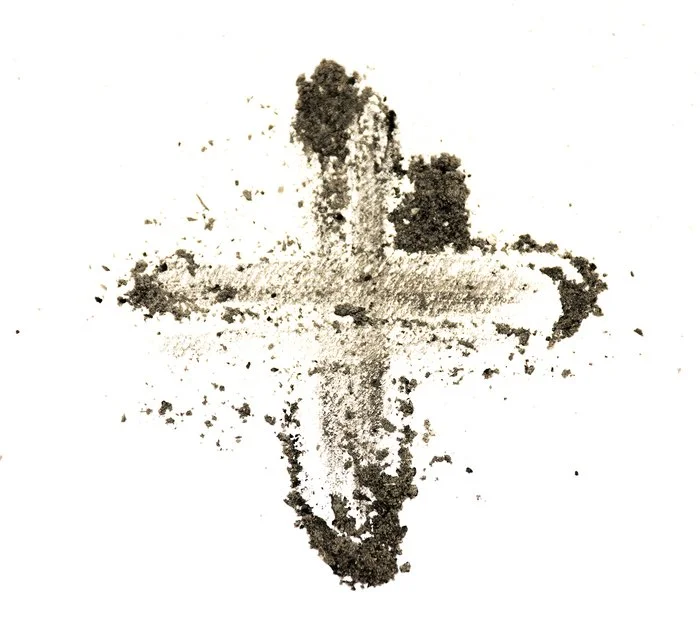
Christians have been prepping for Holy Week for almost 40 days now during the liturgical season of Lent, which began in the ashes of Ash Wednesday on February 18th.
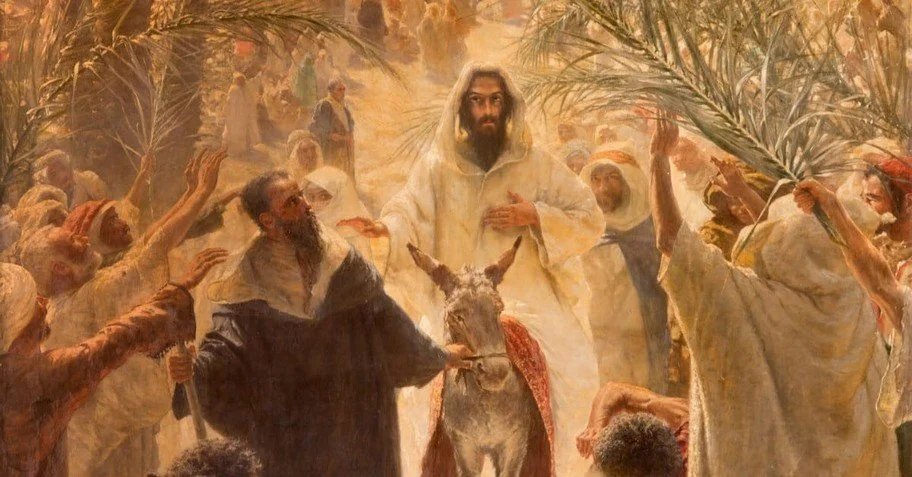
The first day of Holy Week is Palm Sunday, the day Christian churches remember the moment, as the Gospel writers tell it, when Jesus’ entered Jerusalem astride a donkey. He was grandly celebrated by the people who had laid their cloaks along his path and waved him in with palm branches.
Presently, at Palm Sunday Masses, the full story of Jesus’ Passion from one of the Gospels is read—this year from the Gospel of Mathew (Chapter 26:1-66)—and churches distribute live palm branches at all the Masses.
As Holy Week progresses, the last three days are specifically highlighted. They are symbolically denoted as the Triduum.
Today, April 2nd, is the first day of the Triduum: Holy Thursday.
Tomorrow, the second day, is Good Friday.
The next is Holy Saturday, the Easter Vigil leading into Easter Sunday: the third day.
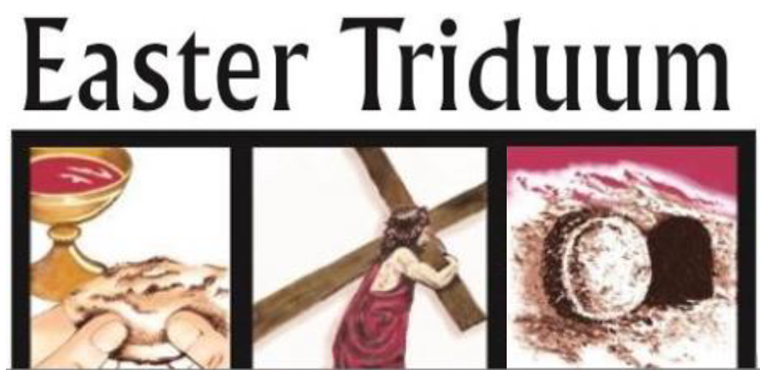
Holy Thursday — Good Friday — Easter Sunday
On Holy Thursday evening, the first of the three days, a ritual occurs during all the Masses celebrated on the evening of that day: “the washing of the feet.”
This is a solemn remembrance of the actions of Jesus that demonstrated exactly what he called for from his followers (including us): a servant ministry.
Washing the sandal-clad, dusty, or muddy feet of a guest in the ancient days of Jesus’ time, was typically the job of the household servant.
With Jesus’ action of taking on such a servant’s role, he demonstrated the main point of following his way: servitude toward others.
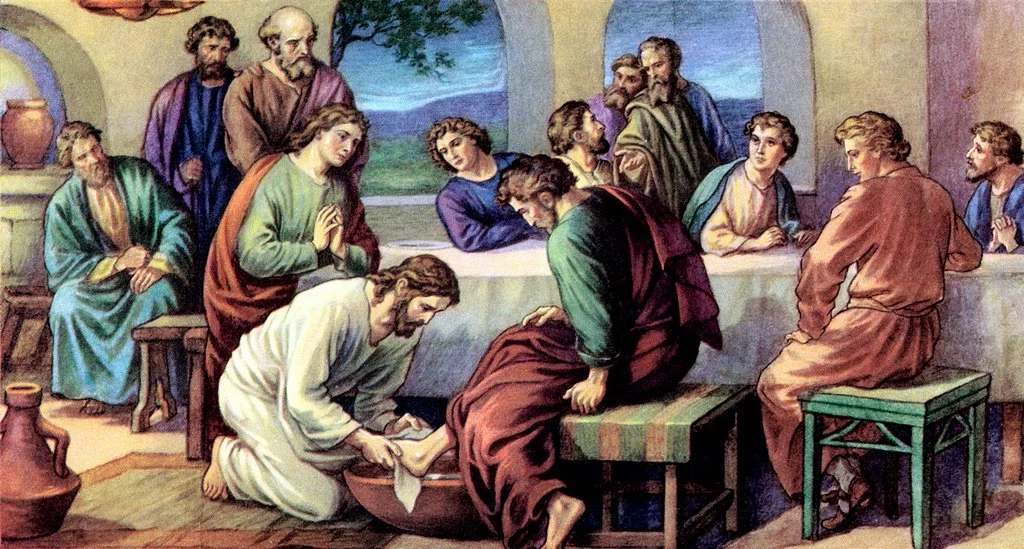
Jesus washing the feet of his disciples, Gospel of John 13:1-17
And so, during Catholic Masses around the globe this evening, the liturgical rites of the Mass will pause for a moment as the priest (most often the pastor), following Jesus’ action, takes on this ritual: the symbolic washing of the feet of 12 people from the parish church.
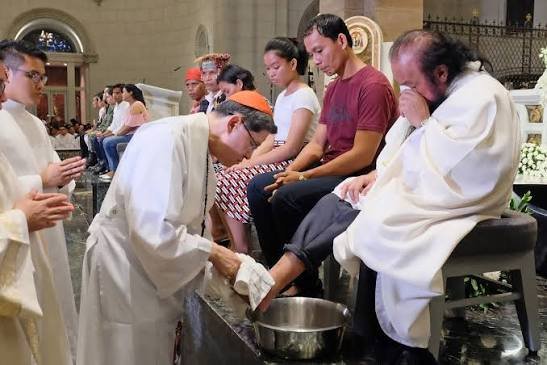
These people sit directly in front of the altar, while the priest takes a pan of water and a towel and ritually washes and dries the foot of each person.
Also, on Holy Thursday evening, the Church also pays special attention to the Last Supper, reported in the Gospels to have been the Seder meal Jesus shared with his friends just before his arrest later on in the evening.
It was to be his last Seder meal.
During that meal, as the Gospel writers tell it, Jesus said some meaningful new words.
These words of Jesus’ at the Last Supper are the origin of the Eucharist.
“This is my body. This is my blood.”
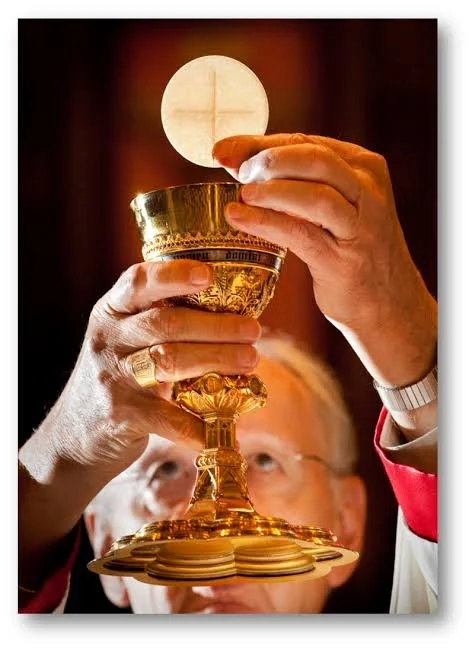
The Bread and Wine:
The Eucharist
“This is my body. This is my blood.”
What happens when these words are pronounced at the Consecration in the Catholic Mass?
In the words of Father Joe:
A beloved priest of my parish church, who passed suddenly last year from Covid-19, always said it this way when he was the celebrant at Mass:
Following his gesture of Epiclesis (by which he invoked the Holy Spirit to come down upon the bread and wine)—and after he quietly said the words of Consecration—Father Joe always proclaimed this:
“It is our faith that we believe that Jesus is now present.”
🩷
Father Joe’s statement of faith brings to my mind a message of the Gospels that inform us about a promise Jesus made to his followers (and it holds for us as well) about the time when he would no be with them:
“When two or more are gathered in my name, I am there.”
Second Day of the Triduum: Good Friday
What follows on the second day of the Triduum is the somber remembrance of the crucifixion and death of Jesus on what some Christians call “Good Friday.”
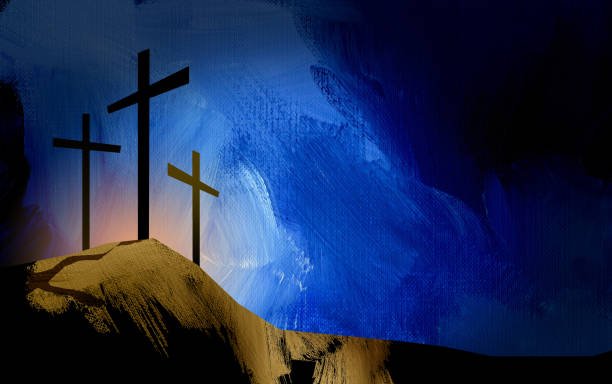
This day has different nomenclature in Christian traditions.
My husband Bruno told me that when he was growing up in the Lutheran faith in Gothenburg Sweden, it was called Long Friday (Långfredagen), which was —and is—a public holiday commemorating the suffering and death of Jesus.
Other traditions refer to the day as Holy Friday, Great Friday, Black Friday, or Friday of the Passion of the Lord.
For Catholic Christians, this day is to be a time of quiet reflection, especially from 12 noon to 3:00 pm, the latter being the hour, as reported in the Gospels, when Jesus expired on the cross of his crucifixion.
(It is significant to note that crucifixion was a Roman form of torture and death in that time period).
Church services occur in the afternoon. The altar is stripped and the tabernacle (the receptacle that normally holds consecrated hosts from the Mass of previous days) sits with an open door to reveal that it is empty.
There are no Masses on Good Friday.
It is a day of fast and of abstinence from meat.
Third Day of the Triduum: Easter Vigil/Easter
Easter Vigil: Saturday Night
On Saturday night, the ritual of the Easter Vigil begins:
People gather outside of a darkened Church.
They each hold an unlit candle.
A large fire (symbolizing the Divine) is lit and from it is lighted a large candle, which symbolizes Christ and is called the Paschal candle.
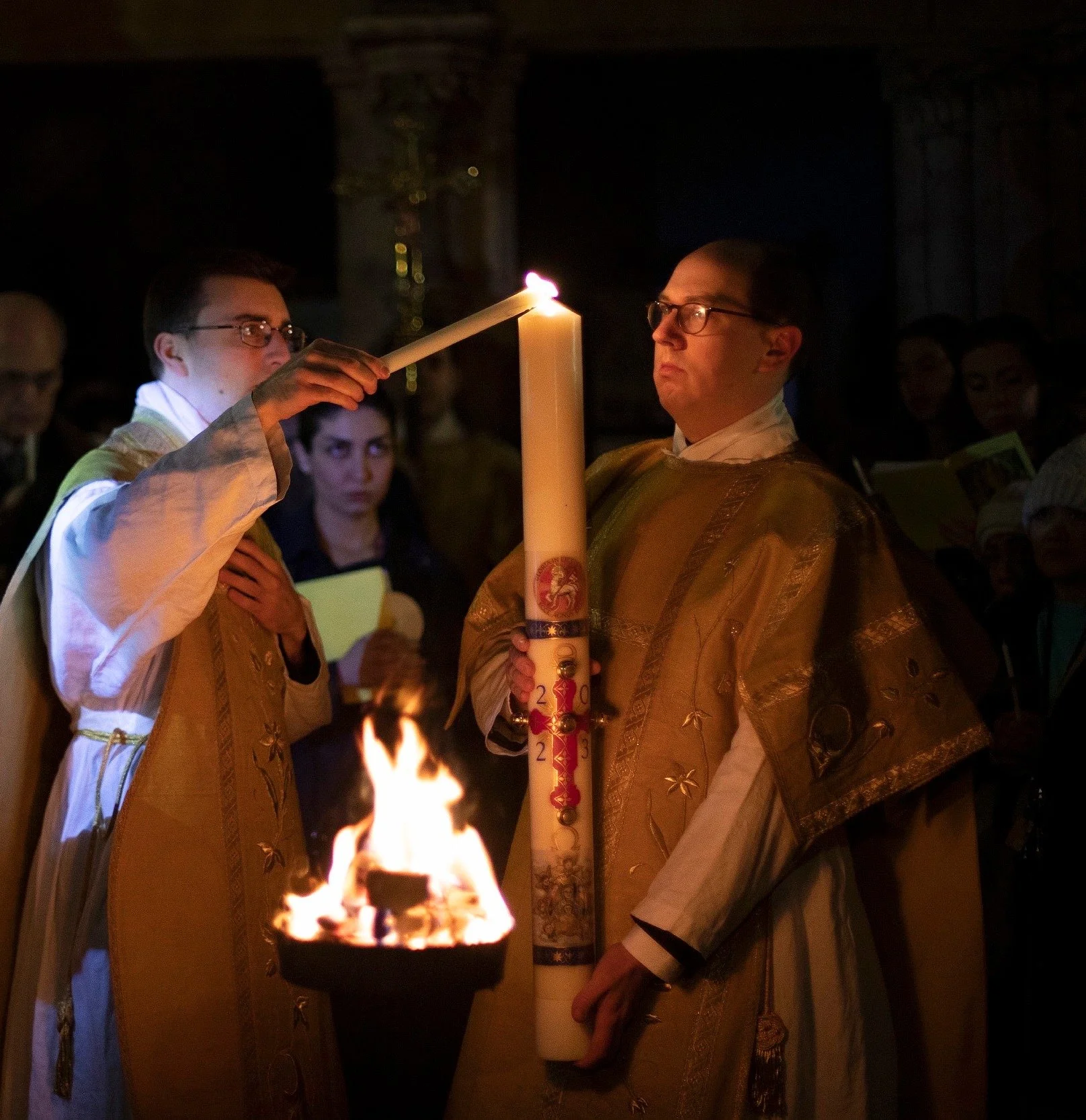
Some people light their candles directly from the Paschal candle; others share theirs to ignite the candles of others.
The congregation enters the darkened church, which gradually is brightened by the candles held by the people.
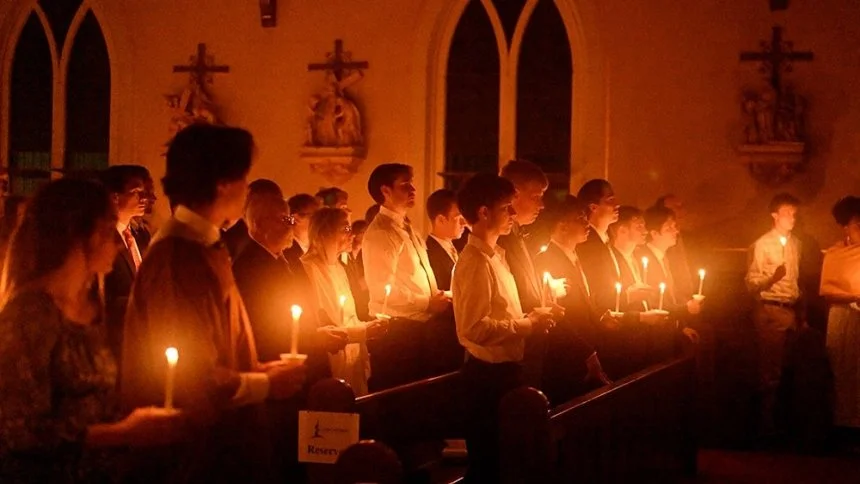
The altar is decorated with Easter lilies, the tabernacle is again filled with consecrated hosts and the Mass of the Resurrection is celebrated.
Easter
Rejoice, Christ is Risen!
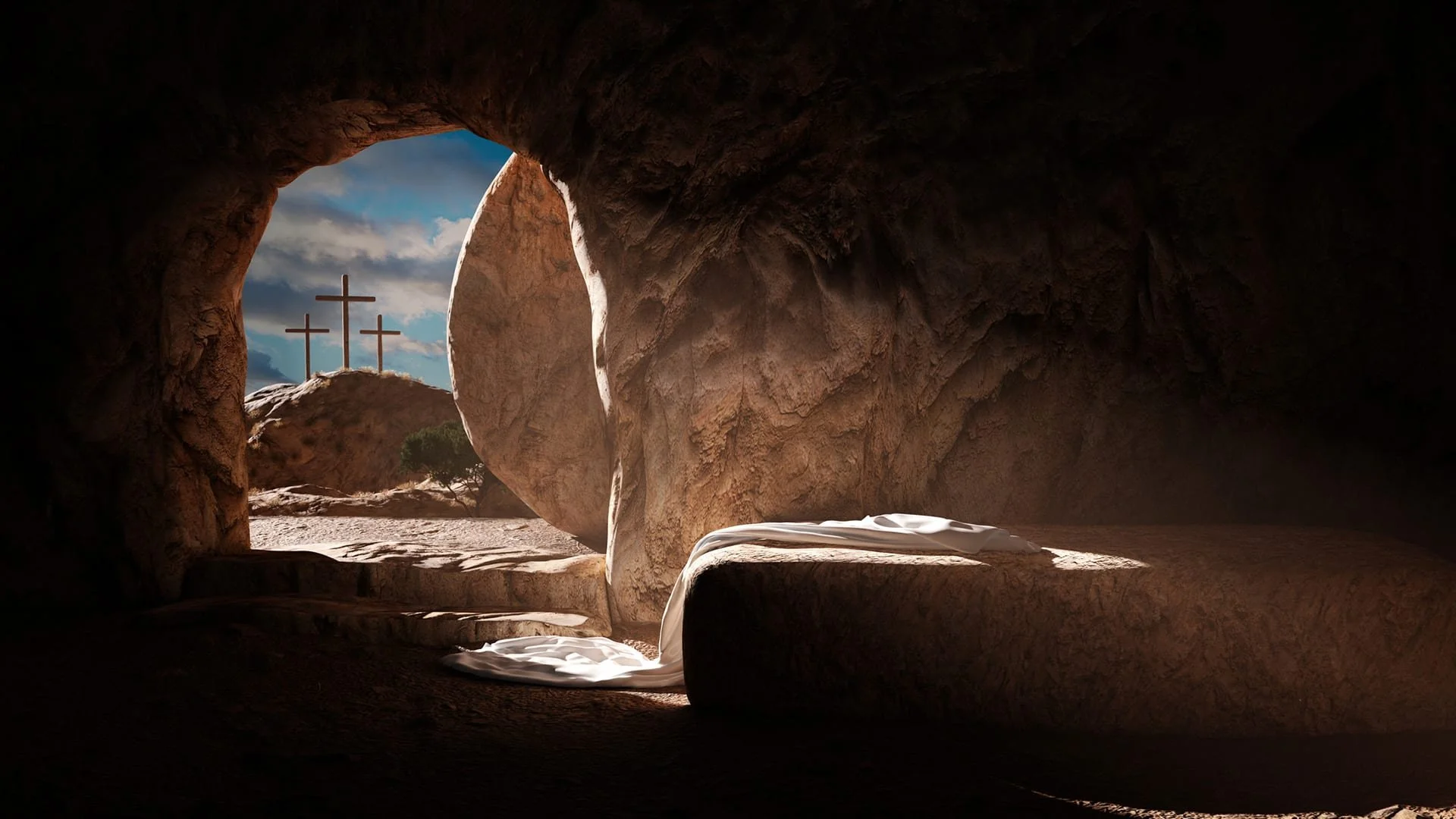
The empty tomb where the body of Jesus had been laid.
During the day of Easter Sunday, Christian families gather together to share an Easter dinner in joyous celebration.
When Two Traditions Coincide
Every few years, Easter and Passover.
This is not a coincidence. It is the result of a focus on the Spring moon and of shared sacred stories that reach back thousands of years.
Why Are the Dates Similar?
The Full Moon and the Spring Equinox Connection Why the Dates Are Similar?
Passover and Easter are both based on the Spring full moon, sometimes called the Paschal Moon (from Pesach, the Hebrew word for Passover), and so they frequently fall within days or weeks of each other.
In the Jewish calendar, Passover begins on the 15th day of the Hebrew month of Nisan, which is determined by the lunar cycle.
Easter is celebrated on the first Sunday after the first full moon after the Spring Equinox. The Equinox, which this year, in 2026, occurred on March 20th, often occurs on the 21st.
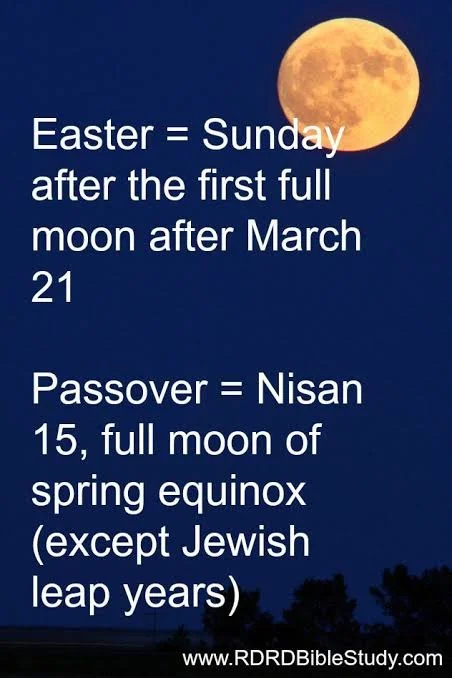
Passover and Easter are calculated differently, so they do not always overlap exactly, but their calendars remain connected through the rhythms of the moon and the arrival of Spring.
So when you see a bright full moon near Easter, you are looking at the Easter Moon, and you are also looking at the same moon that determines Passover.
A Shared Historical Beginning
The connection between Easter and Passover begins in the story of Jesus.
The Gospels report that the Last Supper was a Passover Seder meal, and the events of Jesus’ crucifixion and Resurrection took place during the Jewish festival of Passover in Jerusalem.
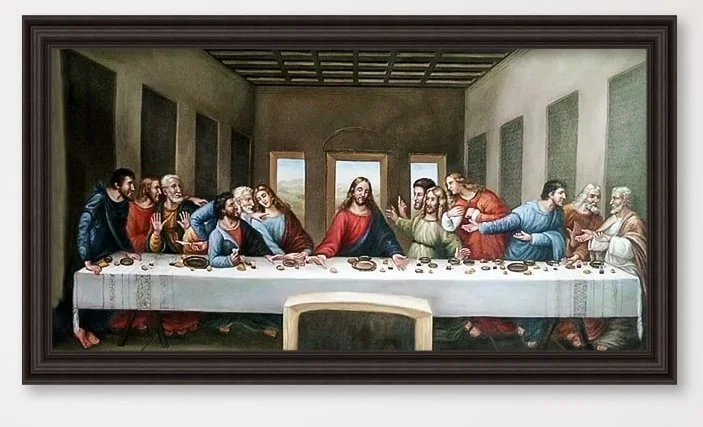
Leonardo da Vinci’s “The Last Supper”
This means that from the very beginning, the Christian celebration of Easter was historically linked to the Jewish celebration of Passover.
For Jews, Passover commemorates the liberation of the Israelites from slavery in Egypt, a story told in the Book of Exodus. of the Hebrew Testament of the Bible.
It is a celebration of freedom, deliverance, and hope.
Easter, which celebrates the Resurrection of Jesus, is also a story of liberation—from enslavement to sin and of freedom from death, with Christ’s Resurrection demonstrating that death is not the end, but an entry into Eternal Life.
Both holy days, in different ways, are about freedom, renewal, and new life.
A Shared Spiritual Message
Even though Passover and Easter belong to different religious traditions, their themes overlap in beautiful ways:
Remembering suffering and struggle
Celebrating liberation and new life
Gathering for sacred meals with family and community
Passing stories and faith from one generation to the next
Renewal of hope
Shared Family Meals
When Passover and Easter fall near each other, Jews and Christians around the world, are roughly gathering at tables, lighting candles, and sharing bread and wine, and telling old stories.
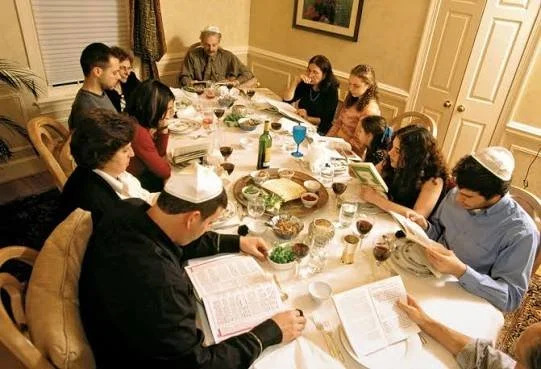
The Jewish Passover Seder
The Jewish Tradition:
The Haggadah (Hebrew: הַגָּדָה, "telling") is a foundational Jewish text that sets forth the order of the Passover Seder.
According to Jewish practice, reading the Haggadah at the Seder table fulfills the mitzvah (commandment) incumbent on every Jew to recount the Egyptian Exodus story to their children on the first night of Passover.
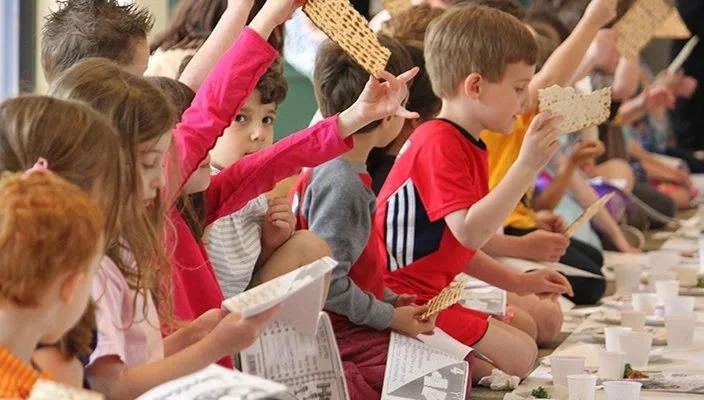
Some families follow the tradition of leaving a cup of wine and an empty seat at the table for the presence of the prophet Elijah, known as a herald of redemption; an outside door is left ajar to allow his entry.
The afikomen is a term derived from Greek/Aramaic. It means "that which comes after" or "dessert" and is the last food eaten at the Seder to ensure its taste lingers.
The afikomen is a piece of matzah broken during the Yahatz (breaking) step of the Passover Seder, set aside to be eaten as the final dessert, symbolizing the Paschal sacrifice.
Often hidden by the leader for children to find for a reward, this tradition keeps children engaged and ensures the meal concludes with the taste of matzah.
The reading of the Exodus story at a Seder focuses on the narrative of slavery and liberation from Egypt found in the Book of Exodus.
To fulfill this commandment to recount the story, the seder typically includes the Four Questions, key Exodus chapters, the Ten Plagues, and the "Dayenu" song, which lists 15 stanzas of blessings, with the chorus proclaiming that each one alone would have been enough reason for celebration.
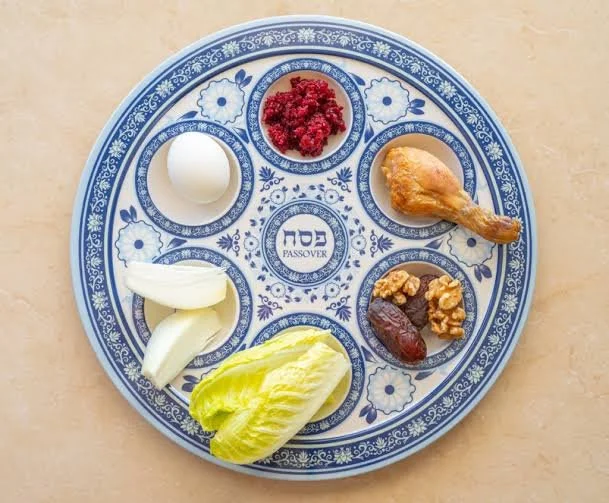
The Seder Plate with Symbolic Food Items
The seder plate is the focal point of the Passover seder. Set at the head or the middle of the table where everyone can see it, it holds the 6 symbolic, ceremonial foods for the night: matzo, shank bone, egg, bitter herb, charoset, and vegetable.
These foods symbolize the Exodus from Egypt.
—Egg (Beitzah) for new life/springtime
—Bitter Herbs (Maror/Chazeret) for the bitterness of slavery
—Fruit/Nut Paste (Charoset) for the mortar used by the Hebrew slaves for building
—Green Vegetable (Karpas) for renewal
—Shank Bone (Zeroa) for the lamb offered as a sacrifice
—Second Bitter Herb (Chazeret) for the harshness of the slavery experience
The Exodus story is a central biblical narrative of liberation, detailing how God used Moses to free the Israelites from Egyptian slavery after 400 years. Following the devastation of the ten plagues, Pharaoh allowed them to leave, but later pursued them.
The ten plagues of Egypt, as recounted in Exodus 7–12, were a series of divine judgments meant to force Pharaoh to free the Israelites.
When Pharaoh took back (recanted) the freedom he had offered the Israelites one last time and sent his army after them, God parted the Red Sea for the Israelites to escape and drowned the Egyptian army.
The plagues occurred over roughly four to five months, starting with the Nile turning to blood and ending with the death of the firstborn. These plagues showcased God's power to the Egyptians.
The 10 Plagues in Order:
Blood: The Nile River and all water in Egypt turned into blood.
Frogs: Infestation of frogs covered the land.
Gnats/Lice: Gnats or lice erupted from the dust.
Flies: Swarms of flies filled the air.
Livestock Disease: The plague of pestilence killed Egyptian livestock.
Boils: A plague of festering boils struck humans and animals.
Hail: A devastating storm of hail and fire.
Locusts: Swarms of locusts consumed all remaining crops.
Darkness: Total darkness covered Egypt for three days.
Death of the Firstborn: The final, devastating plague, which forced Pharaoh to release the Israelites.
(The Israelites were spared the tenth plague as the Angel of Death passed from house to house.
They were given a Divine order to place the blood of the lamb on their doorframes, thus identifying themselves and signifying to the Angel, by Divine order, to “pass over'“ their houses, and not cause them death—hence the name of the feast day of Passover)
Key Elements of the Exodus Narrative (from Wikipedia):
Oppression: The Israelites (descendants of Jacob) were enslaved by a new Pharaoh, who ordered the killing of their newborn sons
The Leader: God called Moses from a burning bush to return to Egypt and demand the release of His people.
The Plagues: When Pharaoh refused, God brought ten devastating plagues upon Egypt, including the Nile turning to blood, locusts, and darkness, culminating in the death of the firstborn.
The Passover: To spare their firstborn, the Israelites painted lamb's blood on their doorframes, which the LORD "passed over," creating the foundation for the Passover festival.
Crossing the Sea: Trapped between the pursuing Egyptian army and the Red Sea, God split the sea for the Israelites, allowing them to pass through on dry land before the water collapsed on the Egyptians.
The Journey & Covenant: Under Moses' leadership, the people traveled to Mount Sinai, where they received the Ten Commandments, establishing a new covenant with God.
Wilderness Journey: They survived in the desert with daily "manna" (bread from heaven) and water provided by God, despite frequently complaining and losing faith.
The Exodus story represents God's liberating love, rescuing people from slavery and leading them toward a promised land, serving as a foundational event for both Judaism and Christianity.
Closing Reflection
Both holy days are acts of memory. Both say: Never forget when you were slaves. Never forget when hope seemed gone. Never forget that liberation and new life are possible.
When Easter and Passover coincide, they offer a powerful reminder that the world’s religions are not completely separate stories, but often interwoven chapters of the human search for meaning, freedom, and new life.
In a divided world, the shared season of Passover and Easter can be a quiet invitation to remember our common hopes: liberation, renewal, and the possibility that life can begin again.

IN YOUR OWN WORDS:
Previous Post: “Óscar Romero: A Salvadoran Profile in Courage” Written by Anne Andersson March 28, 2026
—”Thank you so much for writing this article and sharing it with the world. It is a heart wrenching story but also an inspiring one!” —SP
—”…your recent post about Oscar Romero is lovely. This is a beautiful prayer and I used it all the time when giving workshops for Catechists…. So, you can see I found it so profound and it was always encouraging because it encourages us to realize 'we are not the Messiah' (thank goodness, right?) but 'workers in His vineyard'. Amen to that! Blessings as we enter Holy Week. May it be filled with deep, peaceful graces for you.”—Maryanne
Written by Bishop Ken Untener of MI in 1979.
It’s attributed to Oscar Romero and sometimes referred to as Romero’s Prayer:
Prophets of a Future Not Our Own
It helps, now and then, to step back and take the long view.
The kingdom is not only beyond our efforts, it is beyond our vision. . . .
This is what we are about: We plant seeds that one day will grow.
We water seeds already planted, knowing that they hold future promise.
We lay foundations that will need further development.
We provide yeast that produces effects beyond our capabilities.
We cannot do everything and there is a sense of liberation in realizing that.
This enables us to do something, and to do it well.
It may be incomplete, but it is a beginning, a step along the way, an opportunity for God's grace to enter and to do the rest.
We may never see the end results, but that is the difference between the master builder and the worker.
We are workers, not master builders, ministers, not messiahs.
We are prophets of a future not our own. Amen.
Remember the Epstein Survivors,
and also those associated with them!
Retain your focus
and your prayers for the survivors.
But,
pray for the perpetrators and their supporters as well!
Equitable justice has not yet been served for either group!
C:WED Wish List:
Please remember us with any help you can offer.
🩷
We so appreciate your assistance!!
Be assured that this button below is a safe click.