“Girls’ Voices: Without Us, No Justice”
A C:WED mini-series
It’s Our Second Anniversary!
On April 11, 2024,
C:WED published its first blogpost!
Thank you for joining with us and being an integral part of the C:WED family—
We are so pleased to share in the journey with you!
🩷
To celebrate our commitment—and your support—for Women, the Earth, the Divine, we will be kicking off our second anniversary with a mini-series entitled:
“Girls’ Voices: Without Us, No Justice”
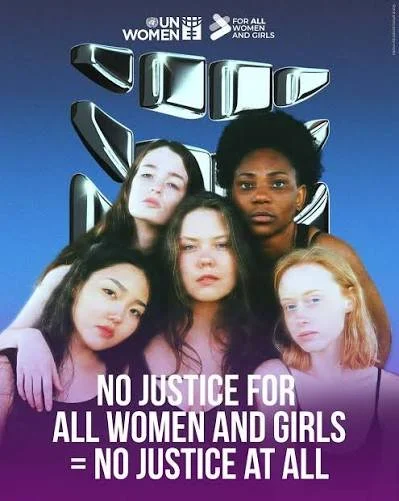
*Our series takes its title from a powerful girls’ panel entitled: “Girls’ voices: Without Us, No Justice.”
The panel, held on March 11, 2026, served as a parallel event during the 70th session of the United Nations Commission on the Status of Women (CSW70).
The panel was designed and hosted by the Grail (1), in collaboration with United for Equity and Ending Racism (UFER) (2) and featured girls from diverse cultural backgrounds presenting their stories, experiences, and visions of justice.
~~~
Before we begin our coverage of the voices of the girls, I believe we should pause here for some background on CSW.
So, this post will provide context for the panel.
Posts that follow will provide the voices of six of the girls, each from their own perspective in their countries!
What is the Commission on the Status of Women?
Short Background Story:
The UN Commission on the Status of Women (CSW) was established on June 21,1946 by the United Nations Economic and Social Council (ECOSOC).
CSW was created as a functional commission, which acts as the principal global body focusing on gender equality and is dedicated to promoting women’s rights, equality, and empowerment.
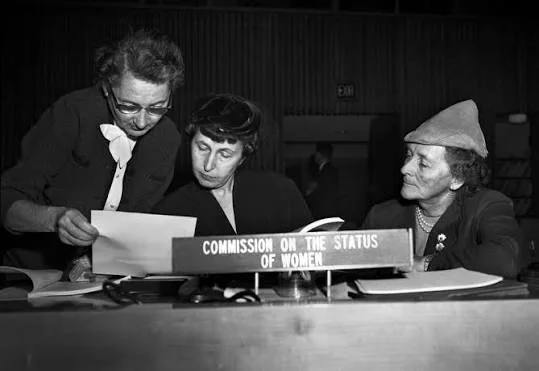
The Early Years of the Commission on the Status of Women
Key Historical Details:
Establishment:
Established on June 21,1946, following the inaugural meetings of the UN General Assembly
First Session:
The first meeting took place at Lake Success, New York in February 1947
Initial Focus:
The Commission was established as a result of lobbying by activists, including women delegates to the UN, to ensure women's rights were included in the UN Charter, with early work including the drafting of the Universal Declaration of Human Rights.
Original Members:
The first session (1947) was composed of 15 members, all of whom were women.
The 15 original members of the Commission on the Status of Women were:
Jessie Mary Grey Street, Australia
Evdokia Uralova, Byelorussian Soviet Socialist Republic
Way Sung New, People's Republic of China
Graciela Morales F. de Echeverria, Costa Rica
Bodil Begtrup, Denmark
Marie Helene Lefaucheux, France
Sara Basterrechea Ramirez, Guatemala
Shareefah Hamid Ali, India
Amalia C de Castillo Ledon, Mexico
Alice Kandalft Cosma, Syria
Mihri Pektas, Turkey
Elizavi eta Alekseevna Popova, Union of Soviet Socialist Republics
Mary Sutherland, United Kingdom
Dorothy Kenyon, USA
Isabel de Urdaneta, Venezuela
For more details on the CSW historical development:https://www.un.org/womenwatch/daw/CSW60YRS/index.htm
—and—
https://www.un.org/womenwatch/daw/CSW60YRS/CSWbriefhistory.pdf
CSW presently holds annual two-week sessions in March. Prior to 1986, however the meeting schedule was inconsistent.
Between 1972 and 1985, the Commission met only biennially (every two years).
The decision was made to return to annual meetings following the 1985 World Conference on Women in Nairobi, as the international community sought more frequent reviews of progress toward gender equality.
History of CSW Session Timing:
1947–1956: Met annually during the UN's formative years.
1959–1970: Returned to an annual format after a brief gap.
1972–1985: Shifted to biennial sessions.
1986–Present: Established the current annual two-week format.
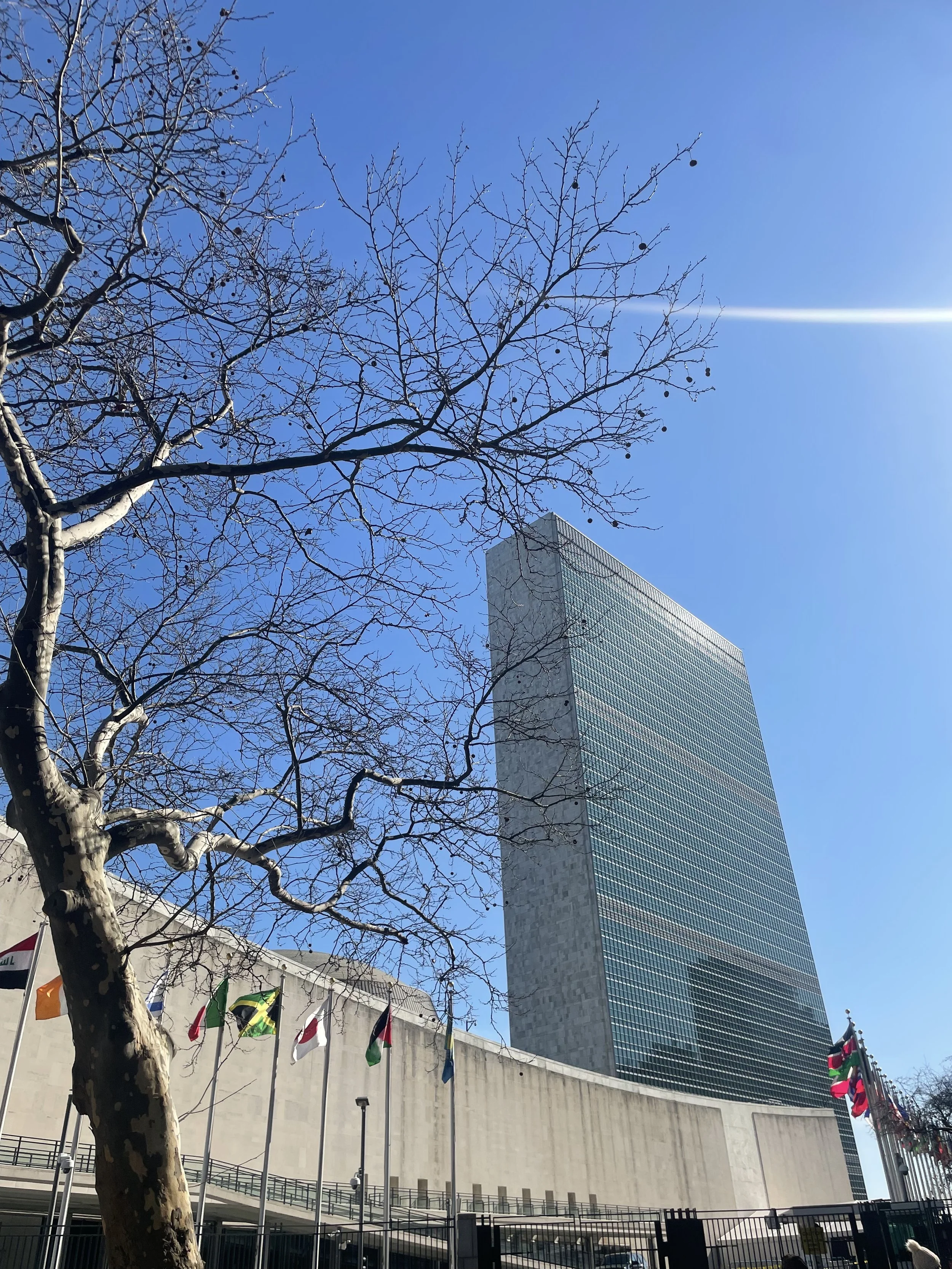
United Nations Headquarters — CSW70 - March 10, 2026 Photo by Anne Andersson
Why March?
CSW sessions are held in March to coincide with: International Women’s Day (March 8).
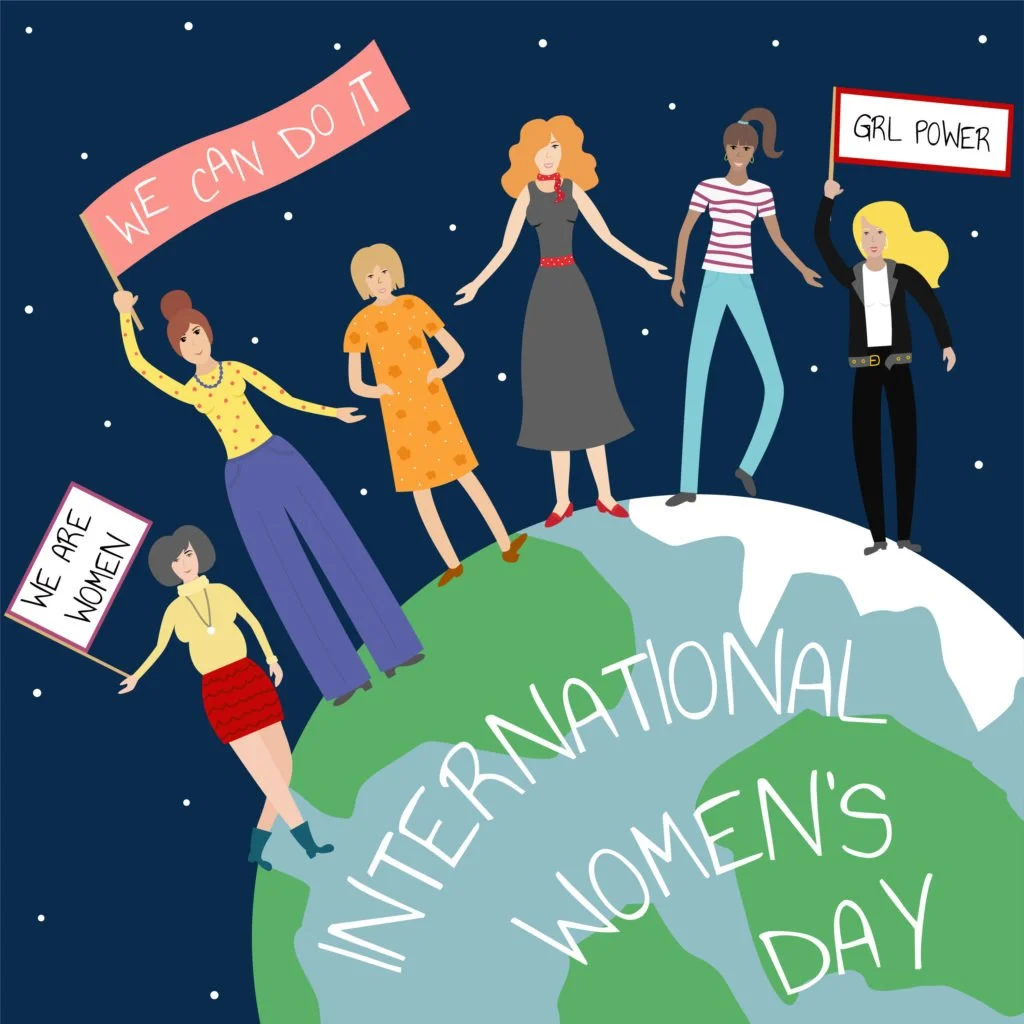
While many nations celebrate International Women's Day on March 8, the US, UK, Australia and the Philippines also recognize the full month as Women’s History Month to honor women's societal contributions.
This coordinated timing allows for maximum global visibility and aligns the Commission’s formal negotiations with worldwide celebrations and advocacy efforts.
Priority Theme: Each year, the Commission focuses on a specific issue (e.g., climate change, social protection) to produce targeted recommendations.
Review Themes: Additional topics are also targeted for review based on sessions from previous years.
~~~
On July 2, 2010, a new UN agency was created:
UN WOMEN
To create UN Women, the UN consolidated four distinct UN units dedicated to gender equality and women's empowerment.
The new agency, established by the United Nations General Assembly on July 2, 2010, began operations on January 1, 2011.
UN Women was charged with working for gender equality and the empowerment of women. It was specifically charged with advocating for the rights of women and girls and focusing on a number of issues including violence against women.
My Own Experience:
At the time UN Women was founded, C:WED had been an NGO of the United Nations with ECOSOC status for many years.
Eleanor Rae, as president of C:WED, had access to the evening event that was to be the launching of UN Women. And so, thanks to Eleanor who graciously offered me an invitation, I had the thrilling opportunity of attending the launch of UN Women on February 24, 2011.
The launch was exhilarating—it was an experience of a liftetime!
I reported on the evening with an article for the Spring 2011 issue of C:WED’s newsletter Weaving the Connections: The Newsletter of the Center for Women, the Earth, the Divine.
Here was my takeaway:
The launch ceremony was held in the UN General Assembly Hall.
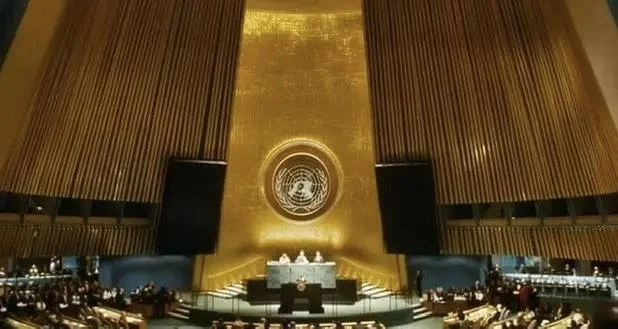
I was able to viscerally feel the excitement among the attendees as we all witnessed a new turn in the effort to bring to fruition two goals:
Millennium Development Goal 3: Promote Gender Equality and Empower Women
and
Address the concerns of the Fourth World Conference on Women, held in Beijing in1995.
The 1995 Beijing Declaration declared that it was “determined to advance the goals of equality, development and peace for all women everywhere in the interest of all humanity.
Also on that evening:
Michelle Bachelet, the President of Chile and first executive director of UN Women, addressed the audience by stating that there is no limit other than what women can do.
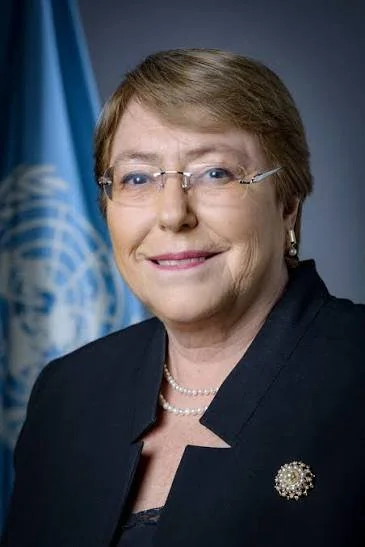
Michelle Bachelet, the first Under-Secretary-General and Executive Director of UN Women.
Michelle Bachelet, MD (born 1951) is a Chilean pediatrician who had served as President of Chile from 2006 to 2010. A long-time champion of women’s rights, she advocated for gender equality and women’s empowerment throughout her career.
In her address, Dr. Bachelet offered that the vision, on which UN Women is grounded, is one of a world where women and men have equal rights and opportunities, and the principles of gender equality and women’s empowerment are firmly integrated in the development, human rights, and peace and security agendas.
She outlined five goals of UN Women that were designed to meet that objective:
Expanding women’s voices, leadership and participation.
Ending violence against women.
Strengthening implementation of the women, peace and security agenda.
Enhancing women’s economic empowerment.
Making gender equality priorities central to national, local, and sectoral planning and budgeting.
Michelle Bachelet firmly believed: “Women’s strength, women’s industry, women’s wisdom are humankind’s greatest untapped resource. The challenge is to show how this resource can be effectively tapped in a way that benefits all.”
Under her leadership, UN Women led, supported and coordinated the work on gender equality and the empowerment of women at global, regional and country levels.
The UN Secretary-General at the time, Ban Ki-Moon, stated emphatically: “I will support women with every ounce of my energy and my time. I will try to raise money too.”
Two reigning concepts that threaded through the evening were:
”Women’s rights are human rights.”
and
“I am UN Women—We are UN Women"
(the latter reiterated by women and men, boys and girls.)
The launch evening ended with the singing of: “One Woman”
Here are are the first few stanzas of the song:
In Kigali, she wakes up,
She makes a choice,
In Hanoi, Natal, Ramallah,
In Tangier, she takes a breath,
Lifts up her voice,
In Lahore, La Paz, Kampala.
Though she’s half a world away,
Something in me wants to say—
We are One Woman
You cry and I hear you.
We are One Woman
You hurt, and I hurt too.
We are One Woman
Your hopes are mine
We shall shine.
—Written by Beth Blatt, Graham Lyle, and Fahan Hassan
Performed at the Grand Finale for the launch of UN Women in 2011, it has become the official song for UN Women and was officially released in 2013.
For complete lyrics, copy and paste the following URL into the search box of a browser of your choice (such as Safari, Google Chrome, etc.):
https://www.unwomen.org/en/about-us/about-un-women/un-women-song
UN Women’s Executive Director Today:
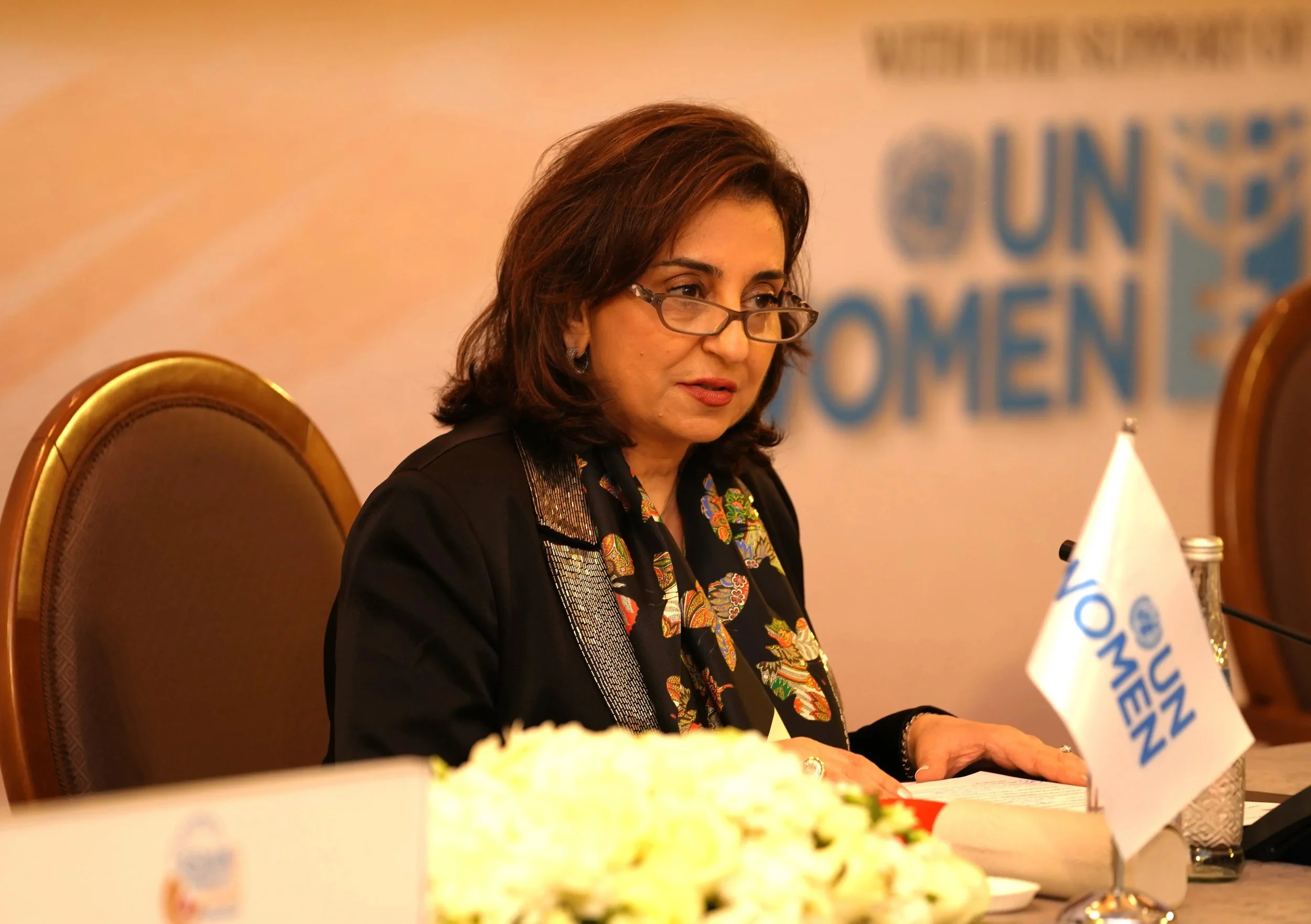
UN Women Executive Director: Sima Bahous
Photo: UN Photo/Evan Schneider
Sima Sami Bahous, PhD. (born 1956) is a Jordanian diplomat and women’s rights advocate. She became UN Women’s third Executive Director on September 30, 2021, and has agreed to serve for a second term.
She succeeded Phumzile Mlambo-Ngcuka (born 1955) of South Africa who was the second Executive Director of UN Women (2013-2021).
Dr. Bahous is a champion for women and girls, gender equality, and youth empowerment, as well as a keen advocate for quality education, poverty alleviation, and inclusive governance.
In her words:
“We know what happens when men and women share power and decision making, when men and women contribute equally to economies, when women and girls are not brought down by violence or the evils of conflict and crisis and instead play their fullest part in our human family.
Equality must not wait."

~~~
Last month the 70th session of the Commission on the Status of Women (CSW70) was held from March 9 - 19, 2026.
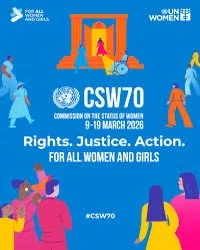
Priority theme: Ensuring and strengthening access to justice for all women and girls, including by promoting inclusive and equitable legal systems, eliminating discriminatory laws, policies, and practices, and addressing structural barriers.
Review theme: Women’s full and effective participation and decision making in public life, as well as the elimination of violence, for achieving gender equality and the empowerment of all women and girls. (The agreed conclusions of the sixty-fifth session.)
During CSW each year, the sessions held within the buildings of the UN are called side events, while parallel events are sessions that are sponsored by various Non-Governmental Organizations (NGOs), and are held in the surrounding area.
The organization, with which I began this post, the Grail, has been sponsoring parallel events for many years.
One of its events this year, in collaboration with UFER, was the panel, which focused on CSW70’s Priority Theme of Justice:
"Girls’ voices: Without Us, No Justice."
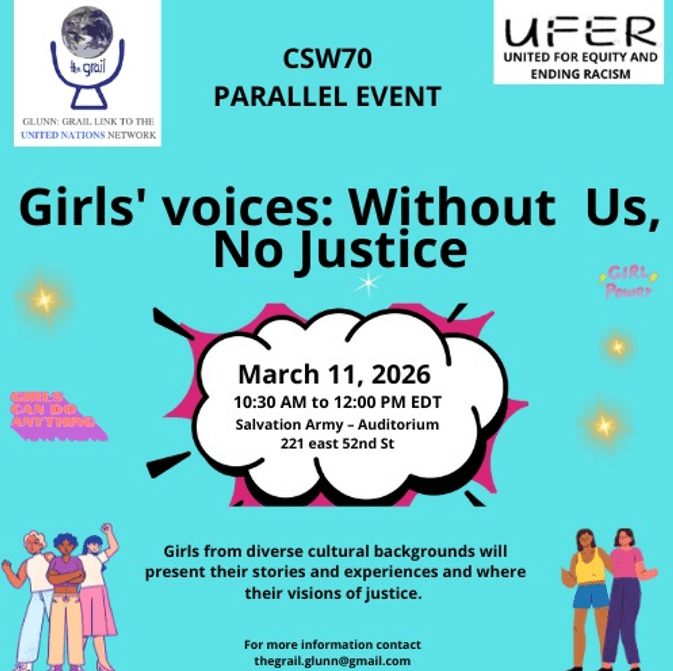
Over the next several posts of our C:WED anniversary mini-series, I will be presenting what six girls from that panel had to say about “Girls and Justice” and how justice plays out—or does not—in their own cities and countries.
Their words are powerful!!
Notes:
The Grail is an international movement of women founded in 1921 in Holland by a Jesuit priest and five Catholic lay women. Its mission is focused on social transformation, spiritual search, environmental sustainability, women's empowerment, and global solidarity.
The International Grail has been a registered non-governmental organization (NGO) at the United Nations since 1953, with Special Consultative status through ECOSOC since 1998. It works on issues such as the Commission on the Status of Women (CSW), anti-racism, and sustainable development.
Headquartered at Granville in Loveland, Ohio, the Grail operates in roughly 22 countries, with a significant presence in the USA.
Grail in the USA: https://www.grail-us.org/
International Grail Movement: https://grailmovement.net/
2. United for Equity and Ending Racism (UFER) has worked to eliminate all forms of racism, xenophobia, discrimination and related intolerance since its founding in 1952.Through representation as a non-governmental organization (NGO) at the United Nations in New York and Geneva, UFER collaborates with other international actors to promote policies for racial equity at the global level, while condemning the transatlantic slave trade and colonial genocide of indigenous peoples as flagrant crimes against humanity.
UFER’s mission is to build a peaceful world free of all forms of racism, casteism, inequity and injustice where all members of one human race enjoy full health, dignity and well-being in a context of freedom, equality and justice protected by universal human rights principles.
UFER International: https://ufer.international/
IN YOUR OWN WORDS:
Previous Post: “Óscar Romero: A Salvadoran Profile in Courage” Written by Anne Andersson, March 28, 2026
—”The Oscar Romero post looks great!” —DA
Previous Post: “From Ashes to Alleluia—Roots and Connections of the Journey in Two Traditions” Written by Anne Andersson, April 2, 2026
—”Thank you for this wonderfully detailed explanation of both feasts Anne. I gained much grateful clarity on Passover’s ritual prayers. Rituals and prayer are such rich traditions helping to keep us connected to family and always to God. Thank you, and a blessed Triduum experience and glorious Easter to you!” —Maryanne
—”Happy Easter to both of you. God Bless❤️” —PH
—”This was beautiful. Thanks for sharing. Happy Easter! Love” —MK
—”Really well-written and informative! Facts you told me as a child but it’s nice to see them in writing!!! ✍️✍️✍️” —MA
—”Thank you, Anne. You have provided a beautiful comprehensive body of information for reflection. May you be blessed with deep peace and joy. Love and Easter joy.” —LB
—”Very well done. Thank you.” —ER
—Thank you! Peace and Shalom! What beautiful descriptions of the two traditions you have provided. You wrote so concisely. May the Easter season be a period of much joy and thought. —RE
Please keep your focus
on the survivors of Epstein sex-trafficking!
Keep your prayers flowing
for them—and for the perpetrators!
Justice has not yet been served
for either group.
C:WED Wish List:
Please do continue to support us with a donation of any amount you can offer:
In celebration of our Second Anniversary!
Please click the safe link below to add your support, which is always needed and so greatly appreciated!